


23 Aug 2026
Rowing 101: The History, Terms and Tactics to Know Ahead of Amsterdam 2026
As the world’s best rowers gather at Amsterdam’s historic Bosbaan for the 2026 World Rowing Championships, there is plenty for newcomers to the sport to take in. From the explosive start to the punishing final sprint, rowing combines power, endurance, precision, and race strategy in a deceptively simple contest: getting a boat down a 2,000m course faster than everyone else.
For fans discovering the sport — and media covering it for the first time — this guide explains the history, terminology, technique and tactics behind elite rowing, from the four phases of the stroke to the strategic “moves” that can decide a race. It also introduces the Bosbaan, one of Europe’s historic purpose-built rowing venues, and some of the athletes whose achievements have shaped the sport’s past and present.
OVERVIEW
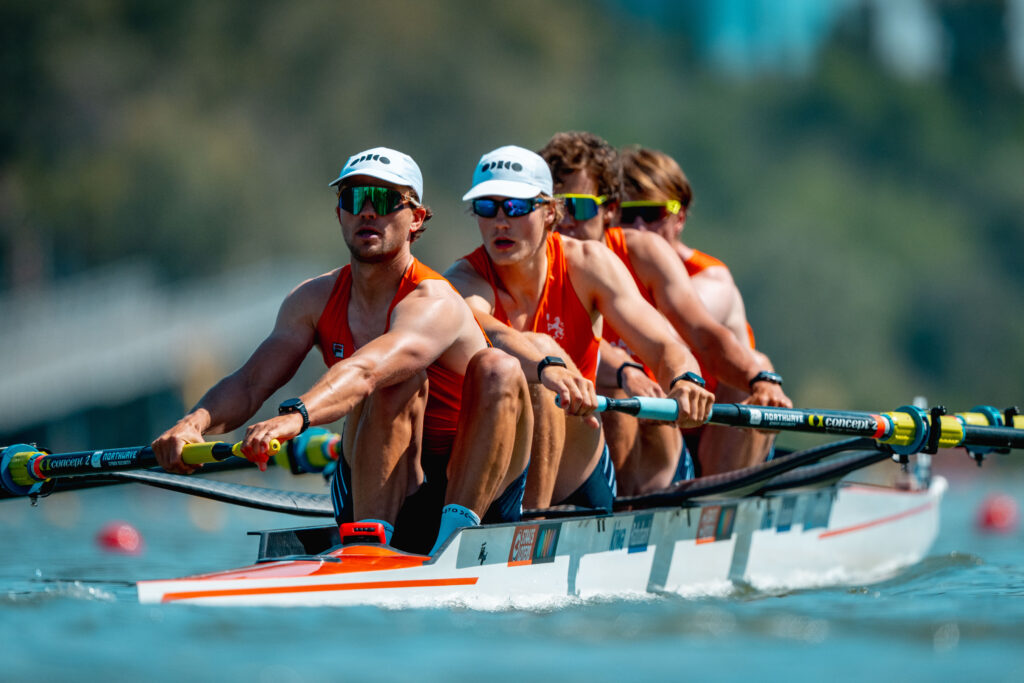
Rowing is a racing sport in which one, two, four, or eight rowers propel boats along a straight 2’000m course using oars, requiring impeccable technique, endurance, and mental toughness. A fixture of the modern Olympic Games since 1986 and with the World Rowing Championships taking place since 1962, rowing demands that athletes move in perfect unison, turning immense physical effort into smooth, efficient motion.
LOCATION
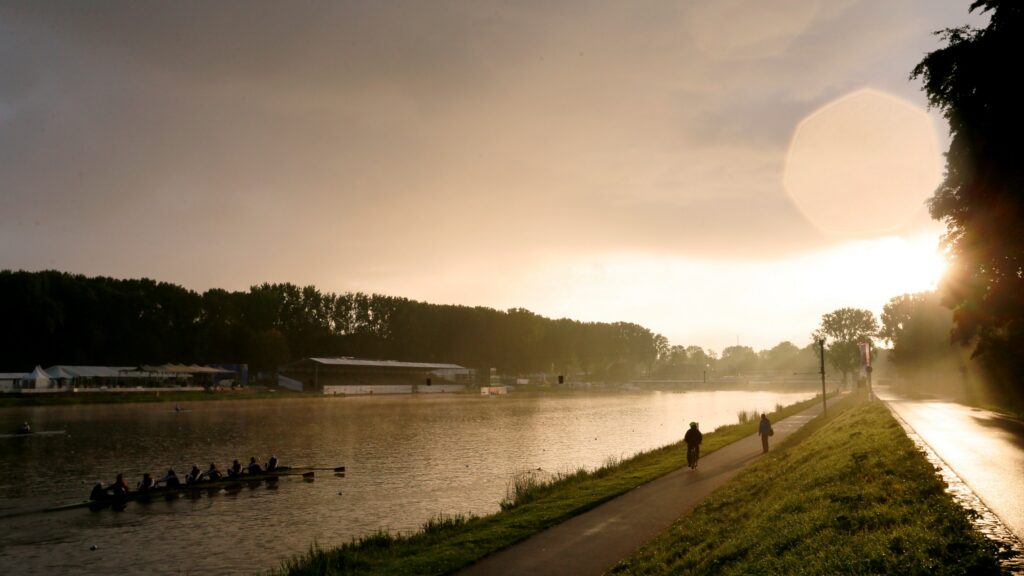
Built in 1937 in Amsterdam’s Bos, the Bosbaan was one of the first purpose-built rowing courses in Europe and has been a fixture of international rowing ever since. Over the decades, it has hosted major European and World Rowing events, including the World Rowing Championships in 1977 and 2014.
The course was extensively modernized in 2001–02, creating the international regatta venue used today, and has undergone further renovation ahead of the 2026 World Rowing Championships. Its purpose-built layout, dedicated infrastructure and long history of international competition make the Bosbaan a distinctive setting: a specialist rowing venue in the middle of one of Amsterdam’s largest green spaces.
COMPETITION FORMAT
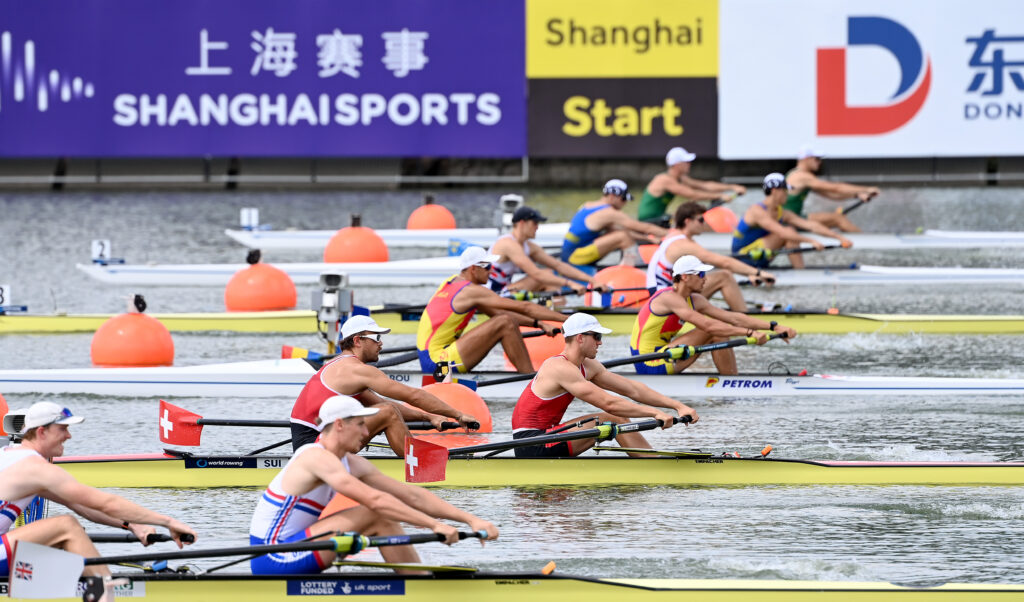
Six lanes are used for racing, each 12m wide, clearly marked by buoys.
Crews committing a false start are issued a warning, with repeated false starts leading to disqualification.
A boat’s final time is determined by when its bow crosses the finish line. In the case of a close finish, a photo finish will be consulted to determine the order that each boat crosses the line.
All events begin with a round of heats, followed by semi-finals and finals. Progression through heats and semifinals determines the finalists, depending on the number of entries in each event.
ROWING TECHNIQUE
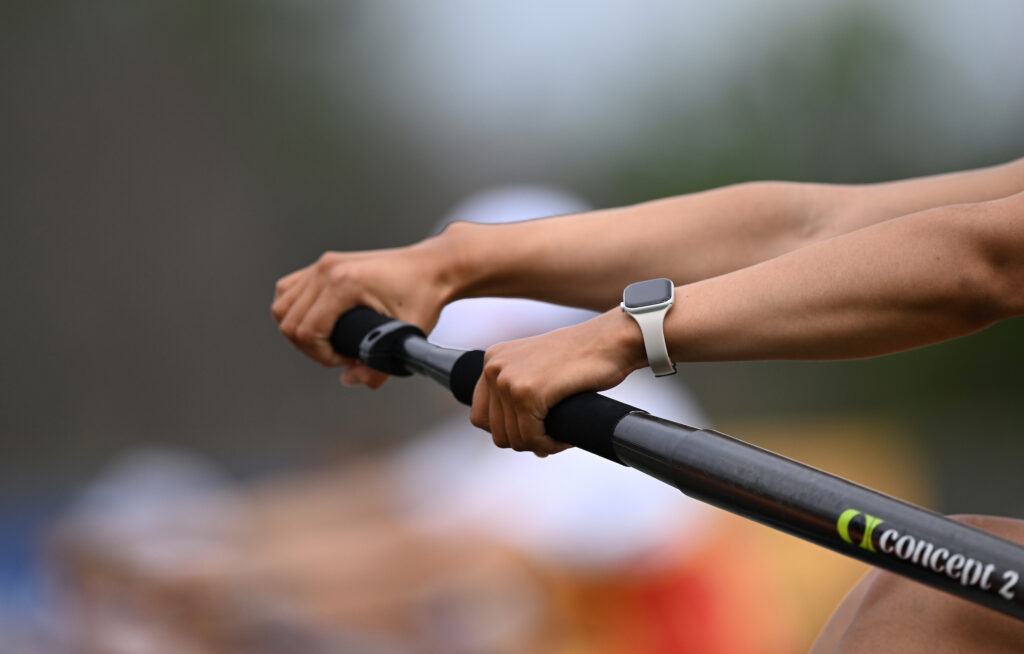
The whole body is involved in moving a rowing boat through the water. Although rowing looks like an upper-body sport, strong legs are really important. The rowing stroke has four parts: Catch, Drive, Release, and Recovery, and they all flow together in a smooth, continuous, powerful movement. The motion is so fluid, smooth, and seemingly effortless that the agony on the athlete’s faces near the end seems out of place.
The last 500 meters of the race are excruciating. The energy is gone, and the muscles are burning. And the body is well into oxygen debt. But the mental discipline remains, and the athletes continue, straining to synchronize each motion and mentally counting the strokes to the finish. Rowers must be in perfect synchronicity with the rest of their crew to achieve the highest possible speed.
Catch: The catch is often described as the blade entering the water, which should be done quickly and as a continuation of the recovery. It should be well synchronized with the boat’s speed, without too much backsplash or front splash. Rowers use the gravity of the weight of the blade instead of power to place the oar in the water.
Drive: While executing the drive, the blade should remain buried in the water, moving horizontally and at an even depth of approximately 8 to 10 cm. To maintain steady pressure, the drive should gradually accelerate from entry through the final push of the boat, matching the boat’s acceleration. Shoulders swing until the blade leaves the water.
Release/Finish: the release of the blade from the water should follow the last push of the drive. The release should be a quick, clean, fluid motion of the blade up and out of the water while still square. The feather- turning the oar so the blades are parallel to the water’s surface – follows sequentially after the blade leaves the water. The whole path of the blade should be very horizontal during the drive and during the recovery.
Recovery: During the recovery, the blade travels toward the bow in a smooth, horizontal plane at a steady height. There should be enough clearance to allow an easy squaring of the blade before the entry without skimming the water’s surface.
RACE STRATEGY
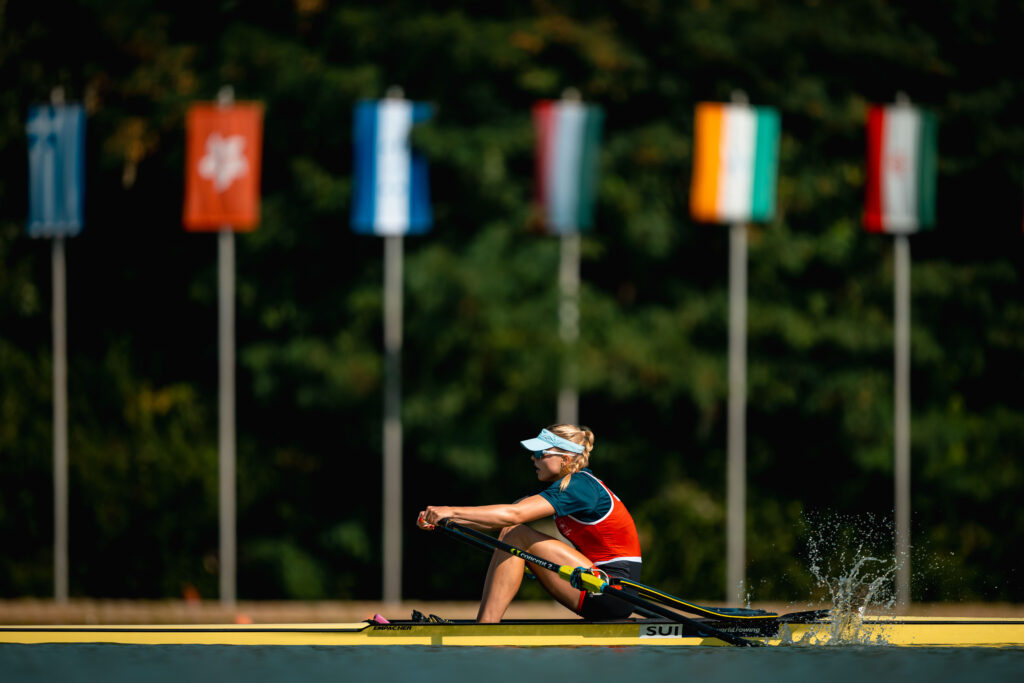
The stroke rate typically follows a strategic pattern, varying in intensity and stoke rate across different stages of the race.
Start: At the beginning of the race, rowers often start with a high stroke rate. This is referred to as the “start sequence” or “high rate.” The goal is to accelerate the boat quickly off the start line, establish an early lead, and settle into a rhythm.
Settling: After the initial high-rate start, rowers settle into a sustainable rhythm. This phase involves gradually reducing the stroke rate while maintaining strong and powerful strokes. The settling phase allows athletes to find their pace and establish a smooth rowing pattern.
Middle Phase: During the middle portion of the race, rowers aim to maintain a consistent, efficient stroke rate to cover the distance while conserving energy. The stroke rate may vary slightly based on factors such as wind conditions and the specific race plan.
Power Moves: In some races, rowers may strategically execute “power moves” or “pushes” to gain an advantage over their competitors. These are short bursts of higher stroke rate and intensity, often used to overtake opponents or create a gap. Power moves can occur in the middle-to-latter stages of the race.
Final Sprint: As the race enters its closing stages, rowers often increase the stroke rate for a final sprint to the finish line. The stroke rate is raised significantly, and rowers give their all to maximize boat speed and cross the finish line ahead of their competitors.
It’s important to note that the timing of these stages can vary depending on the specific race plan, the rowers’ strengths, and the prevailing conditions on the water. Coaches and athletes carefully plan their race strategy to optimize energy use and maximize the boat’s speed throughout the race.
Communication: Effective communication among the rowers and the coxswain (in coxed events) is essential for coordinating stroke rate changes and maintaining synchronisation throughout the race. The goal is to strategically balance the high-intensity phases with periods of controlled, efficient rowing to achieve the best possible performance.
ATHLETE ATTRIBUTES
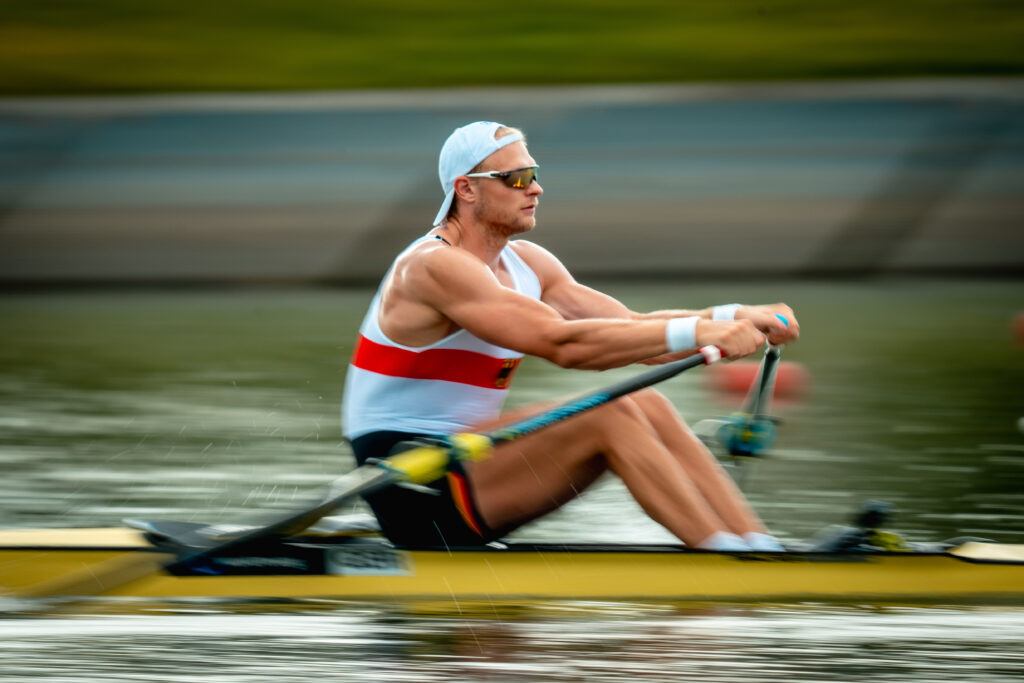
Muscular Strength and Power
Rowing is a power-endurance sport that relies on coordinated muscle groups to drive the boat efficiently. The stroke begins with a strong leg drive (quadriceps and hamstrings), followed by core engagement to stabilise the body and transfer power. The back and shoulders then pull the oar through the water, with the arms finishing the stroke, before a controlled recovery phase resets the position. Smooth rhythm and coordination across these phases are essential for maintaining speed and efficiency.
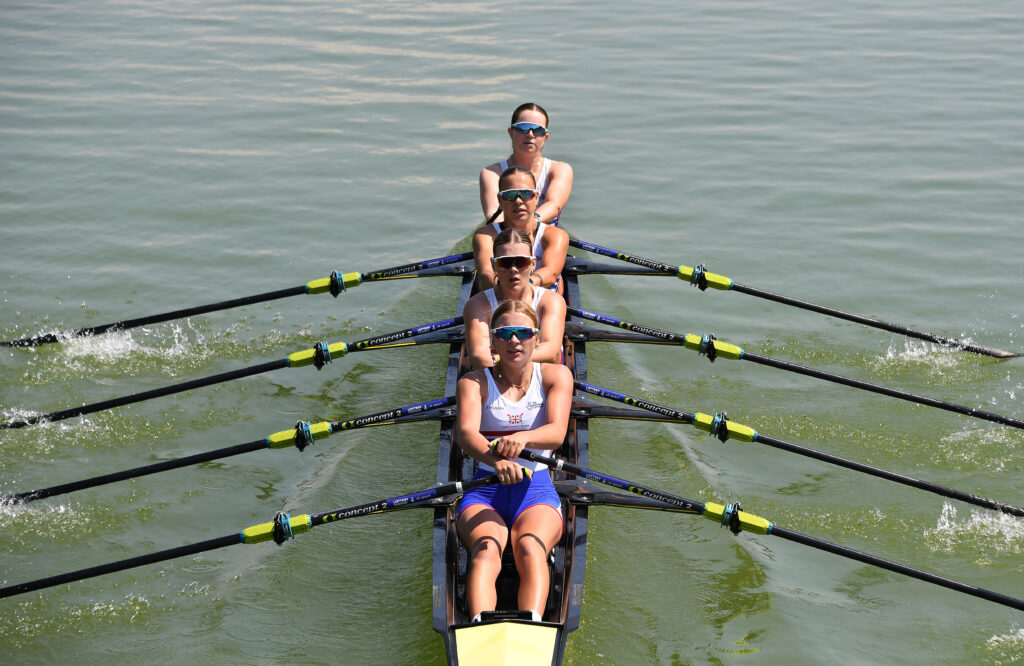
Cardiovascular Endurance
Rowing also demands high cardiovascular endurance to sustain repeated, high-intensity strokes throughout a race. Strong aerobic fitness ensures a steady supply of oxygen to muscles, supporting continuous energy production and delaying fatigue. It also improves recovery between strokes, breathing control, and overall technique. Efficient oxygen transport and endurance training allow rowers to maintain power, resist fatigue, and perform consistently over the full race distance
ODDS & ENDS
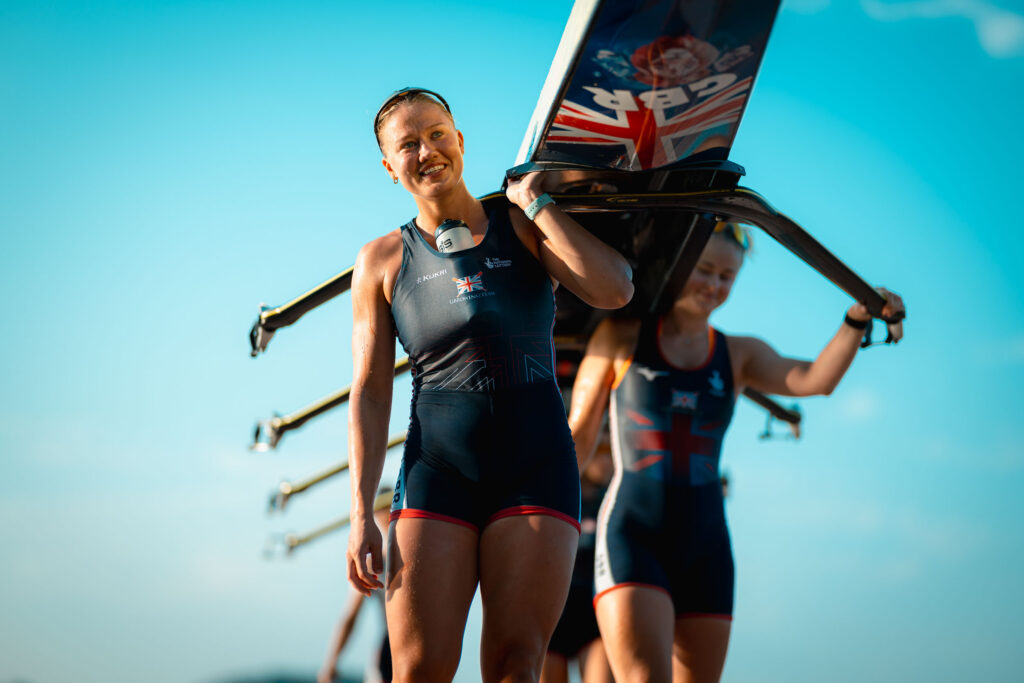
Dominant Nations and Athletes: Dominant nations historically have included Great Britain, the United States of America, Romania, and Germany (incorporating FRG, GDR etc). U.S. rowers have earned 89 rowing medals since the 1900 Olympic Games, the most of any nation. In more recent years (post-2000) however, consistently strong performances have come from New Zealand, Australia, and the Netherlands, as well as Great Britain.
Heading into the 2026 World Rowing Championships, Italy and Great Britain are tied for the all-time most gold medals won with 84, followed by Germany’s 83 gold. In the total all-time medals table, Germany leads with 242 medals (84 gold, 82 silver, 77 bronze), followed by Italy’s 219 (84 gold, 74 silver, 61 bronze) and Great Britain’s 2017 (84 gold, 70 silver, 63 bronze).
Longevity: British rower Sir Steve Redgrave is arguably the world’s most famous rower, winning gold medals at five consecutive Olympic Games (1984–2000). However, Romania’s Elisabeta Lipa is considered by many to be the greatest Olympic rower of all-time. Lipa has collected eight Olympic medals across a 20-year Olympic rowing career, the most of any rower (five gold, two silver, one bronze). Impressively, Lipa’s first medal came at the 1984 Olympic Games and her last in 2004, a mind-boggling 20-year span of greatness.
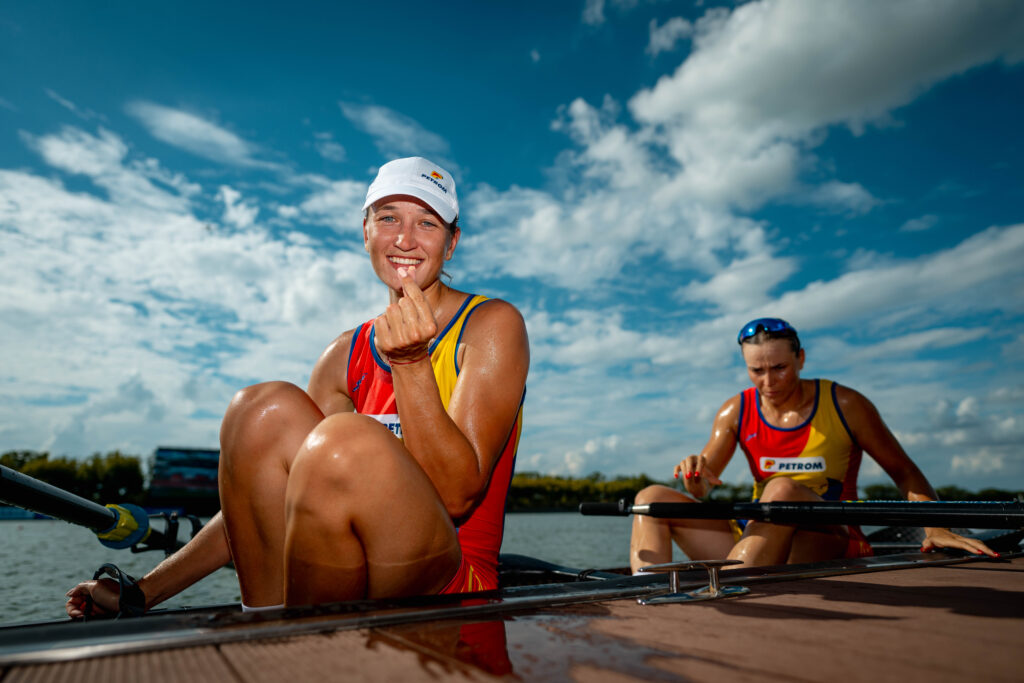
The 2026 World Rowing Championships will feature several notable athletes still writing their Hall of Fame-worthy careers. Among the established stars in Amsterdam are Croatia’s Martin and Valent Sinković, five-time World Champions across three boat classes, and Romania’s Simona Radiș, a multiple World Champion and reigning women’s pair titleholder.