

31 Jul 2025
Young para-rowers making a splash in Poznan
The 2025 World Rowing Under 23 Championships marked the first time in history that an international underage regatta included events for para-rowers – and those competing were enthusiastic about the move.
The championships in Poznan featured PR3 single sculls for men and women, attracting a total of six young para-rowers to compete. Although five of the athletes had previously raced internationally at senior level, this was their first chance to race solely against rowers of their generation.
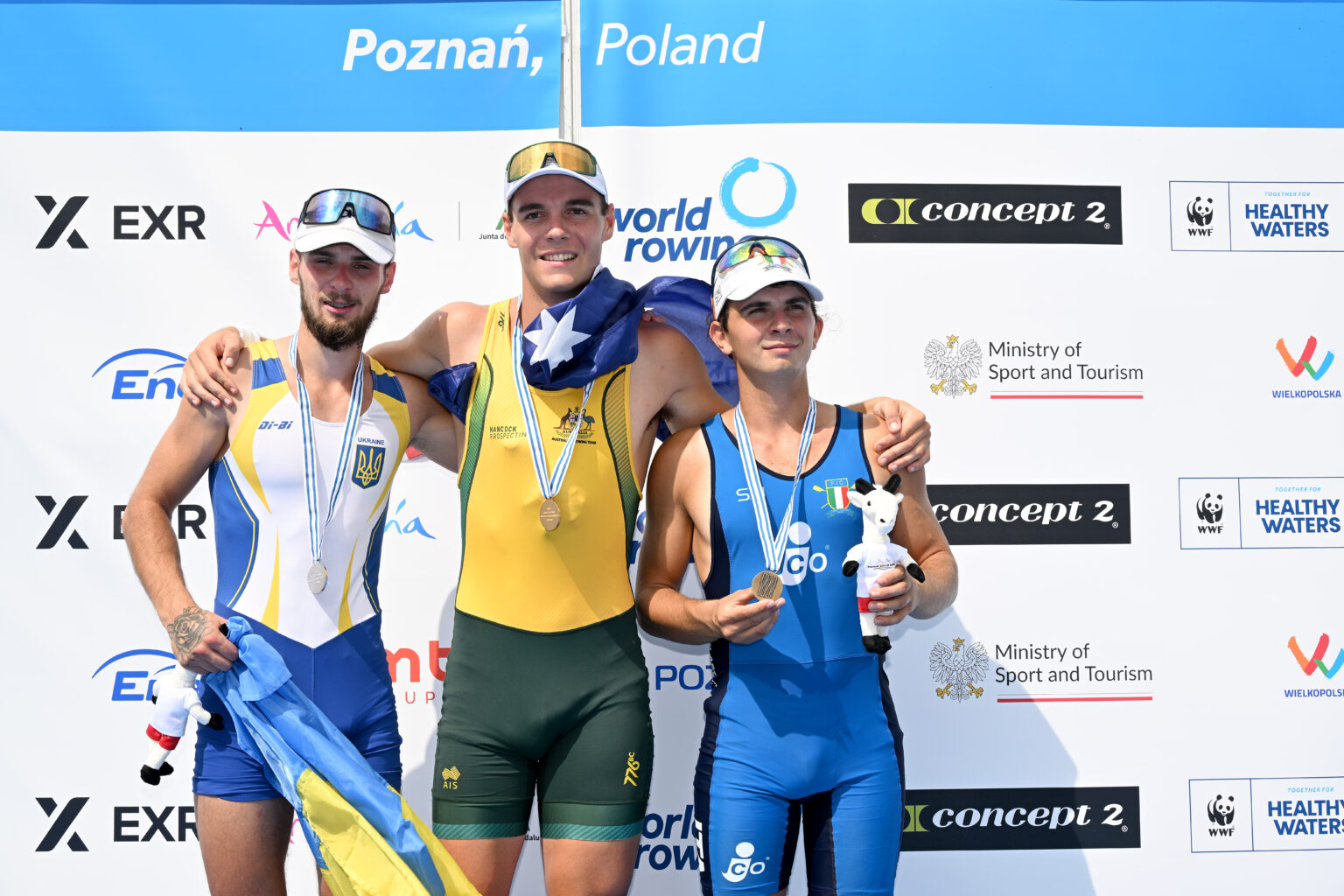
“It’s good to come out here and race an underage event for someone like me who’s 18, it’s nice to race some people your age,” says Australia’s Sam Stunell, who won the PR3 men’s single sculls.
Stunell made his international debut earlier this season, racing in the PR3 mixed double sculls at both the 2025 World Rowing Cups alongside Lisa Greissl – who, at 45 years old, is 27 years his senior. He and Greissl picked up silver medals in Varese and Lucerne, but Stunell says he has enjoyed learning from the different boat class.
“It’s great to come here and work on a different boat and work on some individual stuff that I need to work on, but also to use this regatta to learn and then come back into the double and improve and go even faster,” he says.
“Every competition is very important, but the single is very interesting for me. It’s a good experience,” agrees Dariia Kotyk, the new PR3 under 23 women’s single sculls champion.
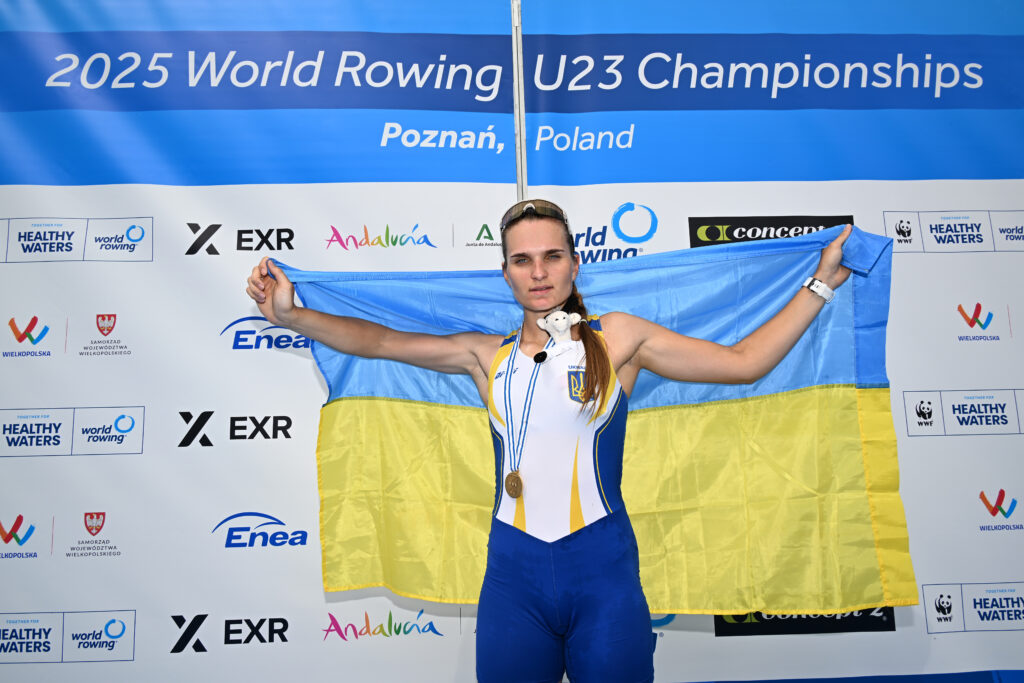
Like Stunell, Kotyk made her debut at senior level, competing first as a 15-year-old in Ukraine’s PR3 mixed coxed four. She has since won several European and one world championship medal, but her gold in Poznan was her first outright victory.
She was racing against Australia’s Isobel Egan, who made her international debut on Lake Malta (and also became the youngest Australian rower to represent her country). Egan is enthusiastic about the opportunity to compete.
“It’s really important to have an opportunity for younger para-rowers to get to show what they’re working on, and that there’s actually a lot of athletes that could be in this event,” she says. “It’s a really good pathway to start getting more people into para-rowing.”
Luca Conti, who won bronze for Italy behind Stunell, is of a similar mindset.
“In the world there aren’t that many para-rowers, but it is important to make the movement even bigger, starting from younger rowers,” he says.
“To be here is very beautiful. I am happy to participate in the single and to represent para-rowing also in the under-23 category.”
Although the debut of para-rowing at under 23 level attracted a relatively small number of competitors, there is undoubtedly scope for growth. Many nations are actively recruiting younger para-rowers, and a pathway which allows international competition against peers at a younger age is appealing.
“It’s great to help build depth in squads around the world. At the moment there’s very limited amount of races to race in, there’s only six seats available at international level, so it’s great to have this event which gives even more opportunities for people to race in para-categories,” argues Stunell.
Egan is keen to see more growth in younger age categories.
“Definitely creating more events like this for juniors, as well as just potentially more advertising around it, so that people who might be able to do para-rowing just start rowing to begin with,” she says, suggesting ways to keep growth going.
The six athletes who competed in Poznan are trailblazers, setting a high standard for others to follow, and have certainly shown the scope for para-rowing to keep developing.