

02 Oct 2025
History-makers Krimi and Dhaouadi hope to open doors for next generation
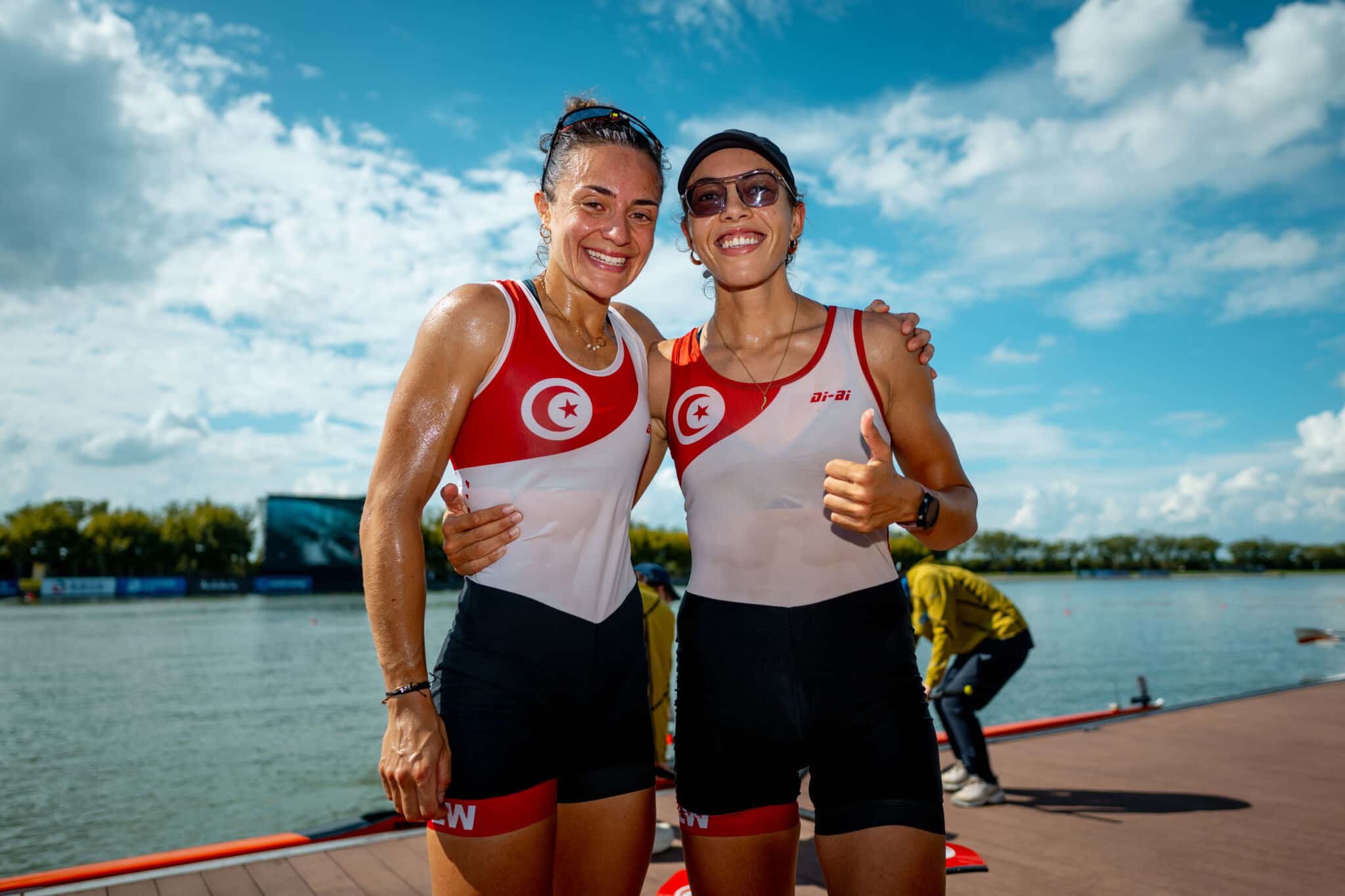
If there is a word to describe Tunisia’s first-ever World Rowing Championships medallists, it would be patience.
Khadija Krimi has been racing internationally for Tunisia since the 2013 World Rowing Under 19 Championships, featuring in a succession of World Rowing Cups, World Rowing Championships and three Olympic Games. In 2022, she teamed up with France-based Selma Dhaouadi for the first time, and together the duo secured the best-ever finish for a Tunisian boat at the Paris 2024 Olympic Games when they finished 11th in the lightweight women’s double sculls.
In Shanghai Krimi and Dhaouadi took silver in the same event, working their way past Peru, who had beaten them in the preliminary race. No Tunisian boat had ever won a medal at the World Rowing Championships before.
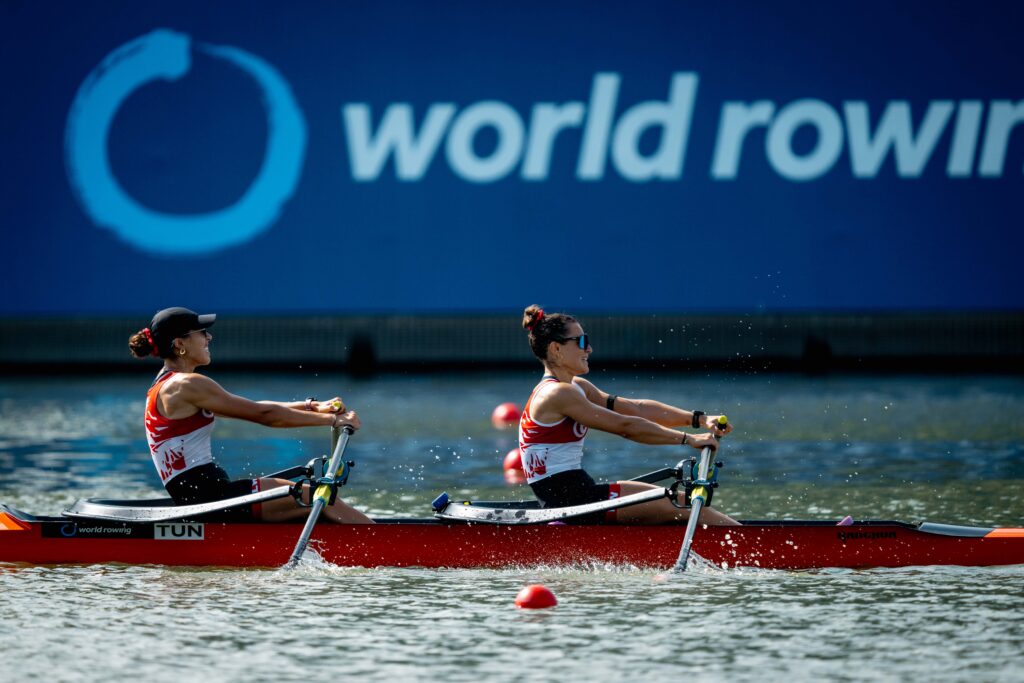
“I think we’re still struggling to process it. We had a plan, we were confident, and we did it. The race was hard, because there was a headwind. Everyone was fighting for the medals, but it was so engaging that it was almost pleasant, in fact, to race, even though it was hard,” says Dhaouadi, looking back the day after the final.
“We did exactly what we wanted to do, we took confidence from that, and we didn’t let up for a single stroke. That’s what allowed us to win the silver medal.”
Patience, and learning from experience, was key, adds Krimi, especially when it came to beating Peru.
“We rowed against them last year and we had a very different strategy to this year. We went out hard in the first 1000m and they tried to catch us in the second 1000m.
“I think they’ve worked on that, and that’s why in the preliminary race they were in front. But we were catching them in the last 500m, we were just a second behind, and we said to ourselves, we need to be alongside them throughout the race because we know our strong point is the last 500m. We were confident that even if it was hard, we’d be able to take the silver medal in the last 500m.”
Dhaouadi says she cried straightaway, but Krimi’s tears took longer to come.
“I’m sure my family and my parents cried, and when I thought about that I started to cry. Going back to the hotel we saw the messages – hundreds of them – that’s when I started crying again,” she says.
It is the messages from Tunisia which clearly move Krimi and Dhaouadi the most. Their achievement has received plenty of coverage in the national media, on social media, and from sports bodies.
“This morning we woke up and became aware that even an Arab commentator who is very well known – Issam Chaouali, he’s a football commentator – shared a post talking about us. That moved me,” says Krimi.
She adds that her friend Habiba Ghribi, a London 2012 Olympic champion in the 3000m steeplechase, was also among the first to post about the medal on Instagram.
Dhaouadi acknowledges that the lightweight women’s double sculls final in Shanghai only featured five crews, but points out that she and Krimi still fought for the medal.
“It’s still something historic. We worked to be here, we worked to try and win the medal. We’re going to go and hunt for the best place possible and not give up. That shows our determination and I think that’s recognised in the country.”
At the age of 30, Krimi says she has no plans of stopping rowing, and her eyes are set firmly on the Los Angeles 2028 and even the Brisbane 2032 Olympic Games.
“Rowing is part of my identity. I breathe rowing, I’m not thinking of stopping,” she says.
“This gives me greater desire to keep rowing, and especially with Selma, even though the lightweight double won’t be in the Olympic Games for LA. But I really want to keep rowing with her, it motivates me,” she says.
“Even though she’s in France, I know there’s someone like me who’ll give everything, who’ll try to train even when there’s not much motivation, there’s no sponsor, it’s basically a personal project. The federation tries to support us with what they have. We’ve even got a physio who works for free, just to help us.”
Facilities are a challenge for Tunisia. The national federation has a good fleet of boats, but little flat water for training on. There is a saltwater lake in the capital, Tunis, but Krimi says it can get wavy and does not necessarily replicate freshwater speed. That does mean that Tunisia is a strong nation in coastal rowing, and is eyeing the introduction of beach sprints in Los Angeles keenly.
“Before there was even beach sprints, we had athletes preparing for them,” laughs Krimi.
However, when pressed as to which discipline she prefers, she goes for classic.
“There’s no luck involved. It’s the person who has worked the most, who’s sweated the most, who’s done the most kilometres, who’ll win. I like the adrenalin of beach sprints, the vibe and the atmosphere. In classic rowing everyone is in their zone, focused, it doesn’t have the same atmosphere. That’s what I like about beach sprints. But the competition where I want to go furthest is classic rowing,” she says.
The double both hope their Shanghai medal will inspire the younger generation to keep working, in the belief that more success will come.
“When you believe it, with hard work it’ll happen. You have to be patient, it won’t happen tomorrow. Rowing is hard, it’s a sport which requires maturity, but you have to stick with it,” concludes Dhaouadi.