


18 Nov 2025
November 2025: Fiona Murtagh
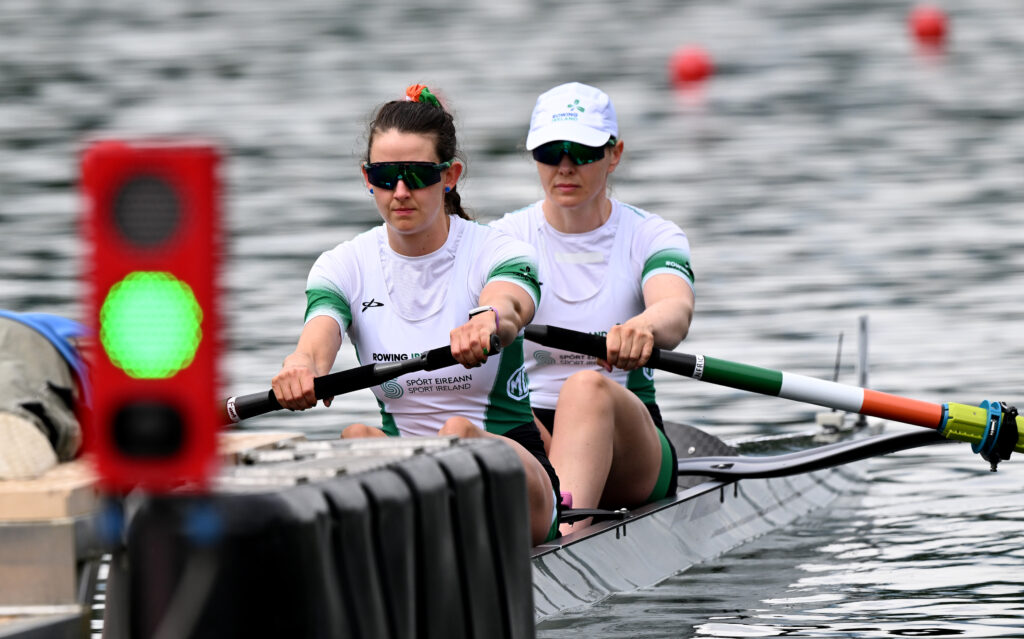
She only stepped into a single scull at the start of last season, but in September Ireland’s Fiona Murtagh claimed the women’s single sculls title at the 2025 World Rowing Championships by 0.03 seconds. She is the Rower of the Month.
How did you get into rowing?
I got into rowing through my twin brother Alan, he started a year before me, on a summer camp in Galway Rowing Club. He used to come home and just be so excited about it. Not that I wasn’t active, but I was kind of the lazy child out of the two of us. It wasn’t until I got into secondary school that the friends I made friends with joined the rowing club as well. My family didn’t think I’d last a session, they thought I’d get my first blister and quit. Here I am, at 30, still at it.
I loved the challenge of it. It was so different. I really wasn’t good at your typical sports. You go thinking that you’re an un-athletic person, but you just haven’t found your sport that you can thrive in. I just loved the group of girls that were down there. We’d just have a craic and enjoy each other’s company; you’d go training to hang out with your friends. The training got done as a consequence. That’s something which has followed me along my entire life.
You broke into the Irish senior squad in 2020 in the women’s four – what was that project, culminating in Olympic bronze, like?
It was such an exciting time. The girls in the four went to 2019 Worlds and just missed out on qualification, they were very unlucky. I was in Galway, my coach was Italian at the time and was friendly with Giuseppe and Antonio [Maurogiovanni]. He was definitely the encouraging factor that pushed me out of the door to go down to Cork and go full-time. I was like ‘If I don’t do this now, if I don’t go all-in, then this opportunity could pass me by and I’ll regret it for the rest of my life’.
I basically just quit my job, upped and moved, went down to Cork and took a risk. Then Covid happened. It was actually a blessing in disguise because it gave me another year of training under my belt. From the get-go I was competitive in it and it brought out this extra competitive athlete in me that I really had forgotten that I had.
The 2020 Europeans were my first international event, and we got bronze, and it was so exciting. We really felt like we were on to something, and it was so competitive to get into that four. It was an incredible historic moment for rowing in Ireland and heavyweight women in Ireland.
After the Paris 2024 Olympic Games, what made you start sculling?
I’ve had snippets of sculling in my life but I either got injured or I just really didn’t enjoy it. We raced a quad as a junior but I did very little sculling to get into that. I was a sweep girl through and through.
Paris was so bitterly disappointing and I wasn’t sure if there was anything left for me in the sport. The team coming back was predominantly scullers. I really did have a moment where I went to Dominic [Casey] and said ‘I don’t know what I’m going to do here. This isn’t my strength’.
He’s very reassuring, but he’s very firm at the same time, and he said ‘you’re just going to have to get on with it. It’s what we do, you’ll be fine’. He foresaw everything that I didn’t see.
It was a good thing in hindsight. I started the season not knowing if I was going to continue. It would have been harder emotionally to go back into sweeping after Paris, so this felt like an entirely fresh slate. Going into something that was completely new that I didn’t have any expectation, there was no pressure, it was just to confidence-build and it didn’t feel like training, it was just to fall back in love with the sport again. My first day out, I only did 4k, and I came straight back in.
I love a project, and once I’m involved in something like that I kind of thrive in those situations. It was always short enough of a session that it made me want to come back. The entire time I was getting training done and it didn’t feel like training.
It was through that that I was able to come to a place where it was something that I wanted to keep doing. I feel like I have so much more to give, but never in a million years did I think that the single was going to be the answer to all of those questions. To think that this time 12 months ago I was genuinely considering retiring, to now feeling like there’s this whole other side to the sport that I’ve never had before: as a senior athlete it’s so rare to say that it feels fresh and new, and to me that’s such a gift.
What have you found hardest about the transition from sweep to sculling?
I remember the very first day back I just had a moment where I just stood beside the pairs, I was instinctively just waiting for Aifric [Keogh] and Giuseppe, and the moment didn’t happen, and I was like ‘Oh my God, I’m on my own!’ That did take a lot of getting used to, having no-one. I’m so used to that collaborative effect of you discuss what you’re going to do and you work on that. That communication is all rowing has been to me.
So to go out there, and I decide everything and if I do it or I don’t do it, that’s totally on me. You’ve got to do the things you don’t want to do, especially when you don’t want to do them. It’s been a massive learning curve in just understanding not only me and how I row and what my strengths are, but leaning into those strengths and understanding what sessions suit me and what I need to work on. It’s been massive, but I’ve enjoyed that challenge and I’ve really thrived in that environment.
What was your mentality like coming into the World Rowing Championships in Shanghai?
It was incredibly calm. I took up journaling in Shanghai which surprised me, because it’s something I’d never done before. The way my mind was, I was very ready for a fight and I was very ready to go wherever I needed to go and put my body under whatever stress it needed to do to achieve a goal. If I could do that I knew I could achieve it.
My thoughts were so calm and very clear throughout the whole regatta. To keep me at that cold, composed, very indifferent space was actually really challenging, and I found that journaling was what was really needed for the longevity of it all. It was helpful to write it all down, and to make sure that every night I came back to that space.
Talk us through the final in Shanghai, where you led out by clear water before Lauren Henry (GBR) came back in the closing 500m?
You envision different scenarios, but the gut feeling for me was that I had to go out hard. Given the heat, by the time people hit the 1500 chances are that positions aren’t going to change all that much. You have to hit it early and then how you deal with the heat and how you deal with the pain is going to get you across the line.
I hit the 500 and could see the group quite clearly. First box ticked. Hit the 1k and nothing’s really changed, still feeling good, everything’s fine, very calm, focusing on front end, keeping it loose, keeping it lively.
Then I hit the 1500 and I was like ‘you’ve got this far, you’ve got to keep going, Fiona’. It really got to that point where the fatigue was enormous. Your mind is sharp but your body’s a whole stroke behind, I could feel that starting to happen. I was like ‘I need the finish line to appear right now’. I caught a bit of a digger in the red buoys and it gave me so much adrenalin that I went bolt up straight for about 20 strokes. I could sense that Lauren knew she was coming really close, it was just a mad scramble at the end.
We crossed the line at exactly the same time and we were so wrecked. I didn’t have the energy to breathe, just completely dead. It took me so long to get to the podium because I couldn’t take a single stroke. It was a completely crazy experience.
What have you done in the month since the world championships?
It’s been cool. I stayed out in Shanghai for an extra week, did a bit of travelling. It was nice to have the time to walk around and see it properly. Then I was straight back into work, and raced the Head of the Charles in Boston. The last time I raced it was about 10 years ago, and I thought it would be so cool to race it in a single.
It was so hard. That’s what’s so cool about the Head of the Charles, it’s so different to the normal regatta season. But it was lovely, there was so much support under every bridge. But very difficult; I completely underestimated how much time you can lose if you don’t take those corners really tight.
Where’s your favourite place to row?
I love Boston if someone else is steering. I’ve always liked Varese, we’ve trained on that lake so many times and when you get it on a good day and it’s not busy, I love that spot.
What’s on the erg playlist?
I am a mixed bag, you will never know what I’m listening to. I could be listening to Metallica but I could also be listening to Taylor Swift. This year it’s been a lot of DoeChii, but to be honest T. Swift and Sabrina Carpenter are my steady state go-tos.
Who has been your inspiration?
My teammates. I cannot understate how influential they’ve been this year and what a concrete pillar of support they’ve been. They’re such an inspiring group of people and they’ve really motivated me through a very difficult patch in the winter to where I am now. To be able to do this alongside them and to watch them grow and them achieve everything, and having them support me in my achievements has been really cool and really special.
What’s the best piece of advice anyone’s ever given you?
It’s something that I’ve learned this year through the single, is don’t let yourself be your limiting factor. So many people won’t apply for that job or won’t do that degree because they’re like ‘I won’t be good at it’. I am like that. It wasn’t until I actually gave sculling a proper chance that I’ve been able to find success and enjoyment out of it.