

28 Nov 2025
The Beach Sprint Originals: vibes and growth go hand-in-hand
In 2019, around 50 athletes gathered in Shenzhen, China, for the first-ever World Rowing Beach Sprint Finals. They competed across four events; even the preliminary races were run side-by-side, and the longest day of racing was two and a half hours.
Six years on, the number of athletes racing at the 2025 World Rowing Beach Sprint Finals has ballooned to over 300 from 52 nations, there were six hours of racing on the longest day, and everyone is eyeing up the chance to be the first Olympic medallists at the Los Angeles 2028 Olympic Games.
The discipline has become a phenomenon attracting Olympic champions, coastal endurance rowers and those looking to revitalise their rowing careers alike. But those who have been part of the journey since 2019 say that at its core, beach sprints remains unique in its draw of being friendly, fun and challenging all at once.
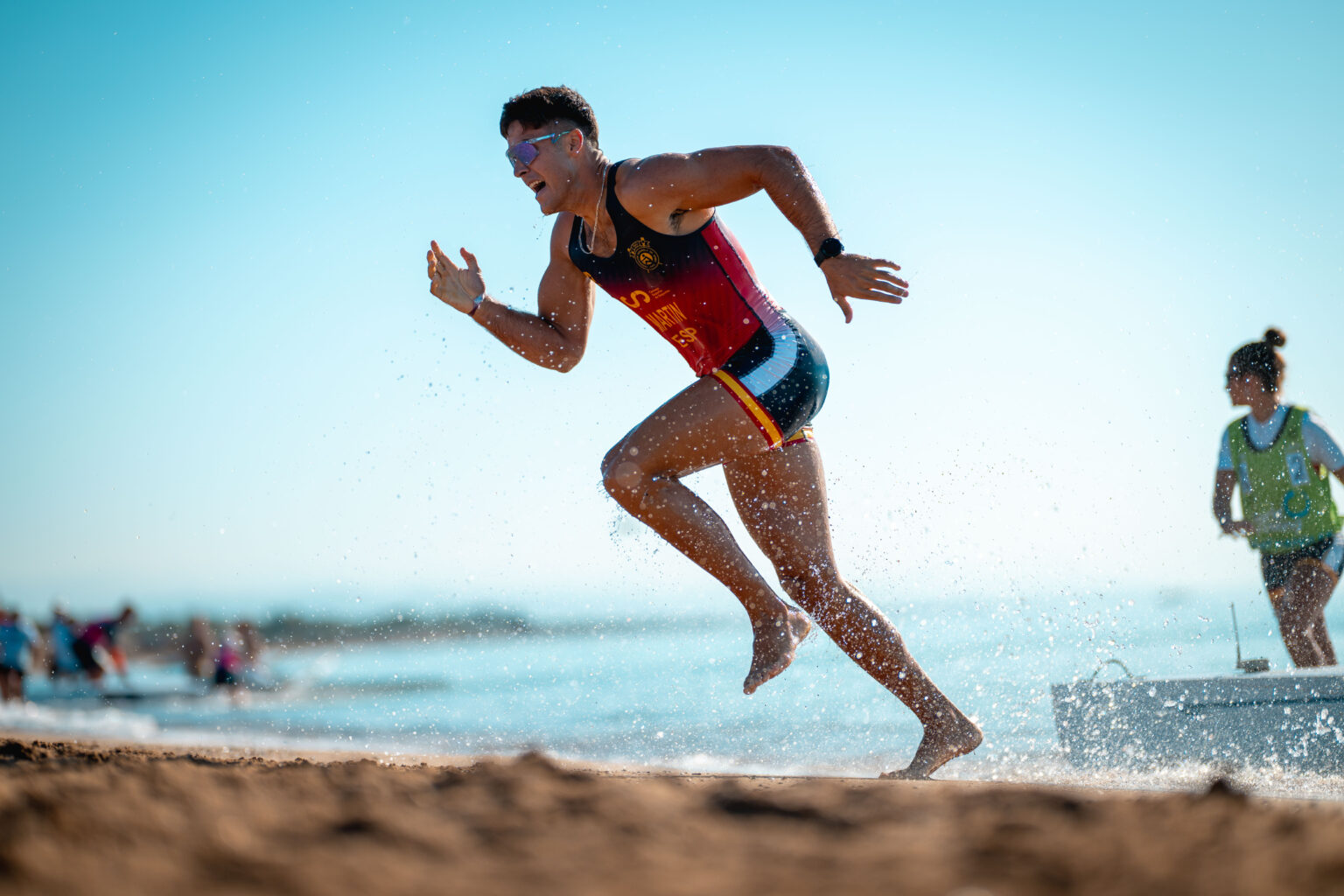
Seven rowers competing in Antalya, Türkiye this November were also there in Shenzhen in 2019; four of them have raced at every edition of the World Rowing Beach Sprint Finals. Ander Martin of Spain was just 19 when he raced the coastal mixed double sculls in Shenzhen – he is now a four-time beach sprint medallist after silver in the solo in Antalya.
David Hussey has been a stalwart in the Irish team since 2019, when he raced the men’s solo; in Antalya he coxed a young development quad.
Canadians Aubrey Oldham and Sarah Pidgen raced the mixed double and women’s solo, respectively, in 2019, and were back in the same boat classes in Antalya, where both made the last 16. In the interim, they formed a successful mixed doubles partnership and were fourth in 2022.
“I’ve been in flat water rowing since I was like 12 years old. When I came across coastal I was kind of at the point where I was deciding whether to stick with the sport or not. Coastal kind of breathed some new life into rowing for me, and made it fun and interesting again,” Pidgen says, of her decision to get into the sport and then stick with it.
Three other rowers, all medallists in 2019, have missed some editions of the competition, but have stayed in touch with the sport and competed in Antalya. Adrian Miramon of Spain won gold in the coastal men’s solo and silver in the coastal mixed quadruple sculls in Shenhzen. In Antalya, he reached the quarterfinals in the coastal mixed double sculls.
Zoi Fitsiou of Greece won bronze in both 2019 and 2021 in the coastal women’s solo before focusing on her flatwater career, which led to Olympic bronze in Paris last year. With lightweight rowing out of the Olympics, Fitsiou is now dipping her toes back into sea water. And Dutchwoman Janneke van der Meulen picked up bronze in the mixed double in 2019; after missing the 2021 edition of the competition, she has come back every year and won women’s solo gold in 2023.
Van der Meulen was disappointed with her performance in Antalya, but while she said her level had not been up to scratch, “the sport is developing the other way around”.
All seven of the 2019 originals are effusive about the growth of beach sprints in the past six years.
“The competition’s more aggressive, the competitors have a lot of experience because they raced all these years. The level is higher, of course, and that’s very good,” Fitsiou says.
“Every year it’s amazing to see how much more depth there is, how competitive it is. It’s so tough just to make the final eight now,” Pidgen agrees. “There’s so many more countries that you don’t always see in flat water rowing, so that’s really great.”
While there is agreement that standards have risen, there is also agreement that this has not come at the expense of beach sprints’ unique vibe and atmosphere.
“The biggest thing here is that we’ve retained the atmosphere of friendship and togetherness,” Hussey thinks.
“It’s fantastic to see the new nations coming here today, and the more established nations who know what they’re doing are very willing to help out with boat handlers or advice. That spirit of friendship is very important.”
Martin says it is up to the original competitors to keep the vibe alive.
“Obviously now it’s an Olympic sport, obviously now it will be more serious, but at the bottom the people that are here from the very beginning, we are responsible to keep that vibe. That’s the spirit and the good vibe that makes beach sprints different,” he says.
Enjoyment is key, says van der Meulen.
“I’m happy to see more and more rowers entering the sport, trying it. What I like the most is that they’re enjoying it very very very much. It’s sports but it’s also a little bit playing. It’s together with the water, with nature, with the waves. That’s really nice to see.”
With their experience behind them, the originals are confident that beach sprints will only continue to grow in size and popularity into the Los Angeles Olympiad.
“I cannot compliment the hosts enough on their presentation of this tournament,” Hussey says, of Antalya. “The standard is phenomenal, the course is totally super-fair, and I think going forward this is the benchmark and this is what we’ll have for the next four years. The sport is going to grow exponentially.”
Oldham says rowing fans are bound to find beach sprints appealing.
“It’s fantastic. If people back home could see where it is, I think they’d all just fall in love with it – just the excitement, the energy, the pain of it, it’s something else and it’s so much fun.”
Whether or not any of the seven will be competing in Los Angeles remains to be seen; Pidgen admits: “I would love to keep going until the Olympics and see what happens.”
The last word goes to Miramon, who predicts: “I think in LA, beach sprints is the best sport.”
Few on the Antalya beach would argue with him.