


31 Mar 2026
Row2Grow: Western University Rowers Turn a World Record into Collective Action
Kya Mason-Wetherill was working on a project about collective action when she started wondering what her rowing team could do for their community. The answer, it turned out, was to row 1,000,000 metres without stopping.
The idea had been quietly forming since Mason-Wetherill’s second year, when a class on climate change challenged students to think about how individuals and communities could make a real difference. She started connecting the dots: rowing was something she and her teammates did every day, something they were good at, and Western University’s profile meant they had a platform to make noise with it. She brought the idea to head coach Matt Waddell, who pulled up the Concept2 world records website on the spot.
“He was like, no small team of women has ever even attempted this record,” says Mason-Wetherill. “So he said, if you finish it, you would have the record.”
That was enough. By that afternoon, she had a name, a logo and a message in the team group chat. She was not expecting what came back.
“I was like, does anybody else have causes they’re passionate about? What would you guys want to row for?” she says. “And I was not expecting the amount of enthusiasm that I got. It got to the point where I had to decide who was going to be able to do it, because we had so much interest. How cool is that?”
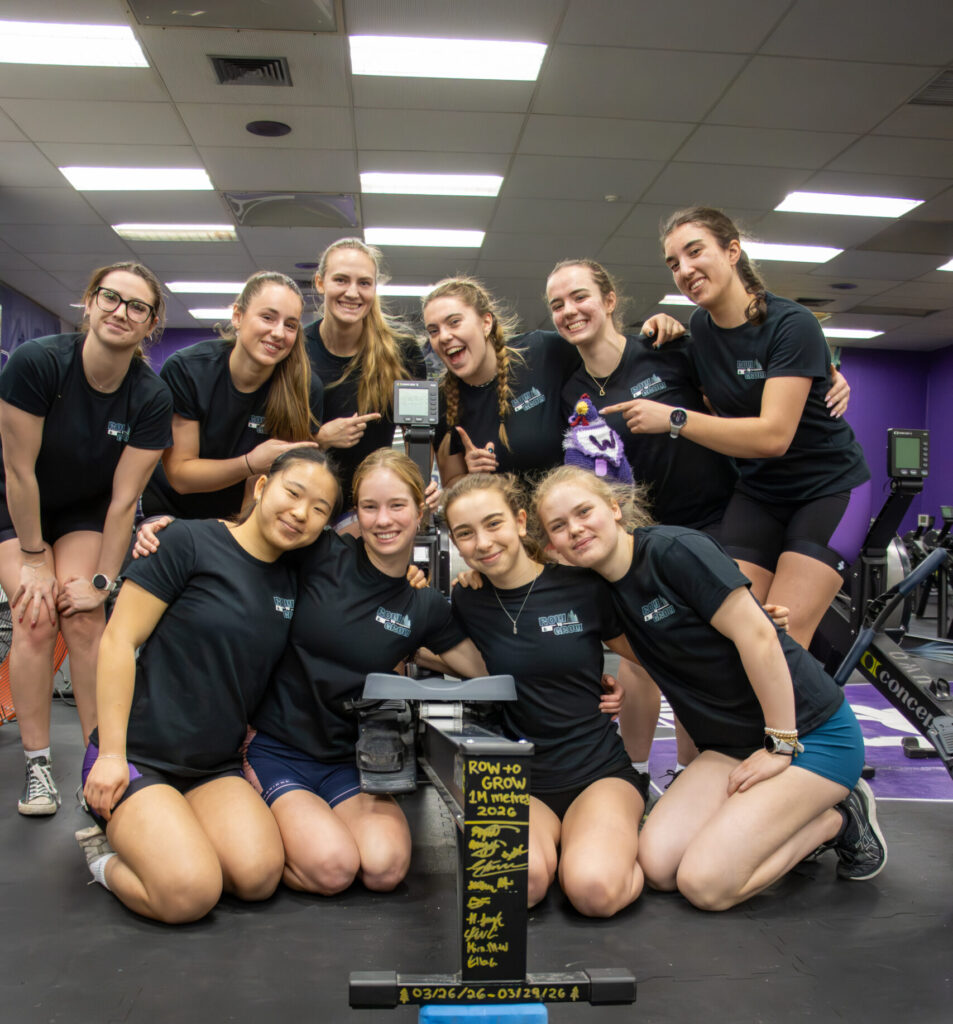
That question became Row2Grow, an indoor rowing challenge completed by 10 members of the Western University women’s rowing team this past weekend. The team set out to become the first group of 10 women to row 1,000,000 metres on a single rowing ergometer (indoor rowing machine) without stopping. By the time they finished, they had done exactly that, and picked up a second Concept2 world record (pending verification) for the longest continuous row by a small team of women along the way. The previous record stood at 50 hours, and theirs took 72.
For context, one million metres is 1,000 kilometres, roughly the distance from Toronto to New York City, or from London (UK) to Paris.
It is exactly the kind of ambitious, community-driven project you might expect from this programme. Western University’s rowing team, based in London, Ontario, is one of the most decorated in Canada. For decades the programme shared its training waters with the Canadian women’s national team, which was based in London until 2018, a proximity that drew generations of elite women’s rowers to Western from across the country.
The connection to the national programme has never fully faded: since 1984, at least one member of the Canadian Olympic women’s rowing team has been a Western alumna. Over time, that tradition has built something harder to measure but just as real, a culture of excellence across both the men’s and women’s programmes, and a tight-knit alumni community with a genuine desire to give back.
Row2Grow is the latest expression of that culture.
The women worked in pairs, each duo taking on a two-hour block and rotating every 20 minutes before handing off to the next pair. Non-rowing teammates remained on site around the clock, running a support operation that covered food, water refills, dishes and at least one late-night cake delivery. A section of the erg room study space served as a communal sleeping area for the duration.
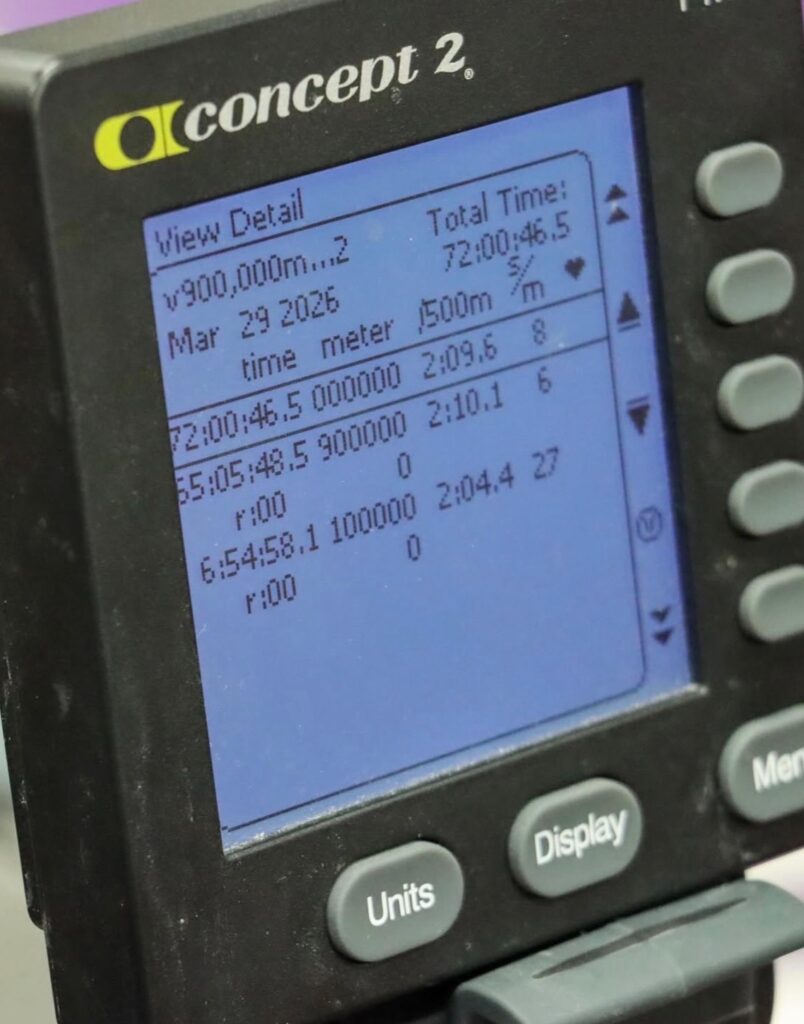
Logistically, the team had to ensure the indoor rowing machine would last the full million metres, so they installed a fresh set of batteries before starting. The machine can only handle six-digit inputs, so the team’s solution was to programme a workout with two intervals: the first of 900,000 metres, then 100,000 metres, with no rest between, allowing the machine to log the total as 1,000,000 metres at the end.
The overnight hours were the hardest. Athletes getting up for a 2 a.m. shift found that it didn’t matter how fit they were, their bodies resisted training at those hours.
“Physiologically your body is like, what are you doing,” says Mason-Wetherill. “You just feel kind of numb. It’s kind of hard to explain.”
When asked if they ever doubted their ability to finish, Mason-Wetherill said there were moments after the first 20 hours where the remaining distance felt daunting, but the belief was always there.
“We’re all at different speeds and fitness levels, we have lightweights and openweights, it’s a mix,” she says. “But we trust that every single person is going to get on the erg and put their best foot forward. You don’t take on an undertaking like this without believing in each other.”
Donations from the challenge are being directed to four charities: Tree Canada, the Alzheimer Society Canada, the London and Middlesex Humane Society and Anova Women’s Shelter in London, Ontario. The causes were chosen through the group chat, each teammate naming what mattered most to them.
The support throughout the weekend extended well beyond the team itself. Coaches and family members kept the food coming, teammates who were not rowing supported throughout, and the men’s team stopped by between sessions to cheer them on.
“We’ve just had a lot of support and we’re really grateful,” says Mason-Wetherill. “We have girls here who aren’t rowing who have stayed around the clock to help with whatever. You couldn’t do it without that.”
Mason-Wetherill notes that the scale of what the team was attempting is not always immediately obvious to people outside the rowing world.
“I don’t think anybody who’s not a rower can really fathom what this is,” she says. “But they’re starting to kind of realise, because some of them have been like, we’re following along, this is crazy.”
She hopes the project inspires other teams and communities to think creatively about what they can do with the platforms and skills they already have.
“It honestly just takes one or two people to open your mind to doing something really big and cool,” she says. “You’ll be so surprised at how many people rally around a good cause.”
Donations remain open at row2grow.ca.