


29 Apr 2026
Boat Race challenge sparks adaptive rowing
Two days before the universities of Oxford and Cambridge took to the Thames for the annual Boat Race, another group of athletes tackled the challenging 6.8 kilometre course on the tidal Thames.
Racing from Putney to Mortlake, the group of adaptive crews from the UK and France was led up the river by arms-only rower Becky Coleman, rowing in a coxed double scull with her coach from Fulham Reach Boat Club, Denise Martin van Meurs.
Coleman completed the course in 33 minutes, and is believed to be the first arms-only rower to do so.
But her challenge is only the start of what Fulham Reach, the club which won World Rowing’s Rowing Programme of the Year award in 2024, is hoping to achieve with adaptive rowing. Few athletes with disabilities have historically been able to access the tidal Thames: most clubs boat from steep, slippery banks or steps rather than pontoons, and the water is fast, cold and challenging.
Fulham Reach want to change that. With recent funding from the UK’s National Lottery Community Fund, the club hired Martin van Meurs to lead its drive into adaptive rowing. After a successful trial of a visually impaired project last year, they are now introducing learn to row courses for visually impaired and physically impaired people, who will hopefully be following in Coleman’s wake.
Coleman found the club by chance, passing it on the towpath one day. She is a former international wheelchair tennis player who developed sepsis two years ago. Spinal complications means she can no longer play tennis, but she was keen on getting into a new sport. Fulham Reach already had the equipment she needed – as well as having a ramp and a pontoon to access the river – and were able to support her.
“It’s pretty much within reason a full body workout, and also cardio and endurance which is what I needed to build up,” Coleman explains.
She says the cognitive impact of the sepsis has made learning the rhythm of rowing quite hard.
“It’s something that I’ll have a lingering challenge with probably for the rest of my life. If I’m tired a little bit it can be a bit more tricky to get the timings, but obviously now as I’m so much better as well it feels like a little bit more of a muscle memory,” she adds.
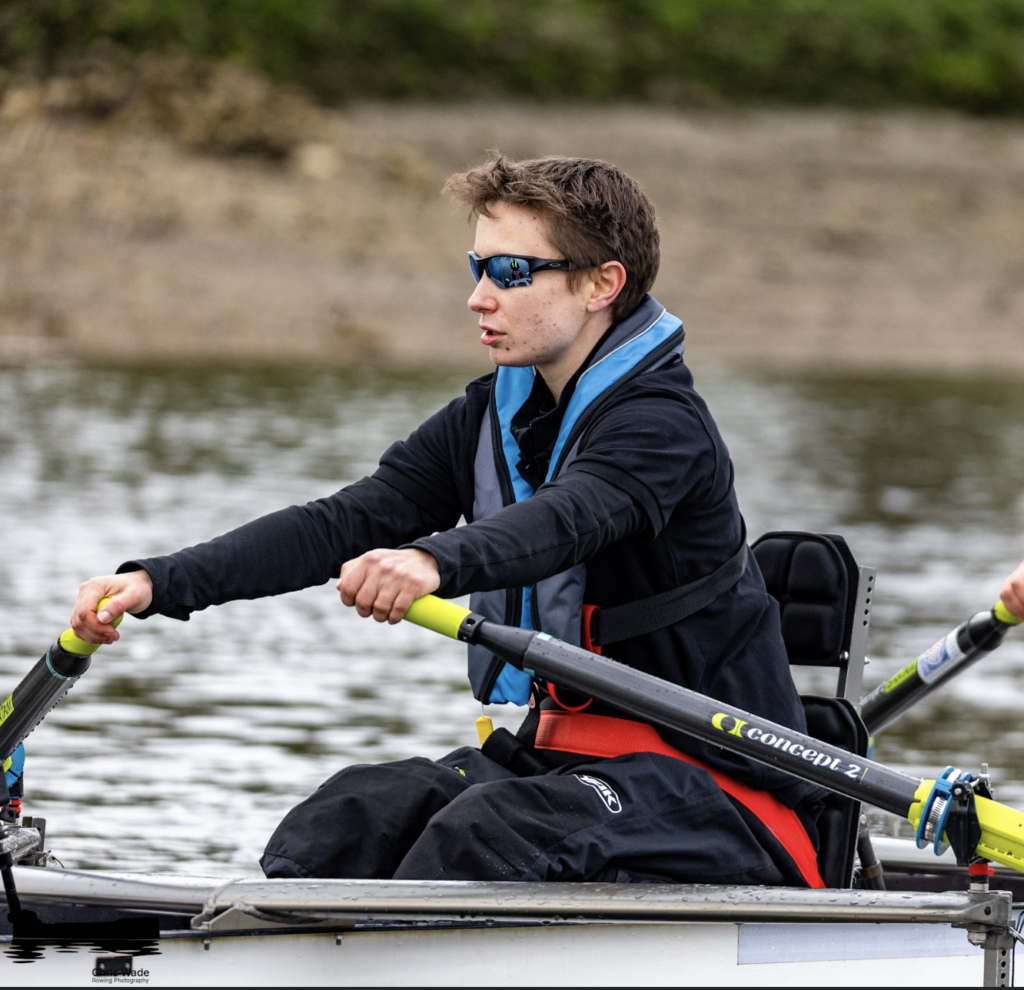
The idea of the Boat Race challenge was dreamed up during a video session in 2025, and Coleman threw herself into training. The process was hampered by the river being on ‘red flag’ conditions for much of January and February, after flooding upstream, leading to a lot of erg training – which Coleman finds challenging due to her spinal injury.
“Although we could get the mileage and the distance it got to the point where we were doing the challenge and I hadn’t been on the water for about six weeks,” she explains.
Luckily, the river settled down enough for the event to take place, and together with a group of adaptive rowers from France, Coleman completed the course.
“We’d like to do this event again, inviting a bunch of other people from accessible clubs,” Martin van Meurs says, looking at the success of the challenge.
Crucially, the media attention has meant that others have come to Fulham Reach asking to join.
“There’s so much demand for it and there just hasn’t been the availability for it,” says Martin van Meurs. “We’re in the centre of London where there’s so many people who want to get involved in sport; I’m actually amazed by the sheer number of people who want to get involved already.”
The programme is not just about rowing, however. It is also about providing a community and an activity for a group who can often feel isolated from society and who can struggle with employment; Fulham Reach has already been running coffee mornings for its existing adaptive rowers to meet and chat.
“It’s quite important. The social connection is probably the key thing we’re trying to achieve,” says Coleman.
There is also an environmental aspect, where people with disabilities and others in the local community can get involved by helping to test water quality, pick litter, or build a garden at the club, without necessarily getting on the water.
Fulham Reach wants to triple the number of people coming through the club registered as adaptive, and wants to create a group of adaptive rowers regularly getting out on to the Thames in London. The National Lottery grant runs for three years, giving the club plenty of time to build the programme.
As for Coleman, she is keen to repeat the Boat Race course, and try and break 30 minutes next time.
“It was brilliant, I really enjoyed it,” she says.