


18 Jun 2026
China Set to Challenge Rowing’s World Order
With 16 crews entered, China was the biggest nation competing at the 2026 World Rowing Cup II in Plovdiv, Bulgaria. And they went away with five medals after a strong showing across boat classes.
None of this is a coincidence. While the overall entry for Plovdiv may have been fairly small, Chinese boats were fast against crews with international pedigree, and will be hoping for another good regatta at the final World Rowing Cup of the season in Lucerne.
An International Coaching Setup
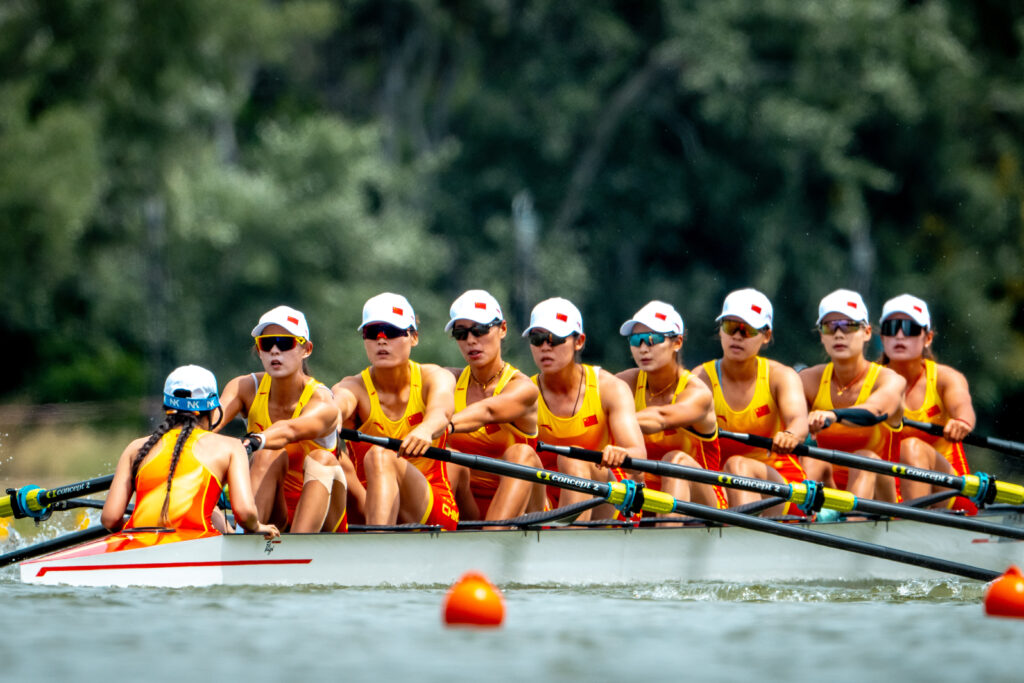
The Chinese team is currently led by New Zealander Ian Wright, who has previously coached Switzerland and Australia to Olympic and world success. Wright has been China’s head coach for about a year and has recruited several more foreigners to join his coaching team.
One of those is Canadian Jeremy Ivey, previously coach to Canada’s lightweight women’s double sculls crew for the Paris 2024 Olympic Games. Since January, Ivey has been the lead for women’s sculling in China.
“It’s been great. It’s a lot different culturally, but I’ve been really enjoying my time and working with the athletes has been fantastic. It’s been really great for me so far,” Ivey says.
Breaking Through the Language Barrier
The four foreign lead coaches each have full-time translators to support their work, and Ivey says they are almost assistant coaches in how they work.
“They’re great because they’re translating, but they get to know the athletes well as we do,” Ivey says, admitting he was unsure as to how the arrangement would work when he was coming into the job.
“As a coach there’s sports psychology, there’s all these levels that go into being a good high-performance coach, and I just wondered ‘am I really going to be able to connect with them?’ But I really do, with the assistance of these translators, they’re great.”
Ivey, Wright, and the other coaches are also trying to learn some Chinese, and the athletes are picking up a little English in the process.
“There are some key words and phrases in relation to rowing that we say, and the athletes all laugh. We do our best,” he adds.
Why the Squad Looks Different
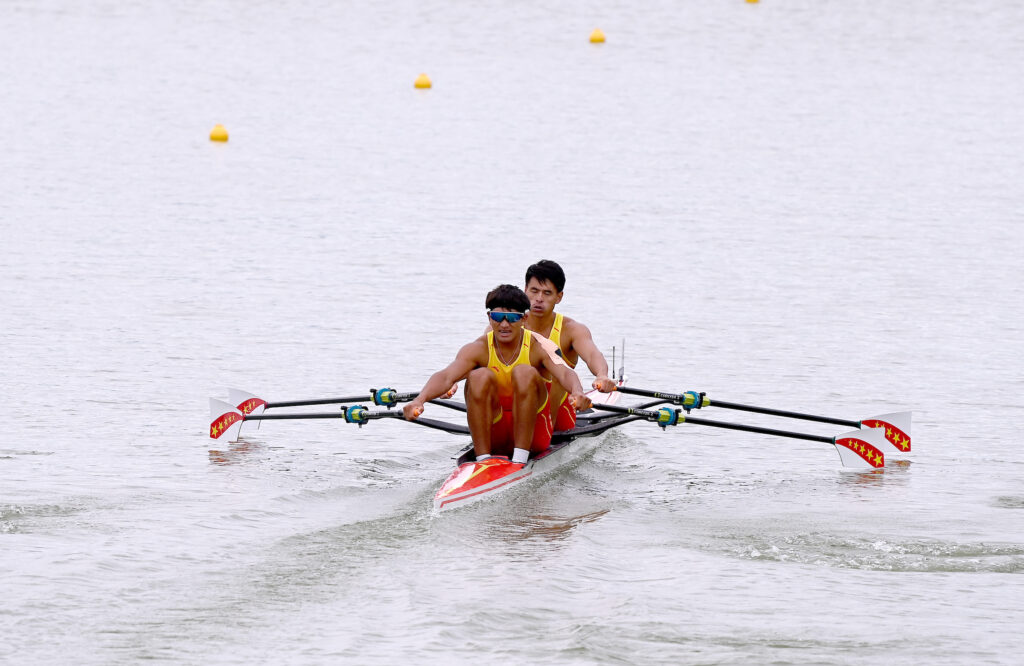
The crews racing in Europe this season look quite different to those which represented China at their home World Rowing Championships in Shanghai. This, explains Ivey, is largely related to the fact that China’s National Games – a four-yearly multisport event – took place after the world championships. Athletes compete for their provinces at the National Games and focus on their event ahead of the world championships.
As a result, all the crews racing in Shanghai, including women’s double sculls silver medallists Chen Yunxia and Zhang Ling, were from the Shanghai province. Chen and Zhang went on to win the National Games.
“It can be a door to the national team, but it’s just a prestigious thing. It’s a great opportunity for a Chinese athlete to do. To win any event at National Games is a really big deal for them,” Ivey says.
New Faces in the Boat
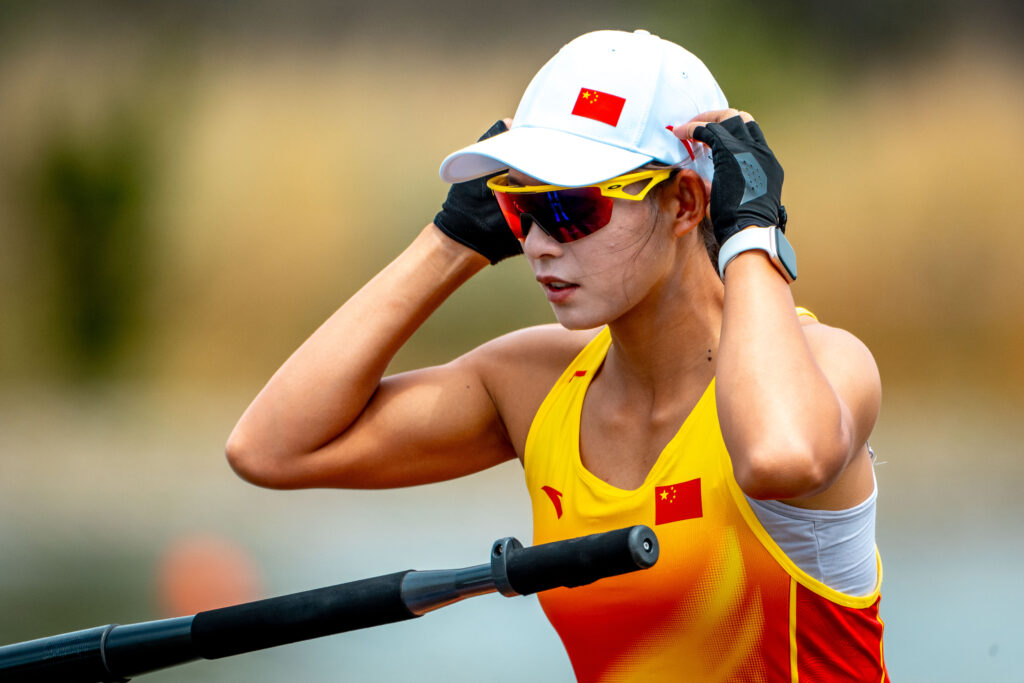
Many of the older, established team members are now taking a post-Olympics, post-National Games break, opening the door for new athletes. Around half the team racing in Plovdiv were making their World Rowing Cup debuts.
“Sometimes there’s an advantage to them racing so freely, because they don’t necessarily have the baggage of understanding the weight of it, so they come in and have some enjoyment. Even for myself, coaching for so many years, it’s kind of fun to see it through the eyes of someone who’s a little bit less experienced,” Ivey says.
He adds that Wright is keen to develop as many athletes as possible, which is why there were two Chinese entries in some events, such as the men’s four.
“Next year we’re going to try and focus on qualifying as many boats as we can for the Olympic Games,” Ivey says. “China has had a really good history in some specific boat classes, for example the women’s quad, women’s sculling, but in some other events not so much representation.”
The team are excited by the men’s four in particular; the top boat in Plovdiv, which won gold, are all under 23.
“Those guys are really young, and they’re just going to gain more and more experience. We don’t really see the ceiling for how good they’re going to be yet,” says Ivey.
A Sisterhood on the Water
Ivey praises the culture which is behind China’s crews, describing the women’s squad as a “sisterhood” where the older athletes look out for the younger ones – for example, in the women’s double, where teenager Zhang Xinyu is joined by two-time Olympian Shen Shuangmei. Ivey says Shen has spent a lot of time helping Zhang develop, and that is clearly paying off.
Looking to LA28
China’s progress is backed by extensive resources and quality training facilities across the provinces, helping develop a deep pool of recruited athletes. Ivey notes that a lack of English proficiency hinders Chinese rowers from tapping into the US university scene, which would broaden their horizons beyond the National Games.
But he is enthusiastic about the prospects in store for China in the coming years, with that clear development goal likely leading to more fast boats in the run-up to Los Angeles.