


19 Jun 2026
The Patron of Plovdiv: Ivan Popov's Six Decades in the Boat
From the tribunes beside the finish tower, Ivan Popov watched something he spent more than half his life building. Below him, crews were chasing personal bests on a 2,000-metre course that athletes regularly call one of the fastest pieces of water in the world. Around him, a city with roughly 8,000 years of history behind it — among the oldest continuously inhabited settlements in Europe — had, for three days, again turned its attention to rowing.
Now in his mid-70s, Popov is still racing himself — he competed at the World Masters Championships as recently as last year, and he’s still out on the water even if not training as hard as he once did. But it’s what he’s built off the water that has made him a quietly singular figure in the sport: the driving force behind Plovdiv’s emergence as one of international rowing’s most reliable hosts, with 14 World Rowing and European Rowing events delivered since the city’s return to the international stage in 2011.
We sat down with him on the second day of racing at this year’s World Rowing Cup II to talk about where it all started, what it actually takes to keep an event like this running for nearly three decades, and why — six decades after he first picked up an oar — he’s still not finished.
A Quad of Strangers, and a Coach Who Saw Champions
Popov’s rowing story didn’t begin with ambition. It began with two brothers — the Cherpokov brothers, both coaches — who turned up at his school looking for recruits.
“They came to my school and invited me to try rowing,” Popov recalls. “I went along and found three other boys my age I’d never met. The four of us were put in a quad together for our very first attempt.”
What happened next has stayed with him for over fifty years. After the very first stroke the four boys took together, their coach stopped the boat and told them flatly: “You are the new champions of Bulgaria.”
“I had no idea what I was doing. None of us did. We didn’t even know each other,” Popov says. “But he really knew how to build champions, and it starts with the head and the heart. That was my very first impression of rowing.”
It’s a kind of coaching instinct, he adds, that’s become rare today — the ability to spot potential in four strangers and convince them of it before they’d even learned to feather a blade.
The promise turned out to be more than a pep talk. Popov went on to represent Bulgaria in the Men’s Eight at the first-ever World Rowing Junior Championships, in Ioannina, Greece, in 1970, reaching the A Final. Germany won that race comfortably. “The Germans were simply monsters in rowing at that time,” he says, without bitterness — just the respect of someone who was there.
Building a Course, Holding a Line
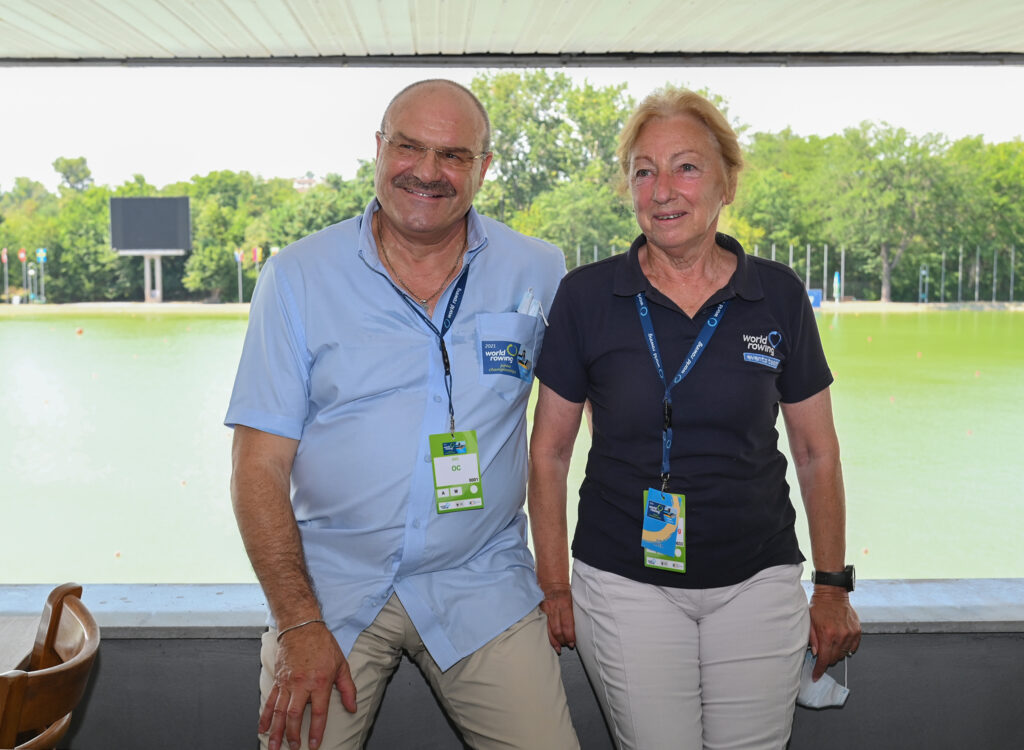
Decades later, rowing pulled Popov back — this time from the organiser’s chair. The catalyst was Svetla Otzetova, the Olympic champion-turned-architect whose name now sits behind some of the sport’s most respected venues. (Otzetova won Olympic gold in the women’s double sculls at the 1976 Montreal Games, the first Olympics to include women’s rowing — and went on to serve as chief consultant on the design of the very course Popov now oversees.)
“She was the one who convinced me to begin organising the biggest rowing events possible, back in 1999,” Popov says. “From the very first moment, I fell in love with it, and that flame has never gone out.”
That first regatta — the 1999 World Rowing Junior Championships — almost didn’t happen at all. NATO’s bombing campaign in neighbouring Serbia was underway, and World Rowing (then FISA) was seriously weighing whether to move the championships elsewhere, or postpone them, for the safety of the athletes.
Popov had already convinced Plovdiv’s municipality to commit serious money to building the rowing channel. He wasn’t willing to watch that investment evaporate. “I pushed back hard,” he says.
FISA’s then-Executive Director, Matt Smith, flew to Plovdiv to assess the situation in person. What he found convinced him to call the FISA President’s office directly: “Everything is fine here. Bulgaria and Serbia share a border, but Plovdiv is calm and the venue is ideal for hosting a major regatta. There’s no problem. We can go ahead,” Popov recalls.
“That was the biggest obstacle — and perhaps the biggest achievement,” Popov reflects. “The decision to hold firm, not to postpone, was made from the heart.”
The regatta that followed vindicated every bit of that conviction. Conditions were fast, it was August, and junior rowers from across the world were posting personal bests at a rate that made people suspicious of the course itself. “The times were so quick that athletes actually requested a professional surveyor come and verify that the course was truly 2,000 metres,” Popov says, “because they couldn’t believe the results.” FISA later published a glowing account of the event. “I was almost embarrassed by how good the compliments were,” he admits. “I was really overcome with emotion.”
From a Kidney-Shaped Lake to a World-Class Canal
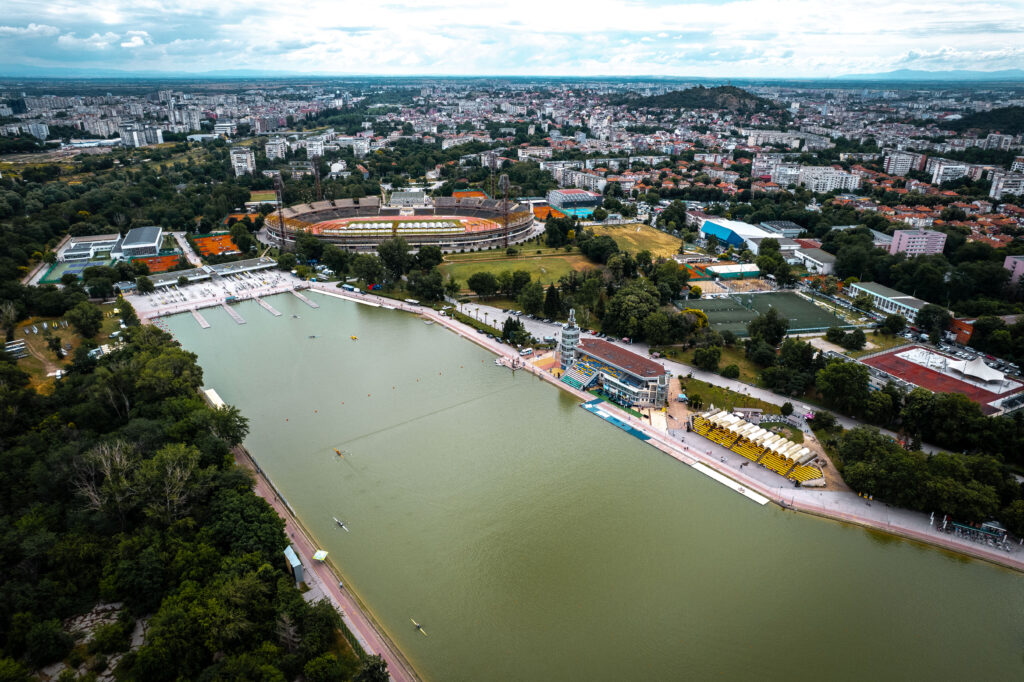
The venue Popov describes with such pride wasn’t always the sweeping 2,300-metre canal that today hosts World Rowing Cups and European Championships. It started life as a small, kidney-shaped lake just 1,000 metres long. “We decided to demolish that and build what you see now,” he says — a reconstruction completed in 1979.
He’s noticed a pattern in the venue’s history since: something significant seems to happen roughly every 20 years. First, the original lake, then the 1979 build, then a major reconstruction roughly two decades later. Now Popov has his sights set on the next chapter — a second, warm-up channel alongside the main course, an idea he’s carried for eighteen years.
It’s not just for elite competition. “For 300 to 340 days a year, when there are no major regattas, the venue should be a beautiful public space,” he says, “somewhere for families, children, and everyone to enjoy.” If the 20-year pattern holds, he hopes to see it built within the next two years.
The Team That Stayed
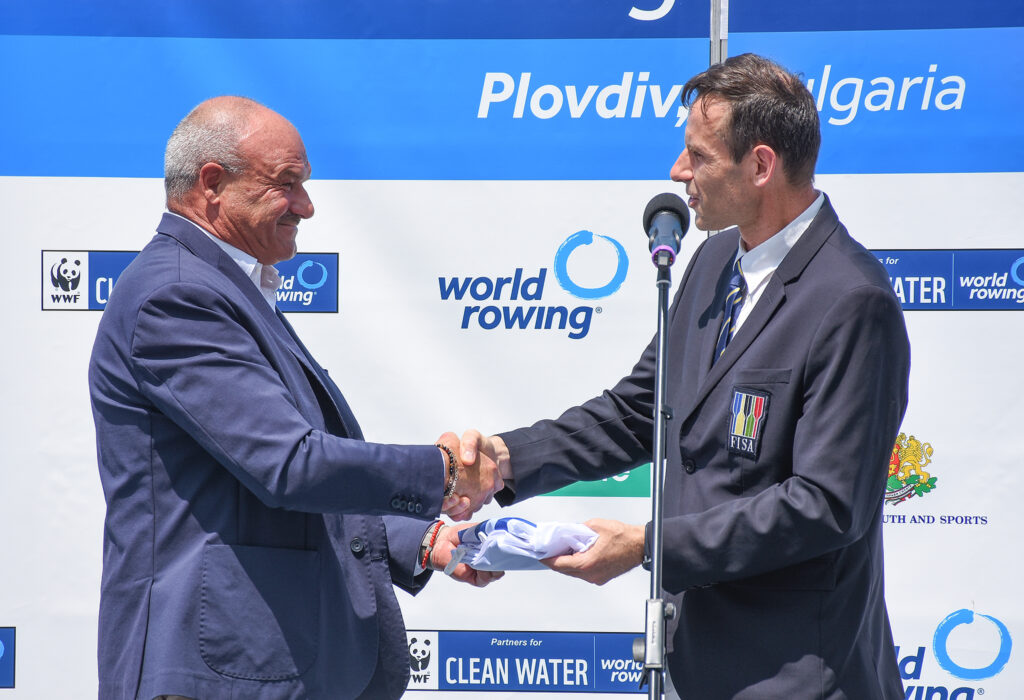
Talk to Popov about how Plovdiv has pulled off 14 major events, and he doesn’t reach for funding models or venue upgrades first. He talks about people.
By his account, the core leadership group — 23 managers, each running their own sub-team — has barely changed since 2011. “There were changes in the early years,” he says, “but starting from 2011, it has been almost exactly the same group of 23 people — maybe one or two changes here or there.” At full scale, for a World Rowing Cup or European Championships, he says that core expands into a working team of 100 to 150 people.
That’s a rare kind of continuity in event organising anywhere, let alone across 15 years and 14 major regattas. Popov’s own explanation for it is simple, and entirely characteristic: “I love rowing. I love Plovdiv. I love Bulgaria. I love the people here. When the next big event comes, I mobilise myself first — and then I try to give my passion to everyone around me, to inspire the whole team.”
He believes that passion pays the city back in kind. By his estimate, major events bring more than a million euros in reinvestment into Plovdiv each time — not into the organising committee’s accounts, but into the hotels, restaurants and shops that fill up with visiting rowers, coaches and families. “The municipality supports rowing, and in turn, everyone who comes because of rowing supports Plovdiv,” he says. “It works in a cycle.”
A City Worth the Detour
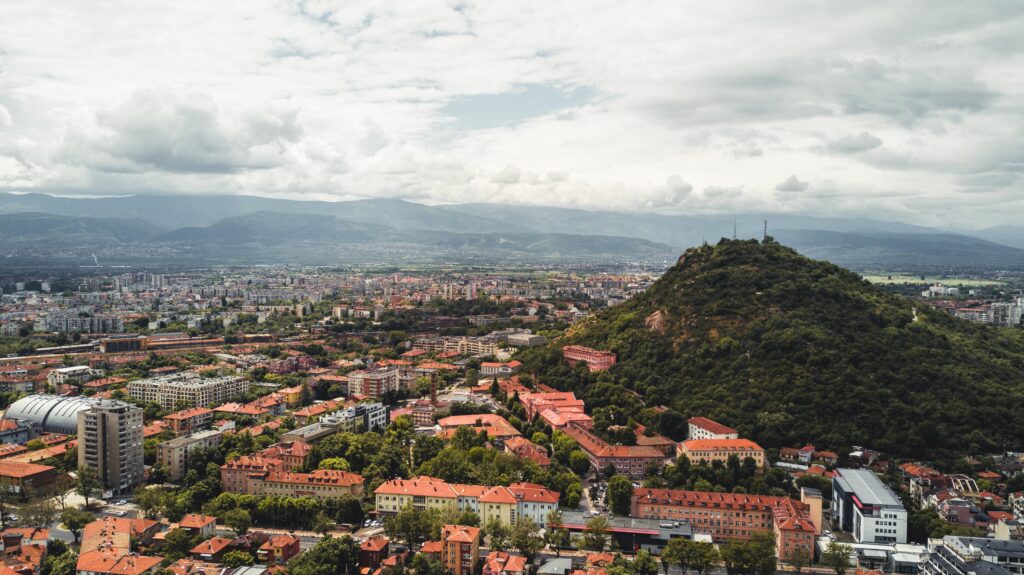
Popov is as proud of Plovdiv the city as he is of Plovdiv the venue — and he’s quick to point out that the two are unusually close together. “The Plovdiv rowing channel is actually inside the city,” he notes, “so there’s little time lost going from the hotel to the venue and back.”
That proximity matters, because Plovdiv has a habit of winning people over the moment they step away from the racecourse. With roots stretching back roughly 8,000 years, it’s regularly counted among the oldest continuously inhabited cities anywhere in Europe — and its Roman amphitheatre in the old town has hosted some of the regatta’s biggest opening ceremonies. “Visiting athletes and spectators come away genuinely moved having been there,” he says. “Some visitors even buy paintings from local artists in the old town. They go from the regatta to the city centre smiling and leave with that same smile.”
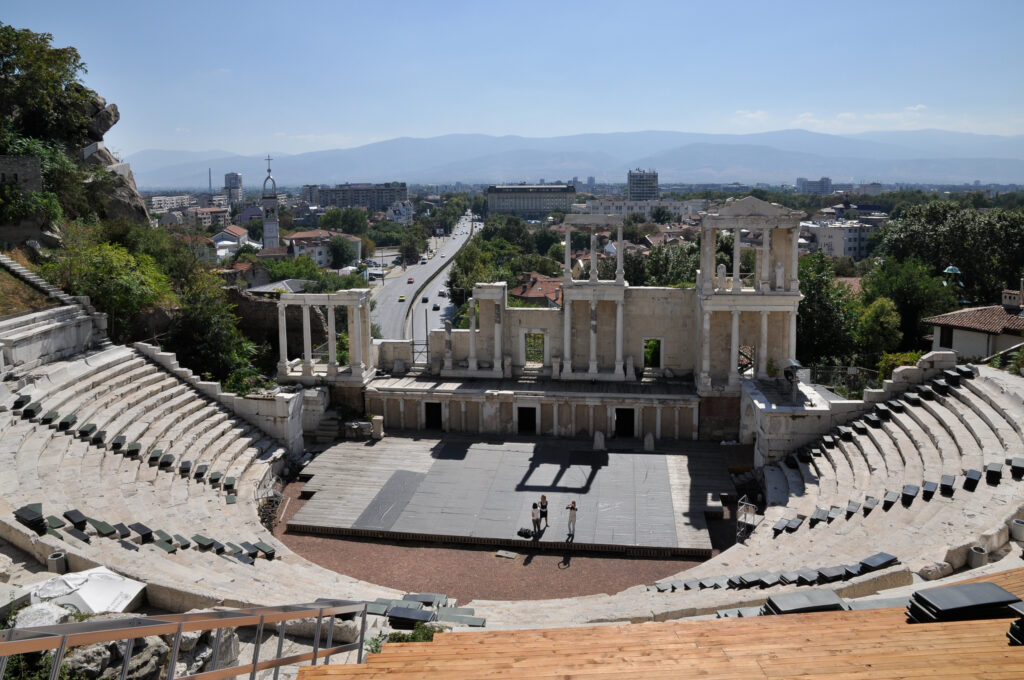
It’s not the only world-class event Popov has brought to that amphitheatre. Three years ago, he organised a concert there with the Vienna Philharmonic. This year, Plovdiv served as a stage start for the Giro d’Italia. “I want to promote Plovdiv and Bulgaria through every kind of major event, not just sport,” he says. “I love this city and I want the world to know it.”
The city’s sporting pedigree runs deep, even beyond rowing. Plovdiv’s Deputy Mayor, Nikolai Bukhanov, is a two-time Olympic gold medallist in canoe. Hristo Stoichkov, the 1994 Ballon d’Or winner, was born here, as was Stefka Kostadinova, the Olympic high jump champion who held the world record for 37 years. “Nowadays, we may not have those headline names in active competition,” Popov says, “but we are inspired by those legends — and we’re working to come back.”
What’s Next, and What Lasts
This year brings a new test: hosting not just a World Rowing Cup but the World Rowing U19 Championships in the same season. Typically for Popov, the scale of the challenge is part of the appeal. “I wanted to see if we could do it — and yes, we can,” he says. “From the very beginning, I said this was a good challenge. I like challenges. And we will succeed.”
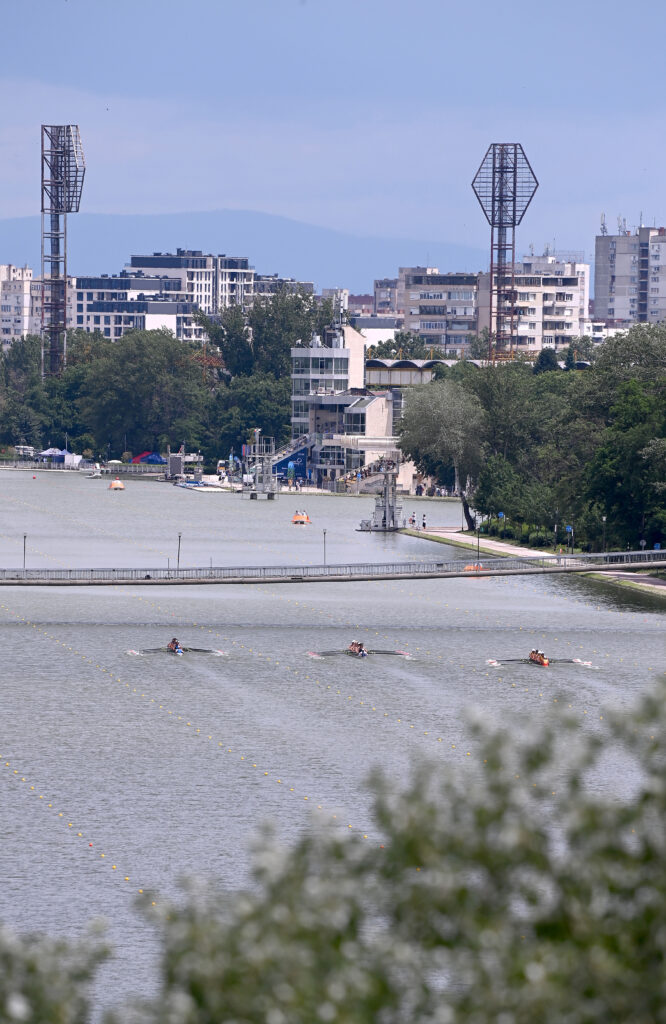
The ambition has a local dimension too. At least 50 members of Plovdiv’s civic leadership were expected at the venue this past weekend, many experiencing rowing in person for the first time. “We’re not just hosting the world,” Popov says. “We’re also bringing our own city to this sport and showing them what we can create.”
Asked what it feels like to watch a venue, a team, and a movement he built largely from conviction come together in front of him, Popov doesn’t reach for anything elaborate. “Pure happiness,” he says. “That’s it. Pure happiness.”
He’s just as candid about the limits of time. “I’m not sure how much longer I can continue because of my age,” he says, “but I’m happy that I’ve built a team, and I’m convinced there are people who will carry it forward.” It’s a fitting note from someone who has spent more than half a century in this sport — first as a teenager discovering, stroke by stroke, what four strangers in a quad could become; later as the patron who turned a small lake into one of rowing’s premier venues, and a single embattled regatta into a fixture on the world calendar.
So what does he hope people say, looking back on his contribution to rowing, to sport, to Plovdiv? “That the work continues,” he says, “that what was built here will go on long into the future, even after me.”
Ivan Popov spoke with World Rowing at the Plovdiv regatta venue, during the second day of racing at the 2026 World Rowing Cup II. Extensive translation support provided by Nayden Todorov.