


26 Aug 2026
Climbing to the top of para-sport
Think doing one elite sport is impressive? Try two. Or even three.
The 2026 World Rowing Championships in Amsterdam marked the international debut for USA rower Natalie Vorel in the PR2 mixed double sculls. But Vorel is far from a stranger to top-level sport: she is a USA representative for both para-swimming and para-climbing.
And it was climbing that got Vorel into rowing – because Dutch PR1 single sculler Eva Mol is also a para-climber.
“Eva has been bullying me for years,” Vorel says. “Every time I see her she’s like ‘you’ve got to try rowing, you’re going to be really good at it, you’re tall and you’re strong. You need to try’.”
Mol admits to the ‘bullying’.
“We were at all the same climbing competitions, like the World Cups and the world championships, and we always have a pretty good thing going. I bullied Nat, very kindly, into rowing. I tried to convince more para-climbers, but so far my success ends with Nat,” she says.
A Path Into Para-Sport
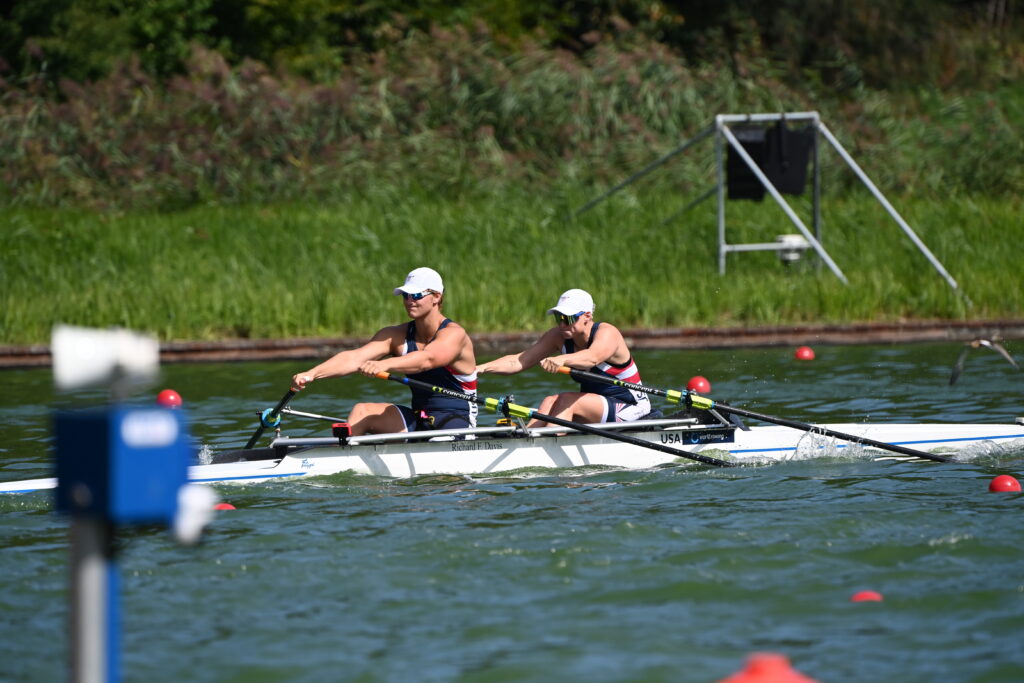
Both athletes’ para-sport journeys began with climbing, and both are enormously successful para-climbers, rarely off the podium in their respective events. Mol picked up the sport at the age of 11 and was soon on the Dutch youth team. She has a progressive muscular disease and has been competing in para-climbing since 2019.
Vorel swam through her teens and into university at Minnesota State, but found juggling her degree and swimming too much, so she quit swimming. However, she had also discovered climbing at college, and was instantly hooked. Soon after she graduated, Vorel had a bad climbing accident, breaking her back in several places.
“Within three months I was back in the climbing gym; I was like, ‘I need this, I need to be climbing.’ Everyone in my life was like ‘you are crazy,’ and I was like ‘I miss climbing, I need to do it’,” she explains. When US Climbing advertised para-climbing, Vorel went along to the national championships, won, and the rest is history.
An injury was also Mol’s route to rowing, when she was unable to climb. She joined a rowing club in Amsterdam and soon afterward found herself at the ‘Row to Paris’ regatta in 2022. Despite finishing well off the pace, she was hooked. And rowing has proved complementary to climbing.
“If I don’t climb, we have to set the settings in my boat lighter because I lose power, so climbing is a really good strength training for me. And the other way around, if I don’t row, my endurance on the wall is not as good as it is when I’m rowing. So for me it’s the perfect crossover,” she explains.
Multi-Sport Achievements
Mol is now targeting participation in both para-rowing and para-climbing at the Los Angeles 2028 Paralympic Games, as the latter makes its Paralympic debut.
“There are four days in between rowing and climbing – rowing first, climbing after – so fingers crossed, not that I can cross them, but if I could, fingers crossed that I qualify for both. That would be the ultimate dream,” says Mol.
Ironically, it is this introduction of para-climbing in Los Angeles that brought Vorel to rowing (on top of Mol’s persuasion). Vorel’s para-climbing category will not feature in 2028, and because she did not want to miss out on competing in a home Games, she got back into swimming and then gave into Mol’s nagging about rowing.
“I made the swim team about a year ago, made the rowing team a couple of months ago, so at this point hopefully I can do both in LA. The schedule works out,” she says.
Like Mol, Vorel finds para-rowing and para-climbing complementary.
“I think the only reason I’m actually good at rowing is that I’m so powerful in my upper body. My category in climbing is always on something that’s super overhung, so when I’m pulling, it’s similar to rowing,” explains Vorel.
“Also, the dexterity that you need for climbing has transferred. Picking up skills in rowing has been super-easy because my hands have to do so many millisecond-based things that rowing’s actually kind of easy.”
The Challenges of Para Rowing
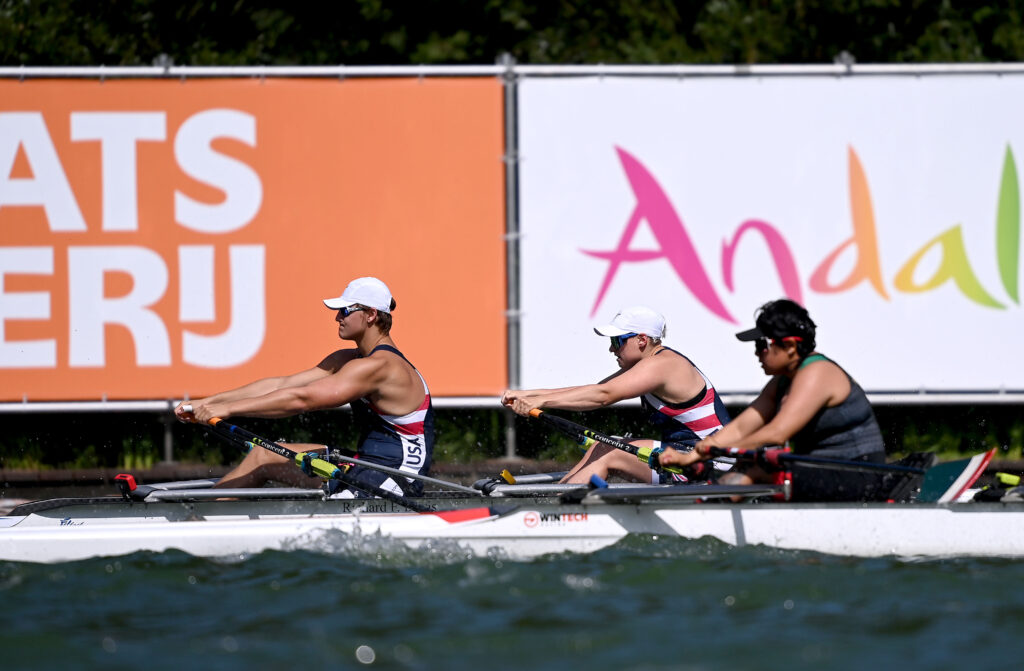
More challenging has been learning a team sport and rowing with her doubles partner, Chance Quarry.
“I’ve had to rewire my brain to work with another person. It’s really weird for me because I’m used to relying completely on myself for everything,” Vorel adds. “If someone messes something up it’s me, if I climb badly, the only person I can blame is myself.”
Her other major challenge has been managing her skin.
“I have a good amount of energy, and I’m able to plan well throughout my day so that I can fuel and get the proper rest I need when I’m doing three training sessions a day. But I’m swimming every day so my skin is wet and my callouses are just hydrating, then I go to the climbing gym and I’m tearing holes in my hand, then I go to row and I’m tearing more holes in my hand, and I’m unable to hold the steering wheel when I’m driving home because my skin is so bad,” Vorel says.
“It’s the ultimate combo of sports; it’s ripping up my hands so bad. Luckily I have a sponsor from a skincare company who are saving me every single day. If I didn’t have them, I don’t know where I would be.”
Building on Experience
Both athletes have found their climbing experience helpful in managing the stress of major rowing competitions.
“My on-land warm-up is exactly the same for rowing as it is for climbing. That’s something that helps me prepare and gives me structure. I deal with both competitions in the same way,” Mol says.
Vorel adds that she is used to big events but has had to adjust to the new environment of rowing. But knowing Mol is around is also a comfort.
“I’ve been with Eva in those high-stress big competition situations, so I’m like ‘oh my buddy’s here who, when I had a bad climb at world championships last year, my buddy is here who comforted me’. It’s nice that it’s happening here on her home turf. It’s really cool that I get to experience this with her as well,” she says.
Mol and Vorel are both keen to encourage more rowers into climbing – Vorel plans to take Quarry climbing once the World Rowing Championships and the Para Pan Pacific Swimming Championships are over – as well as finding more climbers who could become rowers.
In the meantime, they are both focused on making sure they qualify for their two sports in Los Angeles. Success at the 2026 World Rowing Championships would be the first step along that path.