


08 Oct 2026
Waves, Turns and Tactics: How to Win a Coastal Rowing World Championship
Coastal endurance rowing is a unique rowing discipline, combining skills needed to excel on flat water with knowledge of how open seas, wind and waves can affect a boat.
With the 2026 World Rowing Coastal Championships in Qingdao, China, just days away, what will it take to claim a title on the Yellow Sea?
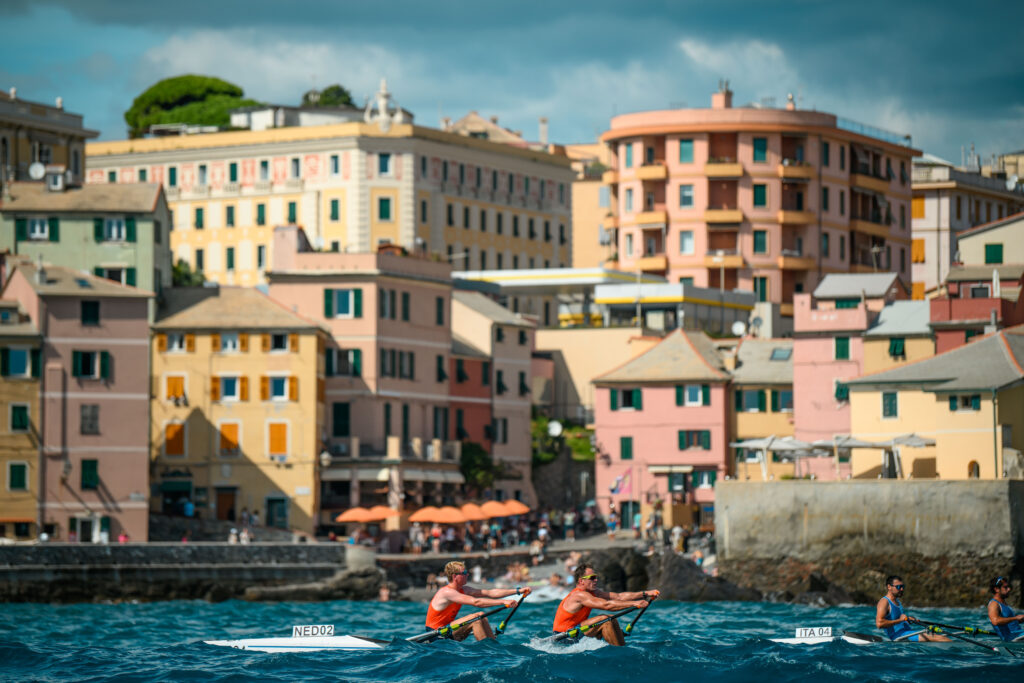
Coastal endurance rowing events take place over 4km courses (for the heats) and 6km courses (for finals). A final lasts more than 25 minutes, meaning rowers tap into deep physiological reserves just to cross the finish line, let alone win.
“I think the first thing is to understand that coastal endurance is not simply a 4-6km rowing race with some waves added. You are constantly making decisions about the fastest route through moving water,” says European coastal champion Joel Naukkarinen of Finland.
Getting the Start Right
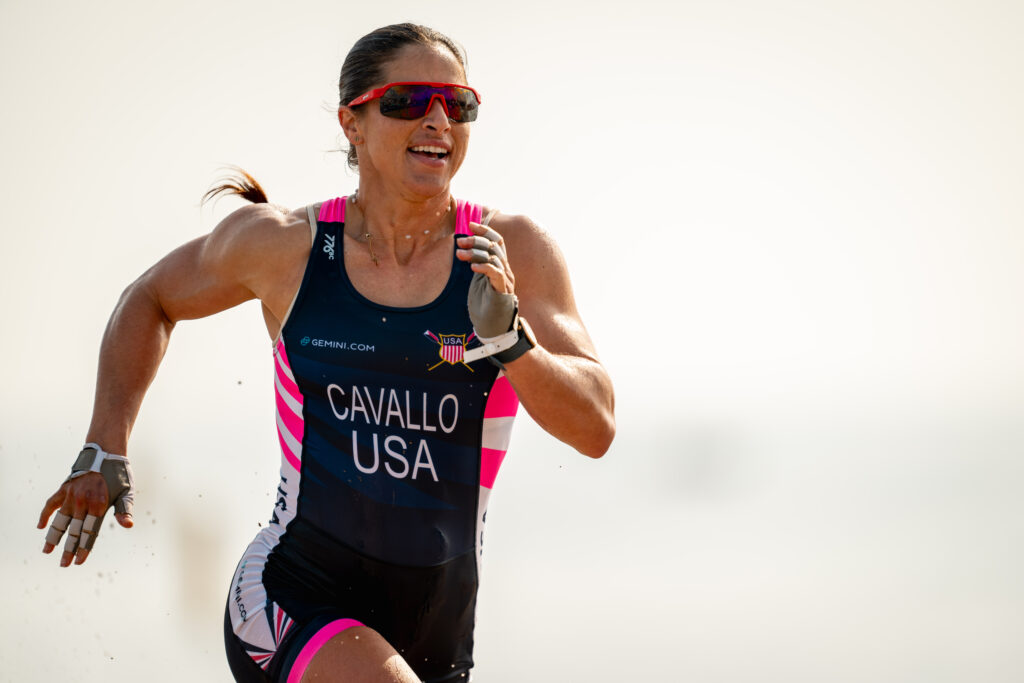
Many flat water rowers are used to winter head racing of a similar distance, but there is a key difference between a coastal endurance race and a head race – the start. In head races, crews start one at a time and race against the clock; in coastal rowing, everyone starts at once. Coastal races can either begin on the beach or in the water; in Qingdao, the start is on the beach, meaning one rower will run down to their boat and jump in, just like in beach sprints.
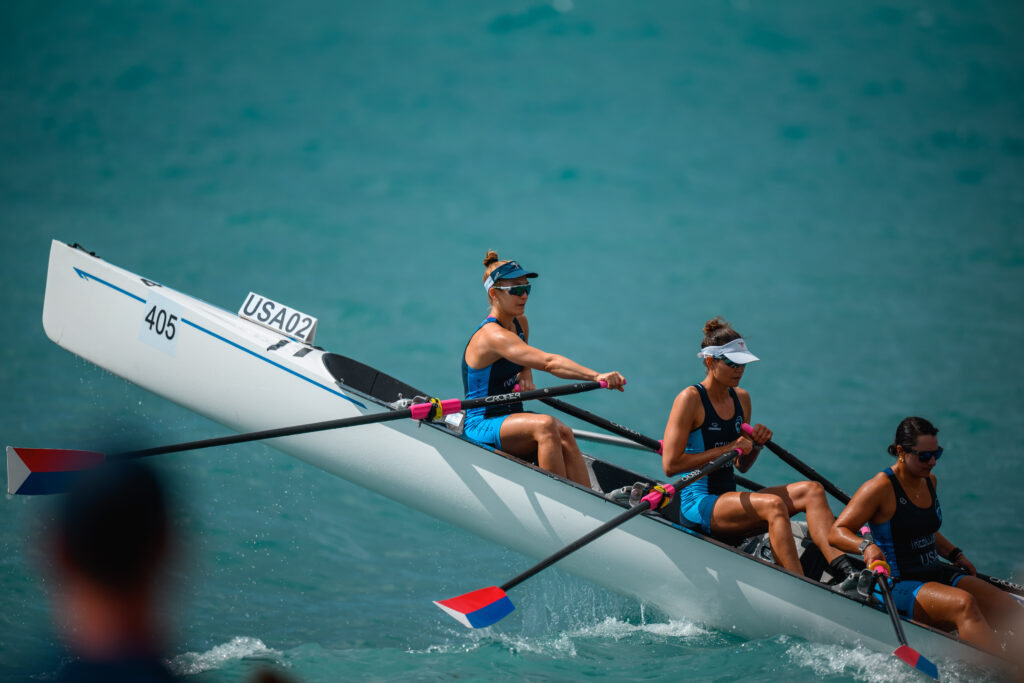
Nailing that start is vital, says USA rower Christine Cavallo.
“It’s a sport that’s quite hard to catch up if you’ve been left behind. Whoever gets the first buoy first and gets out of there clean has a huge advantage for the rest of the race,” Cavallo says.
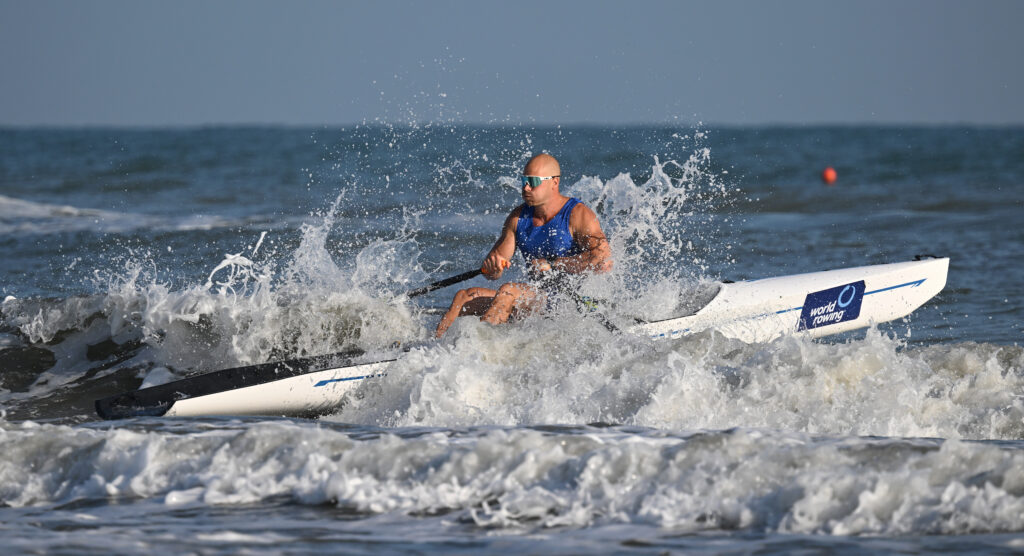
However, Naukkarinen adds a note of warning, saying: “It is still an endurance race. Spending a huge amount of energy to win the first 200 metres can be a very expensive way of gaining two seconds.”
In Qingdao the rowers will have 1 kilometre of racing to the first turning buoy, but will be spread out along the beach, with up to 16 crews in one race. So expect to see the top crews getting out fast and hard to open up distance on the field in the first 1km of racing.
“It’s quite hard in waves to make up a deficit unless the person in front of you blows up,” adds Cavallo.
Making the Turns
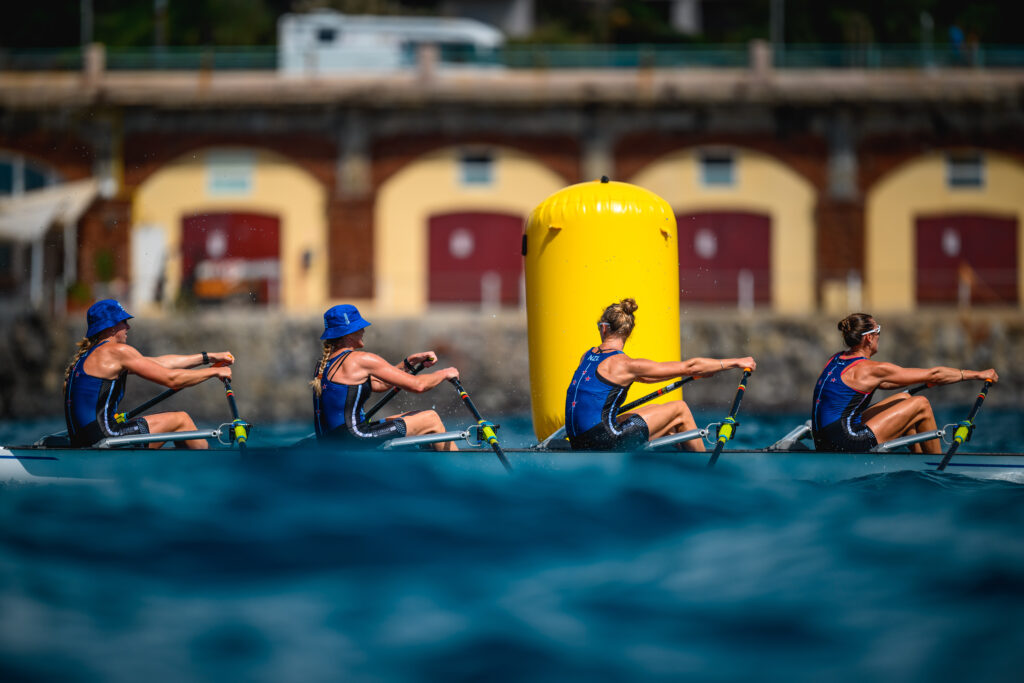
In Qingdao, crews will have to negotiate several buoys. There is no requirement for a crew to yield to a faster, overtaking boat – if you are ahead at a buoy, you get to choose your line.
“Your responsibility is to come in on a line where you can come through the turn and not lose any momentum coming into the next stretch. So if you have a good line, the other boat will have to come around you to overtake you, so that becomes a very strategic component of all of the turns,” Cavallo explains.
Naukkarinen also stresses the importance of strategy.
“The turns are extremely important. A good turn is not necessarily the tightest possible turn. You need to arrive at the buoy with control, carry as much boat speed as possible through it and leave immediately on the correct heading,” he says.
“If you turn too aggressively, stop the boat and then have to accelerate the whole system again, the few metres you saved can become very expensive.”
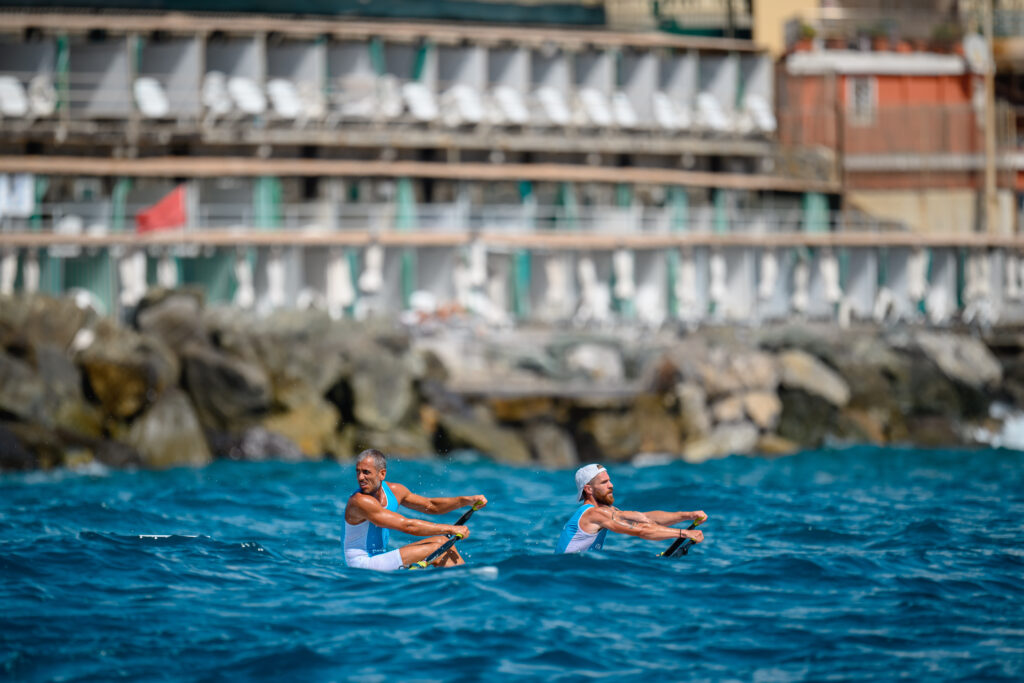
Steering is important, and Cavallo suggests that those who enjoy steering coxless boats in a flat water head race would excel in a coastal endurance race, as the skillset is the same – despite the conditions being different. But Naukkarinen adds that tactics are even more important on open water.
“Sometimes the geometrically shortest line is not the fastest line because of current, wind, waves or traffic. That is probably one of the biggest differences from flat-water rowing: you have to keep making tactical decisions while already physically close to your limit,” he says.
Having the Right Engine
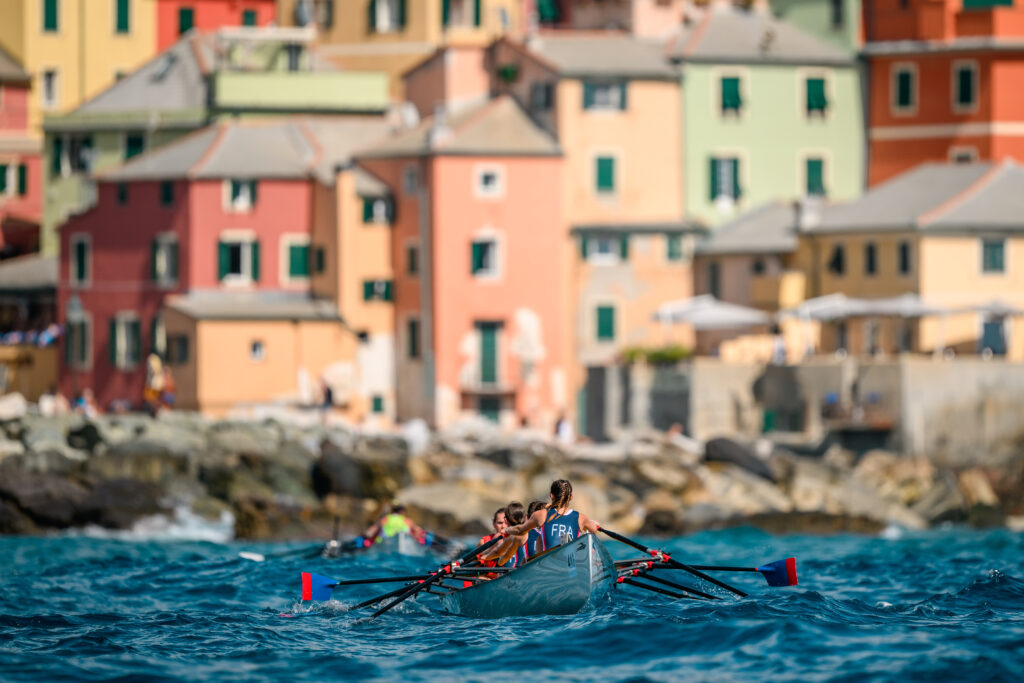
Physiologically, endurance is obviously key, but is not necessarily everything. Conditions can play a big role. Those who have developed significant endurance bases will hope for flatter, calmer conditions that enable them to keep putting out big watts for the full length of the course, while technically adept coastal rowers might want rougher water that plays to their strengths.
“A very strong flat-water rower can lose an incredible amount of time by choosing poor lines, fighting the waves instead of using them, steering too much or repeatedly disturbing the boat. On the other hand, there is only so much clever navigation can compensate for if somebody else has a significantly bigger engine,” points out Naukkarinen.
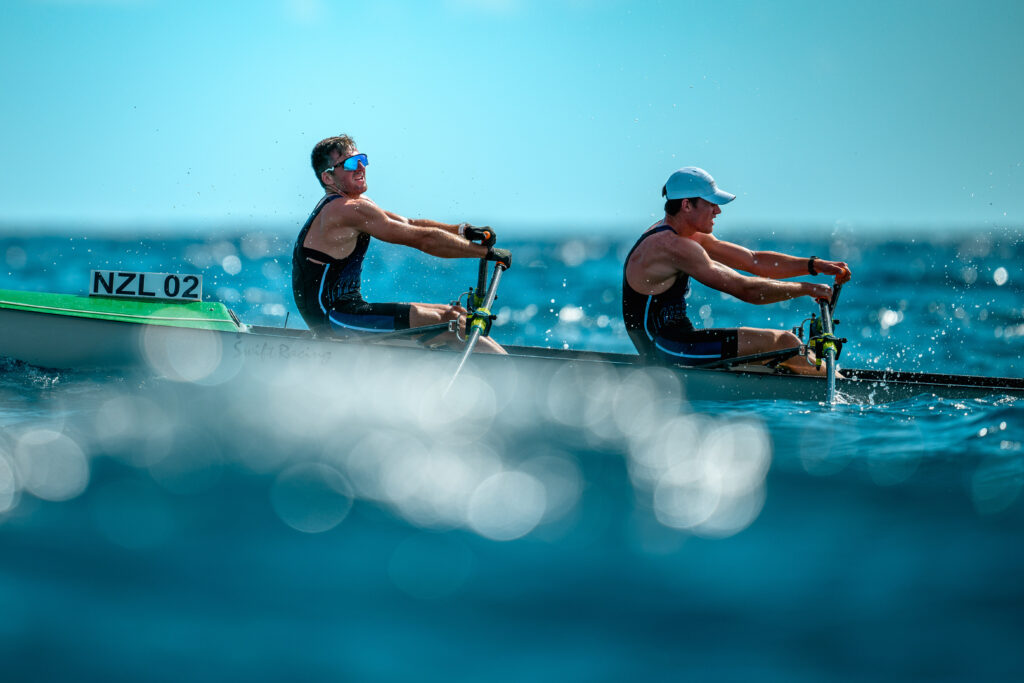
“Understanding how to read waves is a huge advantage, and you can really tell if someone has grown up in the waves or grown up doing coastal specifically,” Cavallo says.
“Some of my hardest practices have been against teenage athletes who have normalised how to read the waves, and they’re really technically savvy. It’s a good ego cleanse to go out with those athletes because they’re young but they have the skillset.”
Conversely, some rowers may find that coastal just is not for them – that they are not the endurance type, or get easily seasick.
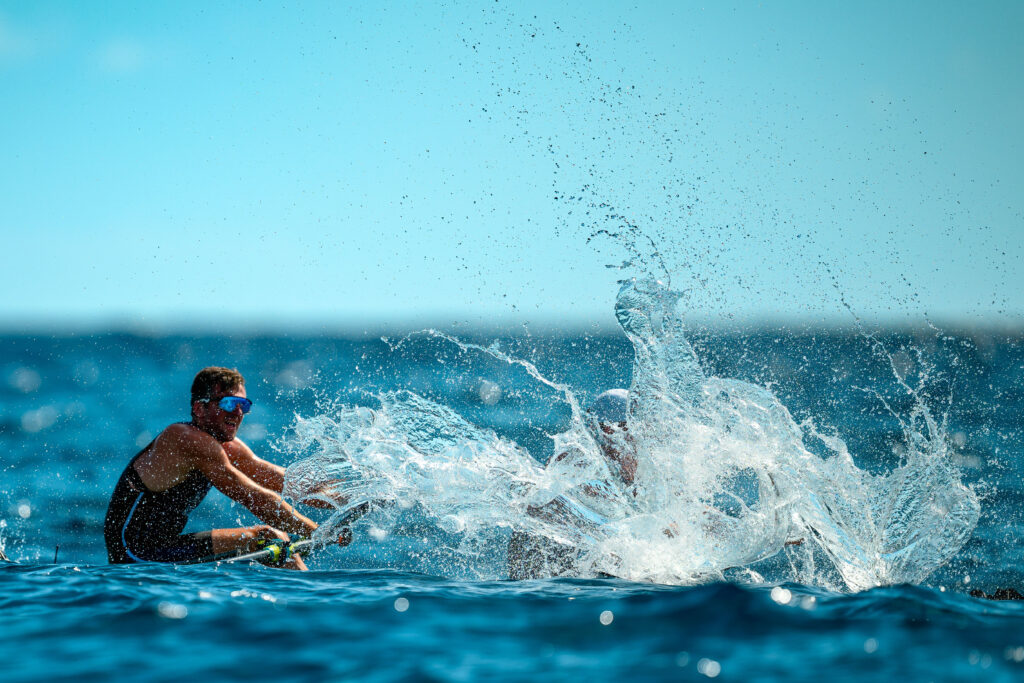
The last consideration for coastal rowers is adaptability. It is usual to rent boats for coastal events, and, as in flat water, every shell varies in terms of its ability to handle conditions. Some might be better surfing waves, others more manoeuvrable around a buoy, and coastal rowers need to be able to adapt their course and their tactics to the specific strengths of whatever boat they have chosen for a race.
But Cavallo goes back to the starting point – whatever the conditions, whatever the volume of training a crew might have done, and whatever boat they are in, “getting out early is a non-negotiable regardless of what other skillsets you have”. So in Qingdao, look out for those fast starters, as they will put themselves in pole position to come out as world champions.