


17 Oct 2026
Inside the chaos and choreography of a beach sprint
On the face of it, a beach sprint race is just that – a race. The person who reaches the finish first will win.
However, there are a huge number of variables contained within the three minutes or so that a race will take that can mean the winner is not necessarily the fastest athlete.
“In beach sprints I don’t think there’s a specific key. There are so many elements where you can gain or lose time,” says Great Britain’s Cameron Buchan, noting consistency in the main beach sprint skills is vital.
The Start
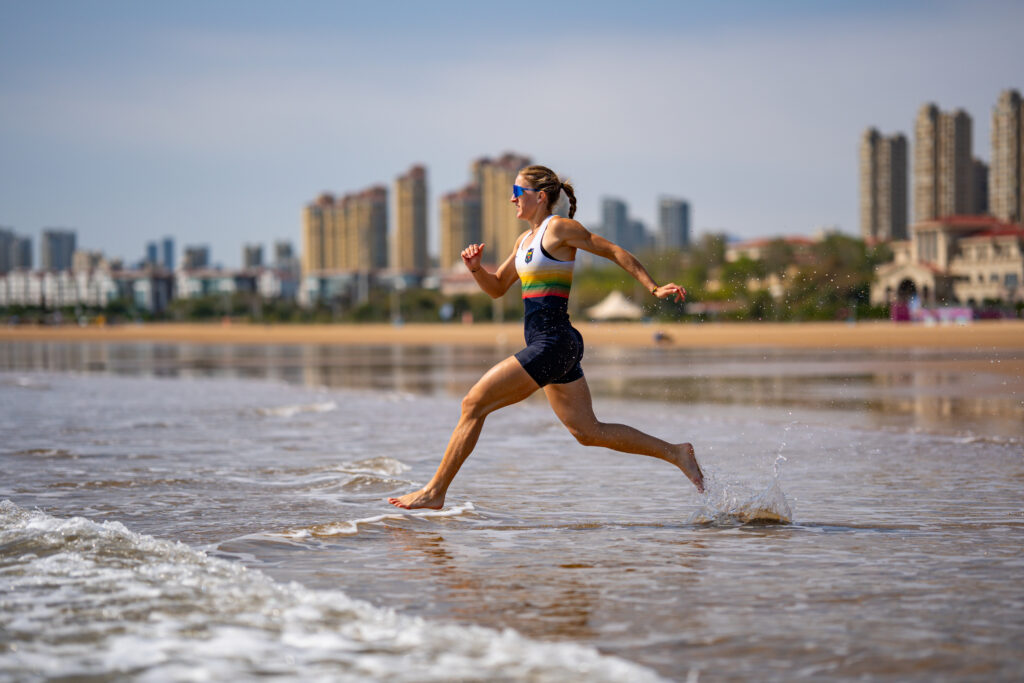
Beach sprints races start on land, with a run. Especially on beaches with big tidal ranges, as in Saundersfoot at the 2022 World Rowing Beach Sprint Finals, or in Qingdao in 2026, the run becomes longer, as the finish timing system cannot easily be moved as the tide goes out.
“The way I think about it is you’re not going to win the race on a run but you could lose it on the run,” says USA rower Christine Cavallo. She says it is important to train the body to be able to sprint while also not unduly taxing the energy system that needs to then start rowing.
“In bumpy conditions, it’s about being relaxed, being almost slow so that you can be clean. You lose so much more time with a bad entry or a bad exit than you would if you have a slightly slower one if you make it clean,” agrees Buchan.
The Entry
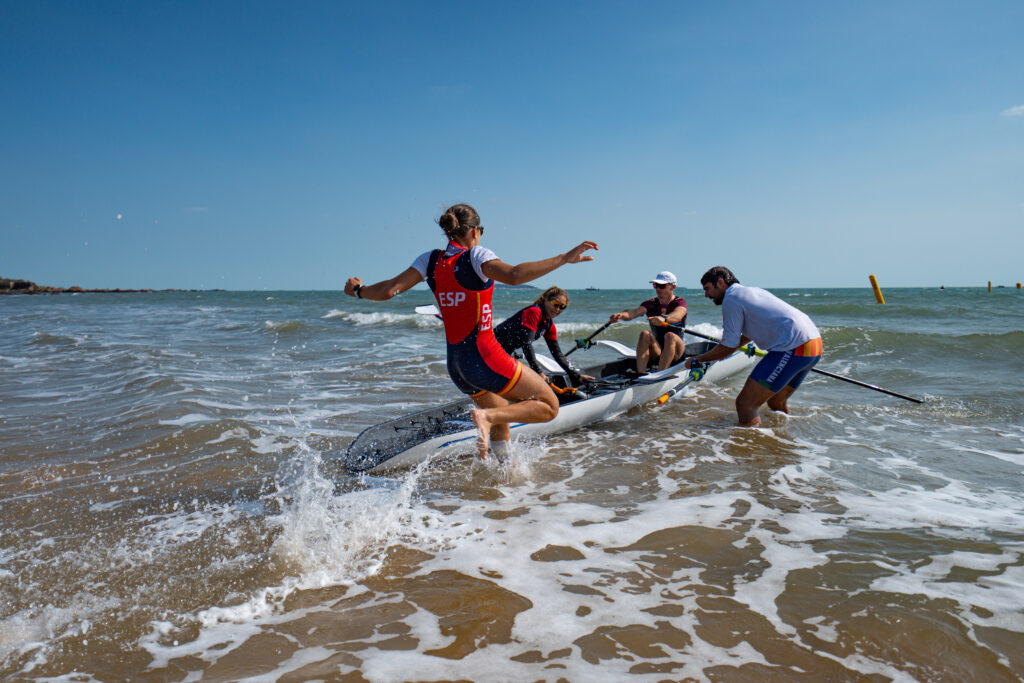
Unique to coastal rowing are the boat handlers – usually two per boat, except in rougher conditions when the jury can allow extra handlers. Athletes will pitch in to help handle boats when they are not racing themselves, and bigger teams have specialist boat handlers who really know how to keep a boat in position on the surf to give their rower or rowers the best possible start.
One athlete in every discipline sprints to the boat and jumps in it; in doubles and quads, the remaining rowers jump in while their crewmates are running. For the runner, the entry is important as you need to jump in, grab the oar handles and get your feet in place all while the handlers are pushing the boat off.
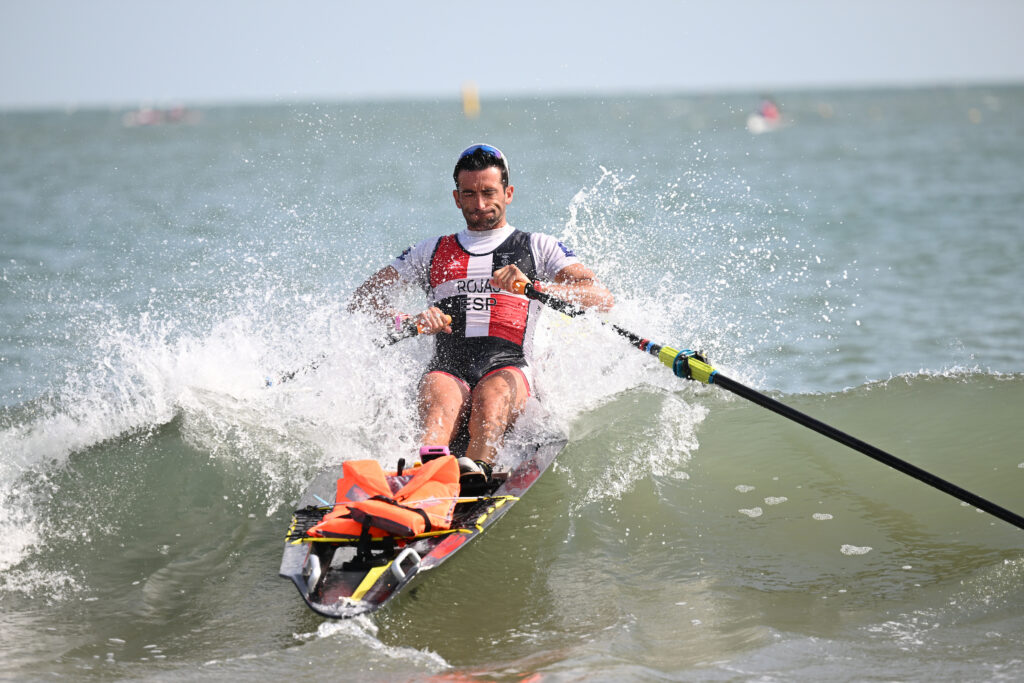
“I would compare it to jumping on a horse bareback; you just kind of have to do it,” says Canada’s Carling Zeeman. “You can practise all you like but it’s going to be different every time. You have to be a little bit physically aware of yourself: know where your hands are, know where your feet are, trust your boat handlers and pray.”
The boat handlers will then give their boat a shove and also begin steering their crew out towards the first of the three buoys on the course.
The Race
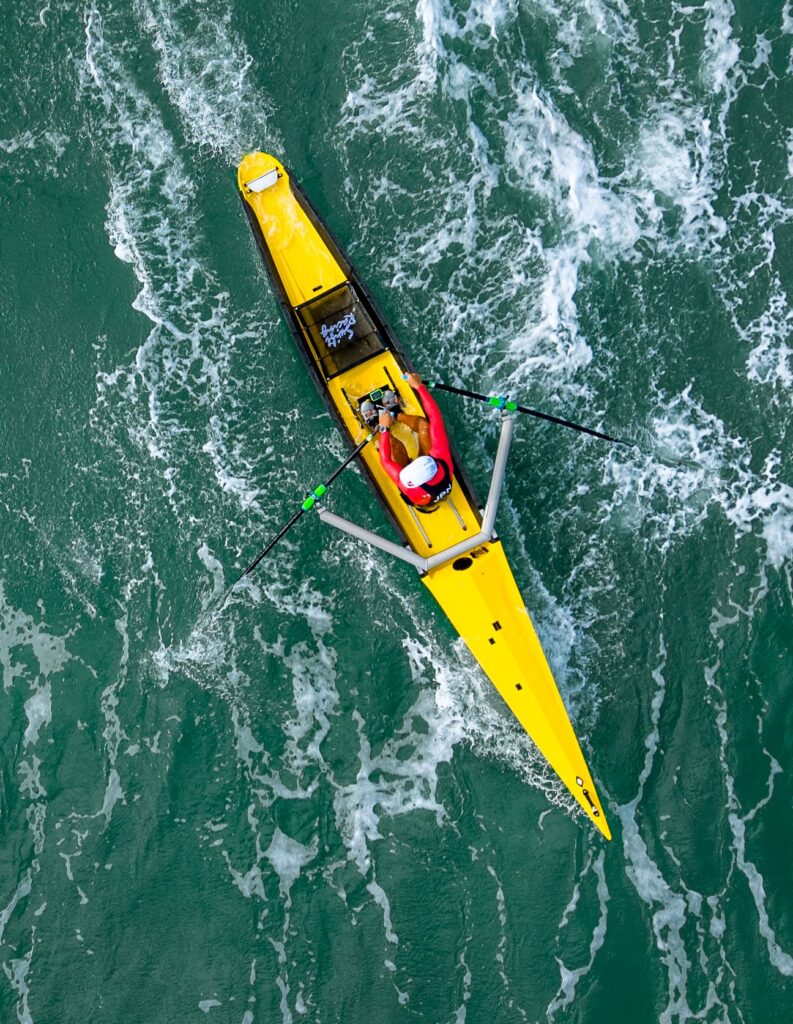
Beach sprints involve a 250m slalom row with two buoys to navigate before a 180-degree turn around a final buoy, followed by a straight sprint back to the beach. It sounds simple, but navigating the course while managing conditions isn’t.
“We’re so used to rowing being very structured in our lanes, but here – this beach, especially – anything goes. You can use such a wide range of tactics and strategies to get round,” points out New Zealander Matt Dunham.
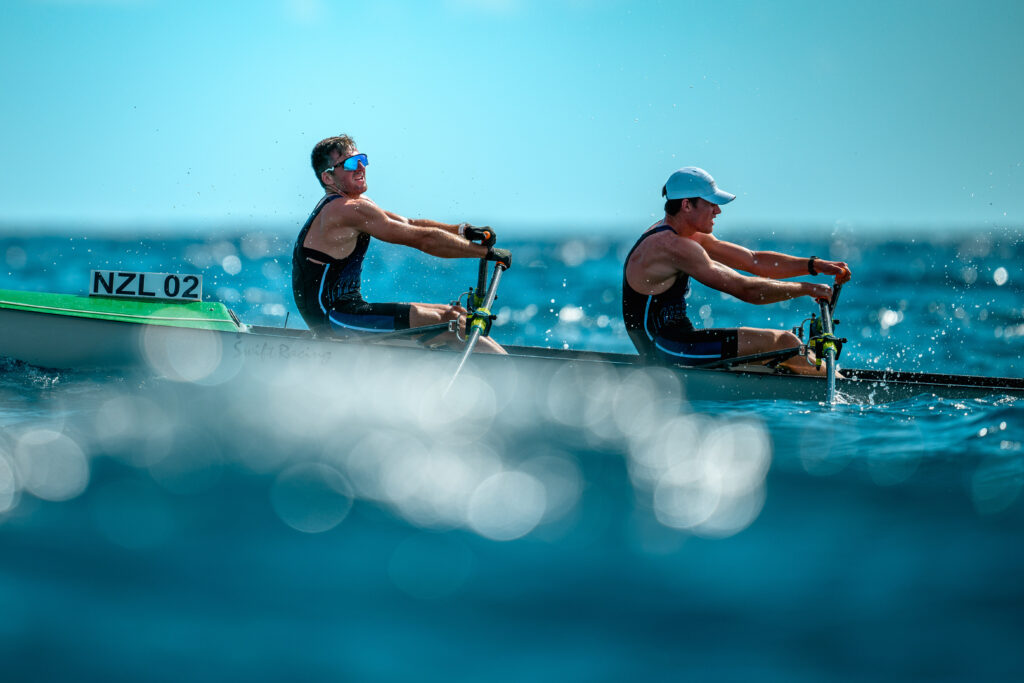
“For a flat-water rower, I think one of the biggest changes is accepting that the perfect rowing stroke is no longer always the fastest solution. On flat water we spend years trying to make every stroke repeatable. In coastal rowing, sometimes the wave decides what stroke you are going to take,” adds Joel Naukkarinen of Finland.
Zeeman agrees. “You can pull as hard as you want, but if you’re not on the wave right, it’s game over. It’s such an athletic condition out there.
“Sometimes you have one hand on the oar, sometimes your hand is on the shaft, sometimes your foot is out. If you don’t catch the wave right the ocean’s so powerful it will just push you right over,” she says.
Those conditions mean physiological strength becomes key. Beach sprint boats are shared between athletes, so the only adjustables are the foot stretcher placement and the height of the gates.
“Because the boat is so heavy at the catch you need to make the most of it as the boat is accelerating. Your back and arms and lats and overall connection to the footplate need to be incredibly strong,” says Cavallo. “These skills have helped me going back to flat water because now I understand what it means to be deeply connected through to the back end.”
The Exit and Finishing Sprint
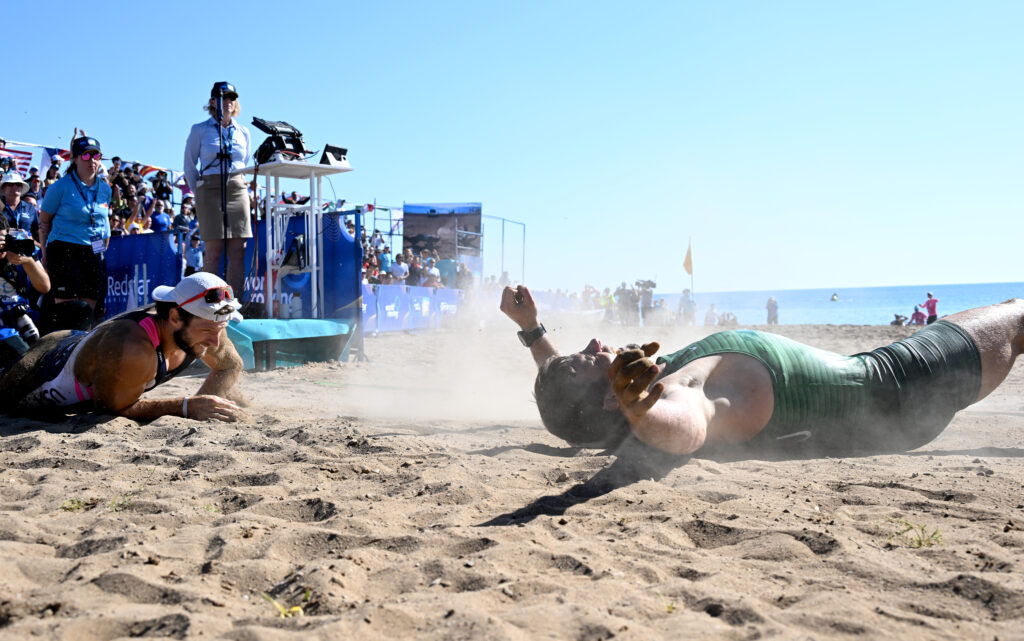
On landing at the beach, rowers rely on their boat handlers to safely call them in – perhaps missing a stroke while surfing a wave – before leaping out of the boat and sprinting around a set of flags to hit a buzzer on the sand. If they are exhausted, it can be hard to sprint, and races have been lost as a result. Slipping on the boat exit is also not uncommon in a tight race where every tenth of a second can count.
The Vibe
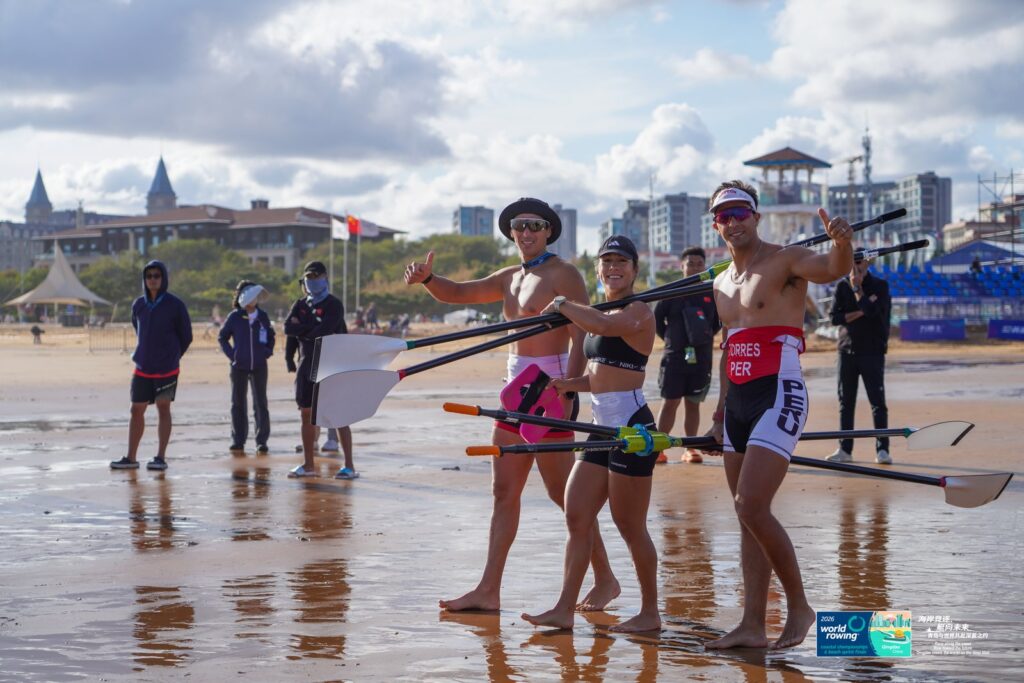
Driving every beach sprint rower on is the unique beach atmosphere. It is a head-to-head race, and spectators are close by, with music pumping during the race.
“Due to the dynamic nature, the head-to-head racing makes it really exciting, not only from a competitors’ standpoint but also from a spectator standpoint, I think it’s really something special,” says multiple world champion Chris Bak of the USA.
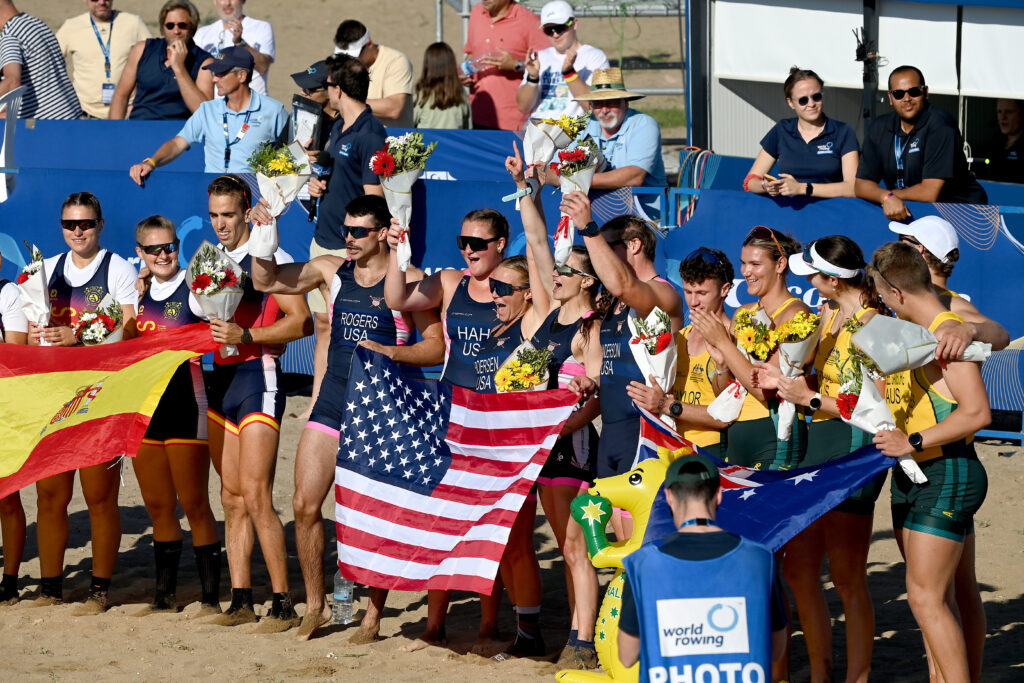
“That’s something which you don’t get in flat water rowing, that you always have contact to your teammates and to the other competitors – also for the spectators, because you’re so close to them. When you pass them at the grandstands they can almost touch you,” agrees Austria’s Magdalena Lobnig.
The People
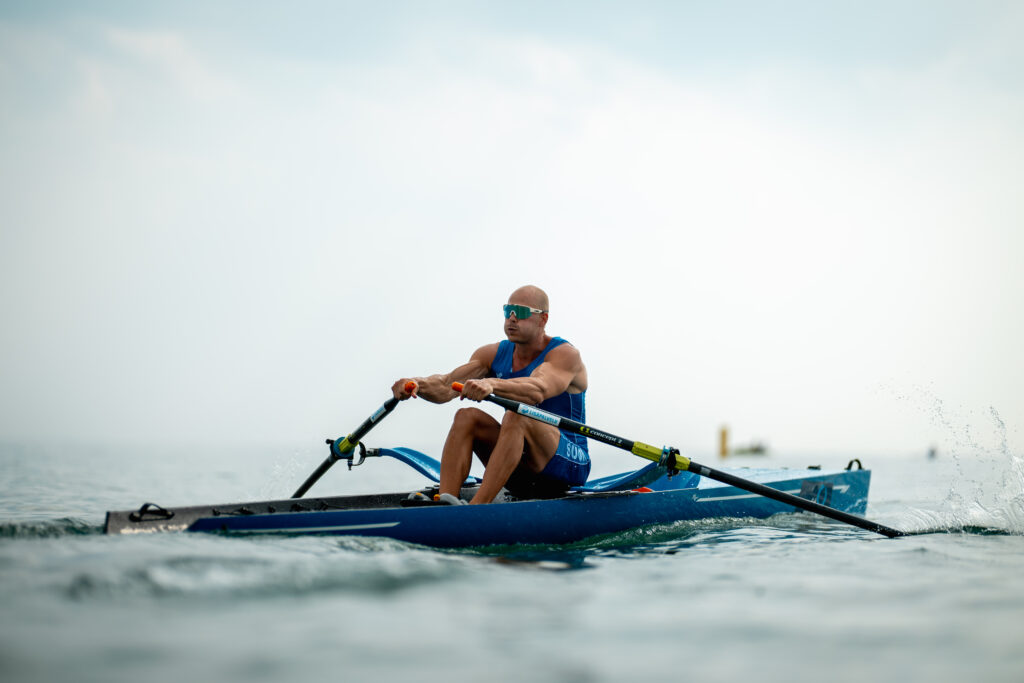
While traditionally, flat water rowing has attracted tall, strong athletes with long levers, there is a much wider range of physicality on show at a beach sprint event – from short, compact athletes to long and lanky.
“There are obvious advantages to being bigger and more powerful once the boat is moving, but beach sprint asks for much more than that. You also have to run, accelerate your own body and the boat repeatedly, change direction quickly, deal with all the vertical movement created by the waves, move efficiently around the boat, handle transitions and react to changing conditions,” says Naukkarinen.
“A lighter and more agile athlete may gain time in the running and transitions, while a bigger athlete may have an advantage in power production and boat speed. The relative importance of those qualities can also change depending on the course and conditions.”
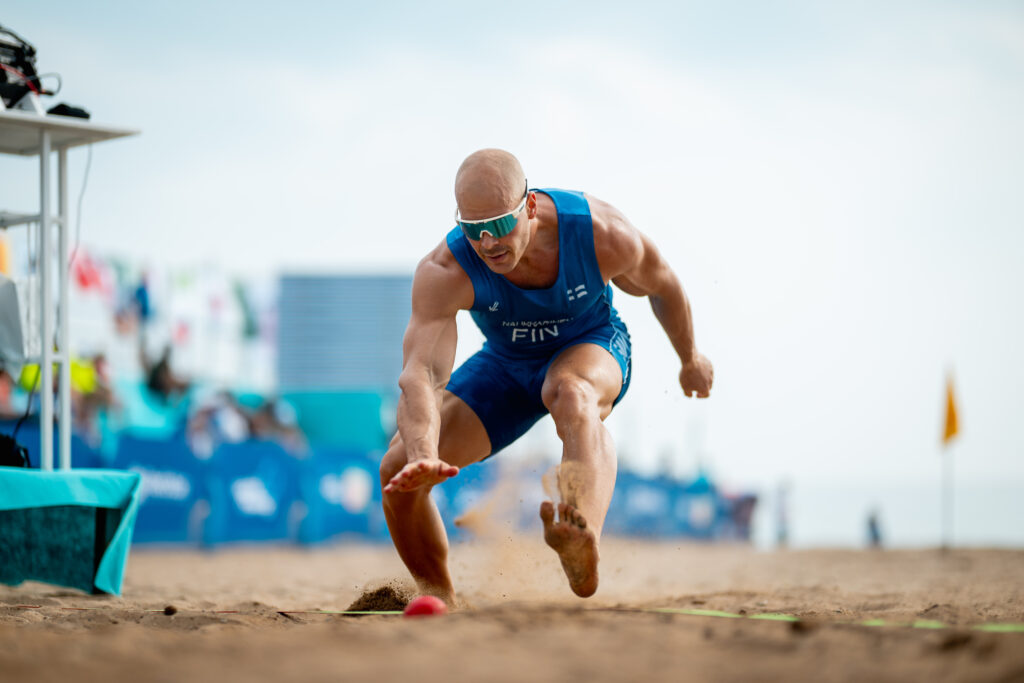
Although in an individual race speed is key, athletes also need endurance, as someone wanting to win a gold medal must complete three races within about half an hour. Those coming from flat water may find this physiological aspect the easiest to grasp. But training needs to account for both the strength and explosiveness required on the start and during the race, while also giving rowers the engines they require to keep going again and again in physically and mentally challenging conditions.
Buchan says the British team split their training through the year into stages, in order to be ready for the big races when it counts.
“The racing’s short, much shorter than a flat water race or an endurance race, but you have to do it multiple times back to back to back. So to build that explosive work you need that base of endurance over time and then build it up to create that peak of explosiveness,” he adds.
Putting it together
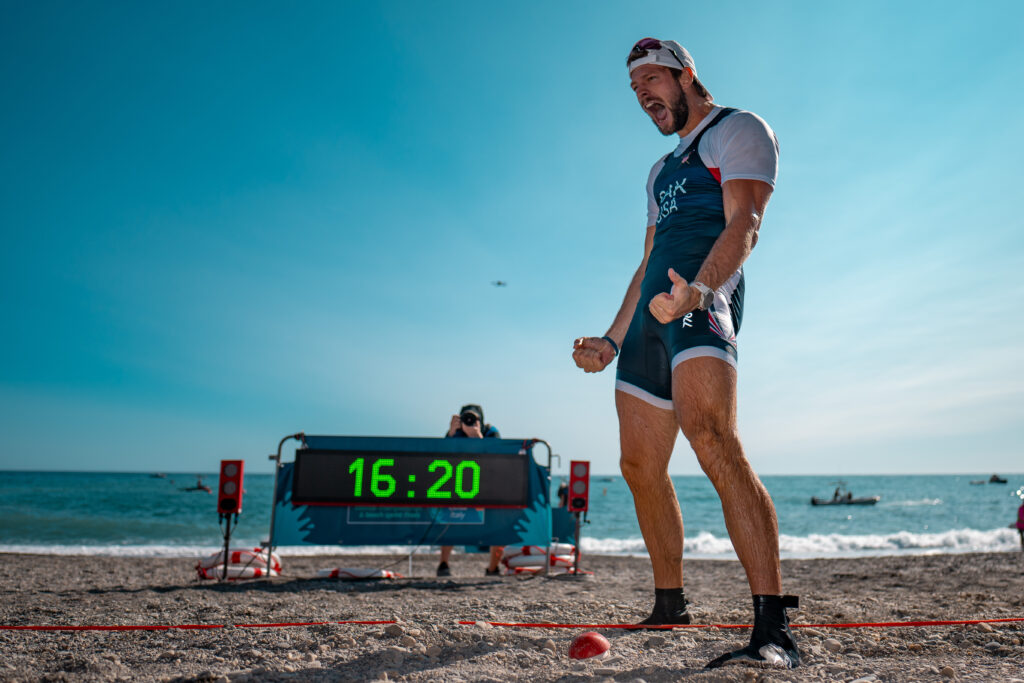
The rowers who can put together a fast run, get off to a good start, survive the Qingdao surf, and reach the buzzer safely will be the ones who thrive in the next days on the Yellow Sea. Conditions are set to be challenging, and the racing will be thrilling from start to finish. It all begins on Sunday 18 October at 07:00 local time (23:00 UTC on Saturday 17 October).