- Share
- Instant Race Recap: Germany, Greece, and Switzerland lead the way on opening day of Dakar 2026 Beach Sprints
- Instant Race Recap: Germany, Greece, and Switzerland lead the way on opening day of Dakar 2026 Beach Sprints
- Instant Race Recap: Germany, Greece, and Switzerland lead the way on opening day of Dakar 2026 Beach Sprints
- Print to PDF


31 Oct 2026
Instant Race Recap: Germany, Greece, and Switzerland lead the way on opening day of Dakar 2026 Beach Sprints
Rowing Coastal Beach Sprints debuted at the Youth Olympic Games on Saturday, as athletes raced in the Atlantic Ocean at Saly Beach West for the first day of competition at Dakar 2026.
On the first day of rowing at Dakar 2026, young athletes from around the world competed in Mixed Double Sculls and Men’s and Women’s Solo Time Trials. This event is another step for coastal beach sprints as they move toward their Olympic debut at LA28.
Competing under the Senegalese sun, athletes faced soft sand, a light crosswind, and occasional Atlantic waves as they took on the challenging beach sprint format.
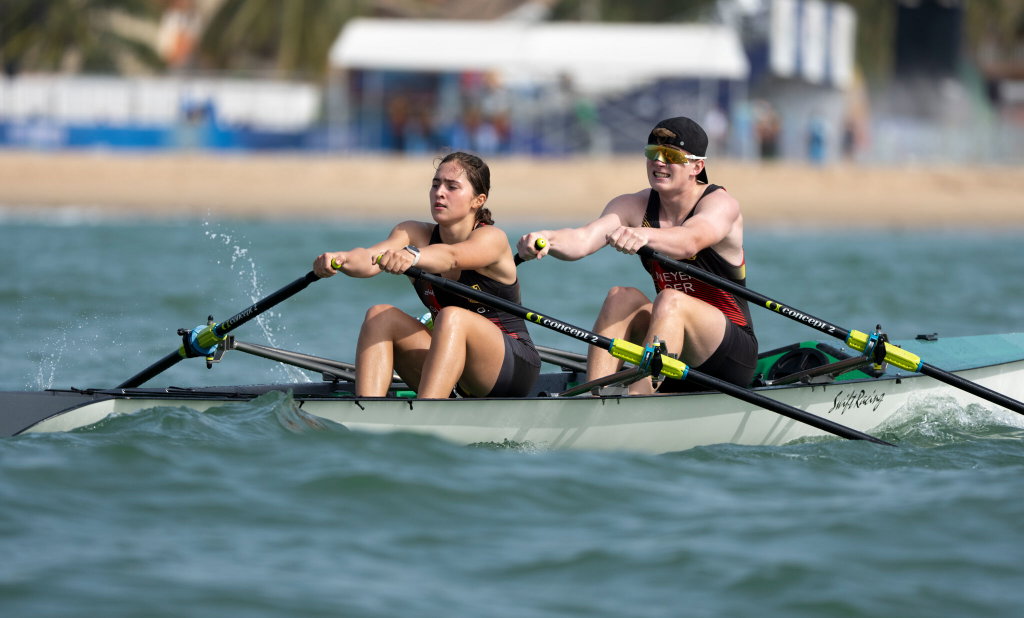
Germany’s Johann Felix Meyer and Carolina Guerra Gonzalez led the Mixed Double Sculls Time Trial 1 with the fastest combined time of 2:35.86. They finished 1.71 seconds ahead of China’s Juntao Su and Lili Liu. Spain’s Diego Molina Martinez and Blanca Lopez Valera took third with 2:37.85.
The top eight crews advanced to the Last 16, while the other competitors will return for Time Trial 2 on Sunday.
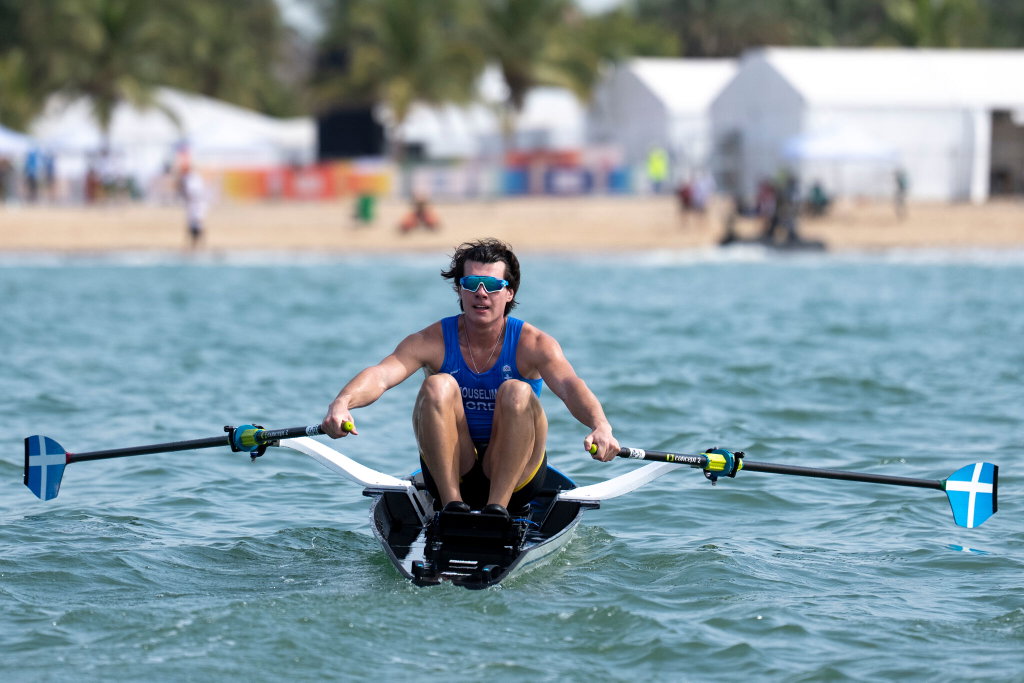
Greece’s Iason Mouselimis won the Men’s Solo Time Trial 1 in 2:39.75. Egypt’s Yossuf Moursi came second in 2:40.60, and Italy’s Davide Gazzola was third in 2:41.54.
South Africa’s Callum Dreyer finished fourth, and Germany’s Meyer, who also competed in the top Mixed Double Sculls crew, placed fifth. The top eight athletes moved straight to the Last 16.
The Women’s Solo Time Trial 1 wrapped up the first day’s competition, with Tanya Brendle of Switzerland setting the day’s fastest time for women in 2:57.82, just out-pacing Liu Lili of China by 7/100ths of a second (2:57.89), as Blanca Lopez Valera of Spain closely followed in third in 2:58.31. Czechia’s Marie Zavadilova posted the fourth-fastest time (3:02.40), followed by Australia’s Camilla Griffin in fifth and Great Britain’s Lexi Gill in sixth.
A perfect beach for beach sprints
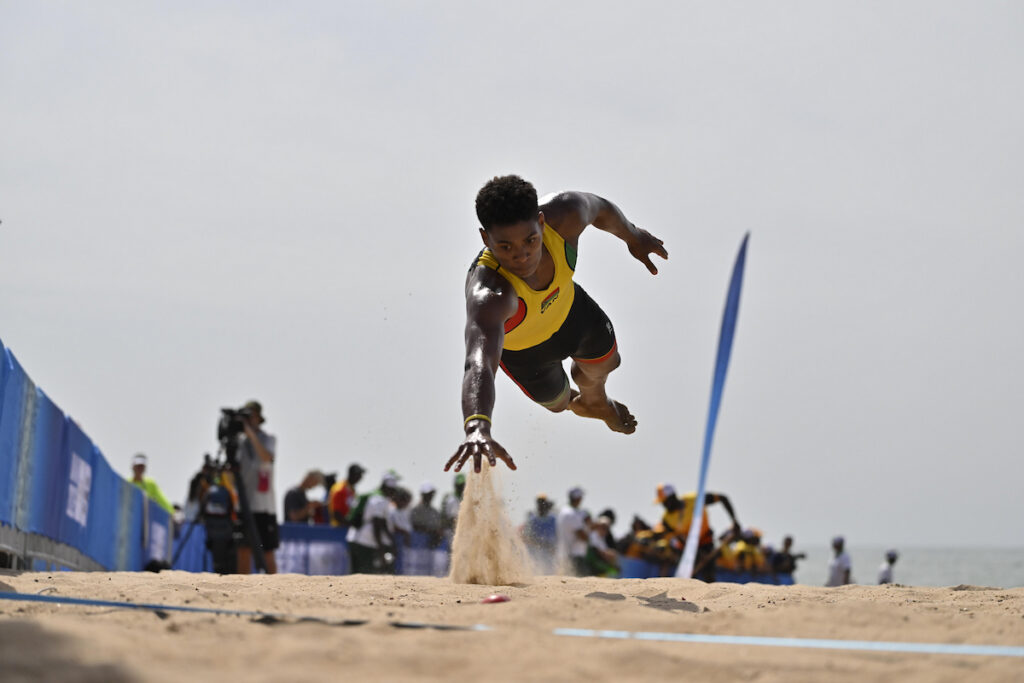
For World Rowing Technical Guin Batten says the quality of the sand at Saly is one of the venue’s best features: amazing colour. “It feels beautiful under your feet. It’s like putting your feet in cream. It’s amazing, so clean. I haven’t been on a beach for many years that’s as clean as this beach,” Batten said.
“It’s just a real privilege to be racing on this surface. We’re really close to the Sahara, so we’ve got the best sand out there.”
Athletes also took on the Atlantic Ocean’s unique conditions. A light southerly wind crossed the beach, which helped keep the swell down but created some changes in the waves.
“We had a really cool wind coming in from the left-hand side, which was picking the athletes up as they came along the long runs,” Batten explained.
“The beach is facing southwest, so the wind was coming up from the south, across the beach. It also meant that there wasn’t much swell because it was coming off the land a little bit.”
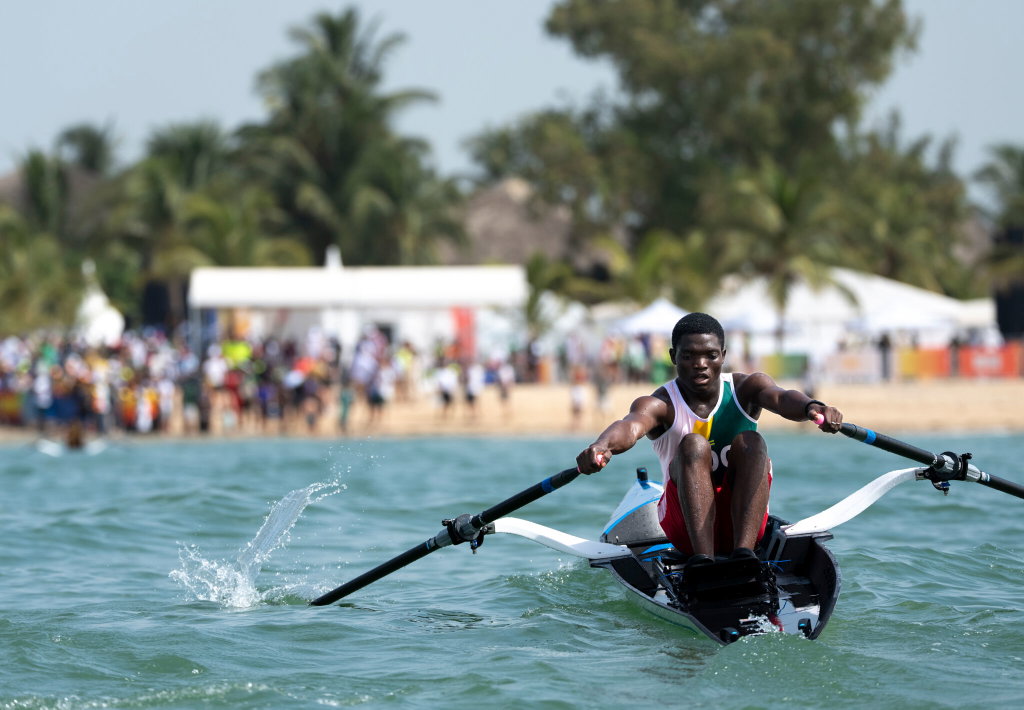
The ocean still moved enough to keep athletes on their toes.
“We just had a little bit of ocean swell coming in, which was kicking up a nice little dumper about two boat lengths offshore. A wave comes and sets, so some of the athletes had a slightly bigger one, and for others that little gnarly wave popped up for them, and for some it didn’t.”
Because the beach has a moderate slope and faces the ocean, conditions could get tougher as the competition went on. On Saturday, these factors created the unpredictable environment that makes beach sprints unique.
The competition took place during a narrow tidal window. With a half-moon tide, water levels changed by about 20 metres, starting an hour after low tide and ending just before high tide.
The first day also showed what it means to include rowing in the Youth Olympic Games in Africa. The venue had already attracted positive comments before racing began, but the arrival of athletes and spectators brought it to life.
“We had really good early comments coming in before racing had even started that the venue looked amazing and it looked really cool. And then, of course, once the athletes started getting out there, everything came alive.”
She also said that the large Youth Olympic Games audience made the atmosphere especially exciting for the young athletes.
“There’s loads more people around. We have a lot of people at our events, but the Youth Olympic Games have so many more. It was really cool for the athletes to be right at the centre of this, doing the stuff that they know how to do.”
For coastal beach sprints, Dakar 2026 is a big step, with the event debuting here at the Youth Olympic Games before joining the Olympic programme at Los Angeles 2028.
Watch the Highlights | Day 1 of the Coastal Rowing Beach Sprints
- Germany quickest in Mixed Doubles Sculls | Dakar 2026
- Men’s Coastal Rowing Beach Sprints begins! | Dakar 2026
- Switzerland’s Tanya Brendle fastest in time trial opener | Dakar 2026
Participants ready to celebrate Dakar 2026
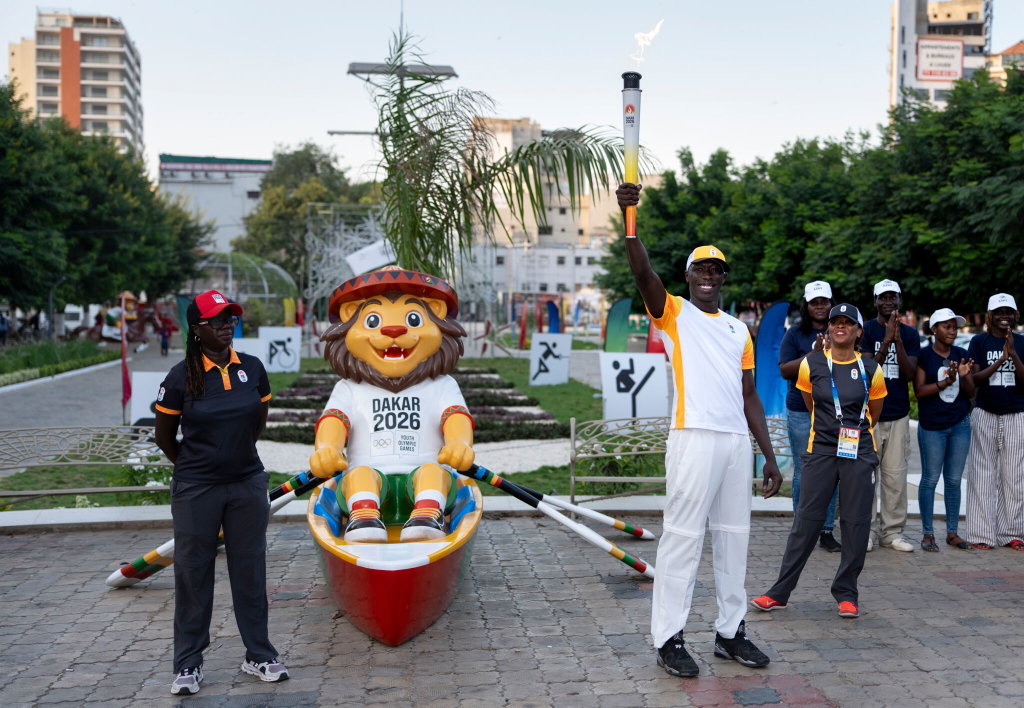
Outside the competition, Saturday, 31 October is also the day of the official Opening Ceremony for the Dakar 2026 Youth Olympic Games, set for 18:00 local time at Abdoulaye Wade Stadium.
The scale of the production underscores the importance of this occasion, the first Olympic sporting event held on African soil.
A total of 1,115 people will participate in the show, after 250 hours of rehearsals over several months.
Dancers are the largest group, with 628 participants and 30 leaders. They are joined by 373 extras, 54 performers, 32 actors, and 25 artists, soloists, and other personalities, along with two masters of ceremonies and a lead choreographer, reflecting the African setting of the Games, with 98 percent of participants coming from Senegal. Approximately 45 percent are women and 55 percent are men.
Local creativity and craftsmanship are key to the production. Senegalese artisans made nearly 1,500 costumes, involving about 100 people and over 5,000 hours of work. Another 350 people are helping with production, artistic direction, technical work, logistics, hairstyling, make-up, and dressing, with more than 85 percent from Senegal. The scenes and the logistical operation include distributing more than 50,000 meals and 25,000 litres of water, while the equipment required for the show weighs approximately 100 tonnes.
The ceremony will celebrate sport, youth, diversity, and Africa’s cultural richness as Dakar, Diamniadio, and Saly prepare to welcome 2,700 athletes and more than 200 international delegations. The Games will feature 25 sports and ten engagement sports and run until 13 November.
What’s next: Sunday, 1 November
The beach sprint competition continues at Saly Beach West on Sunday, with another key day of racing as athletes try to secure spots in the knockout stages. The programme includes:
- Mixed Double Sculls Time Trial 2
- Men’s Solo Time Trial 2
- Women’s Solo Time Trial 2
- Mixed Double Sculls Last 16 – Knockout 1
With the first eight crews Since the first eight crews and athletes from each opening time trial have already reached the Last 16, Sunday will have the rest competing for a place with them, plus the first knockout races in the Mixed Double Sculls.