


22 Jun 2026
Marieke Keijser's comeback
For Dutch rower Marieke Keijser, rowing has always been more than just results, even if her accolades make it look that way.
Since her first international race at the 2013 World Rowing Junior Championships, Keijser has medalled at almost every major World Rowing event she entered, moving from Junior World Champion in the women’s single sculls to two under-23 titles before eventually pairing with Olympic Champion Ilse Paulis in the lightweight women’s double sculls. Their campaign toward Tokyo 2020 was exceptional. In one of the closest Olympic finals in lightweight rowing history, they finished third, just 0.49 seconds off gold and only 0.01 seconds ahead the fourth place British crew.
On paper, it looked like a trajectory that would naturally continue toward Paris 2024. With lightweight rowing set to disappear from the Olympic programme after those Games, the assumption was simple: this was the final push, and Keijser would be part of it.
Instead, she shocked the rowing world by stepping away.
Now, almost five years later, she is preparing for her first World Rowing Cup since 2021, returning into a Dutch women’s sculling programme where almost every seat is occupied by World and Olympic Champions.
We spoke to Keijser about why she left, how she found her way back through coastal rowing, and what her journey reveals about pressure, identity, and the cost of elite sport.
“This is not how it was supposed to go”
Tokyo 2020 was supposed to be the culmination of a lifelong dream for Keijser. Instead, it became something entirely different.
“Everything I had dreamed of as a kid was going to the Olympics with my parents,” Keijser says. “And then COVID hit, and I was like, this is not going how it’s supposed to go in my head.”
Growing up, she had pictured the Games as something shared with family, friends, celebration, and connection. In the Netherlands, there is a tradition of turning Olympic moments into collective celebrations, and Tokyo was supposed to be that for her, especially with her aunt being Japanese and a family reunion layered into the experience.
At the same time, the pressure surrounding the Dutch lightweight double sculls only intensified. Keijser was 19 when she began rowing with Paulis, who had just won the 2016 Games.
“The pressure on me and Ilse, from the moment we started rowing together, was enormous,” she says. “It’s quite something to go to your first Olympics and have people expecting you to win gold.”
When she looks back now, she describes a combination of factors that made continuing feel increasingly unsustainable: the physical toll of lightweight rowing, the emotional strain of expectation, and the collapse of the Olympic experience she had spent years building toward.
“So those things combined, the pressure, and how hard lightweight rowing was on my body, made me realize it would be very hard to continue after Tokyo. When April came, I didn’t feel ready to go back… I thought, I can’t do this any longer.”
“The door was closed,” she says, “but always on a very small window.”
“I wish I could give this to her”
What made stepping away more complicated was that it wasn’t only about her own trajectory.
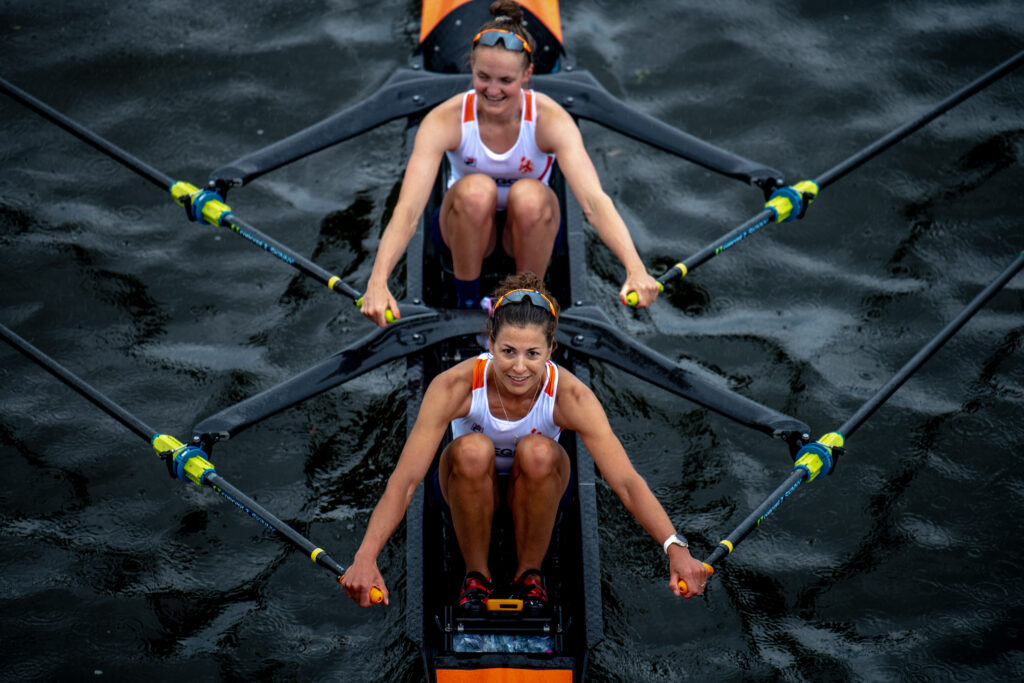
Within the Dutch system, there had been a natural expectation that Keijser would continue toward Paris 2024 alongside Martine Veldhuis, who was the spare to the LW2x in Tokyo. Keijser knew that stepping away would most likely leave Veldhuis without a lightweight double sculls partner, making any Olympic bid contingent on switching into the openweight class. As friends, this made the decision genuinely difficult.
“She never made me feel guilty,” Keijser says. “But there was just a little part of me that was like, I wish I could give this to her.”
“I said to her, I really want to, but I can’t. I’m sorry.”
Veldhuis eventually moved into the openweight program and finished fourth in the women’s double sculls at Paris 2024. For Keijser, watching Veldhuis flourish and carve her own path provided something she hadn’t fully had when she stepped away.
“I finally felt okay,” she says.
Finding her way back
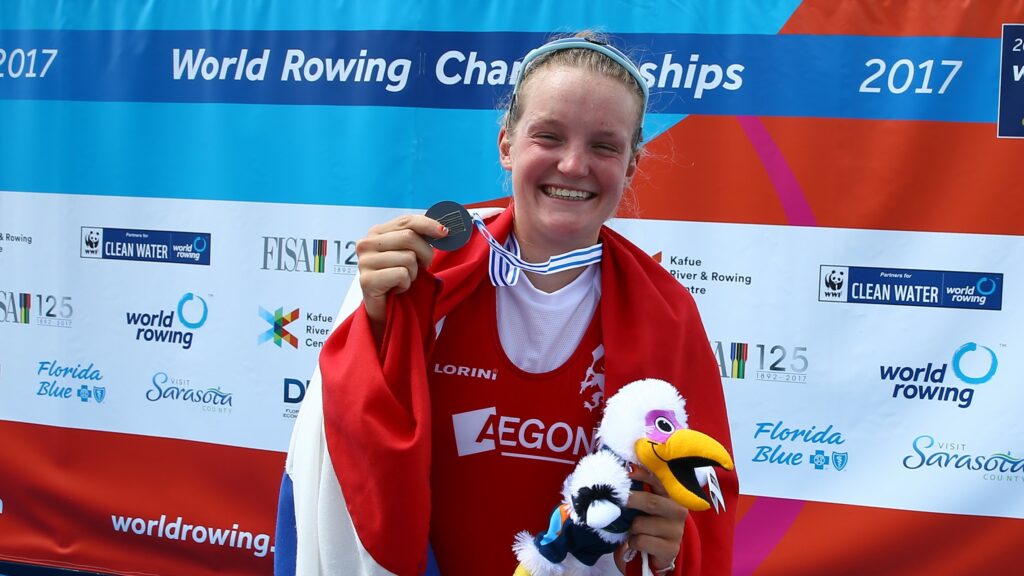
Keijser didn’t disappear from the sport. She started coaching almost immediately, working with juniors, finding her way back to what she had loved about rowing in the first place. She rowed recreationally with the student club, and she even ran a marathon. She let herself find the joy in sport again.
But watching Paris 2024 was complicated. The Dutch team had a historic performance, and Keijser followed along with a strange mix of genuine excitement for her teammates and something harder to name.
“I lost the gold medal in the last ten strokes in Tokyo,” she says. “Watching others get their Olympics, their gold medals, I felt jealous. Really jealous. But I also wanted them to fulfil their dreams. Both feelings were true at the same time.”
It was coastal rowing that changed things. She entered the Dutch coastal nationals almost casually, without equipment or expectation. She finished second, and from there was invited into a World Championships boat alongside athletes still fully embedded in the Olympic system.
“I thought: if I’m going to show up at a World Championship, I should probably practice a bit,” she says. She got back in a single, it was summertime, low pressure, fitting in training before and after work. “And then I went to the World Championships and thought, okay I should really give flat water another try.”
Her own project
To return to the national team, she surrounded herself with a small, trusted circle of people who cared about Keiser the person, not Keiser the result.
“They didn’t have an agenda,” she says. “Whether I rowed faster or slower, they didn’t really care. As long as I was good.”
Despite regaining her elite fitness, she missed the 2025 national team selection – an anaemia diagnosis explaining the fatigue that had dragged down her training load. For another athlete, that might have ended the comeback but for Keijser the diagnosis was relieving.
“If I’m losing when I’m not fit, that’s not a real result,” she says. “I want to know what happens when I’m actually at capacity. If I lose then, I can accept it. They’re just better. But not like that.”
This past January she eventually made the Dutch team through a demanding series of trials, returning into a programme where most athletes are Olympic medallists or World Champions. But Keiser says the pressure feels different now.
“When you’ve already been to the Olympics, the world goes on if you don’t win,” she says. “It’s freeing.”
What sport is actually for
That shift is central to how Keijser now thinks about athlete development, particularly for younger rowers navigating high-performance systems. Too often, she believes, athletes are made to feel that stepping away, whether for rest, life experiences, education, or family, means permanently falling behind.
“If you’re not enjoying it, that doesn’t mean you have to quit,” she says. “It means you need to figure out how to enjoy it again.”
“The world will not end,” she says. “Long-term, that energy and motivation is worth way more than one training camp.”
Her message extends to coaches as well. Rather than viewing athletes through a single pathway, Keijser believes coaches need to recognise the person first.
“There are different ways to become a World Champion,” she says. “A happy person is going to grow as an athlete too.”
She points to the New Zealand women’s double sculls, who won gold at Paris 2024 after navigating motherhood, as evidence that conventional assumptions around elite performance and career timelines are worth questioning.
“You can get a lot out of an unhappy athlete,” she says. “But only for a short period. Maybe one Olympic cycle. Then they burn out.”
What’s next
While it is uncommon for elite rowers to take an entire Olympic cycle off, Keijser’s path shows that there is not one way to be a high performance athlete, that listening to your mind and body can be the best thing you can do for yourself.
Since our conversation, Keijser has competed in the women’s double sculls at World Rowing Cup I in Seville, and will continue her season in the women’s quad in Lucerne at the World Rowing Cup III. She’s hoping that a successful season will see her racing at the 2026 World Rowing Championships in Amsterdam, surrounded by her friends and family, celebrating the sport and everything it has given her.
Story by Jill Moffatt