


22 Jun 2026
An Architect of the Sport: Svetla Otsetova on Gold, Grandstands, and Where Rowing's Going
Fifty years after becoming an Olympic champion, Svetla Otsetova is still redesigning the sport from the ground up.
When World Rowing Cup II finished in Plovdiv last weekend, most of the attention was on the athletes: the United States led the medal table, China won its first-ever gold in the men’s four, and several World Rowing Cup Best Times were set in the men’s double, men’s pair, women’s four, and women’s quad. But above the finish line, in the stands, was someone whose own race ended fifty years ago. Since then, she has helped decide where and how the next generation would compete, shaping the course for over forty years.
Svetla Otsetova won Olympic gold for Bulgaria at the 1976 Montreal Games, teaming up with Zdravka Yordanova in the women’s double sculls. It was one of two gold medals Bulgaria earned in the first Olympic rowing event for women. In the years since, she has built a second career as an architect and has become the sport’s main venue consultant. She has been involved in planning Olympic rowing courses from Barcelona 1992 to Los Angeles 2028, and has helped design around sixty Olympic and World Rowing venues worldwide.
World Rowing sat down with Otsetova after racing concluded in Plovdiv, on the course where her venue-design career first took shape.
“I really feel at home”
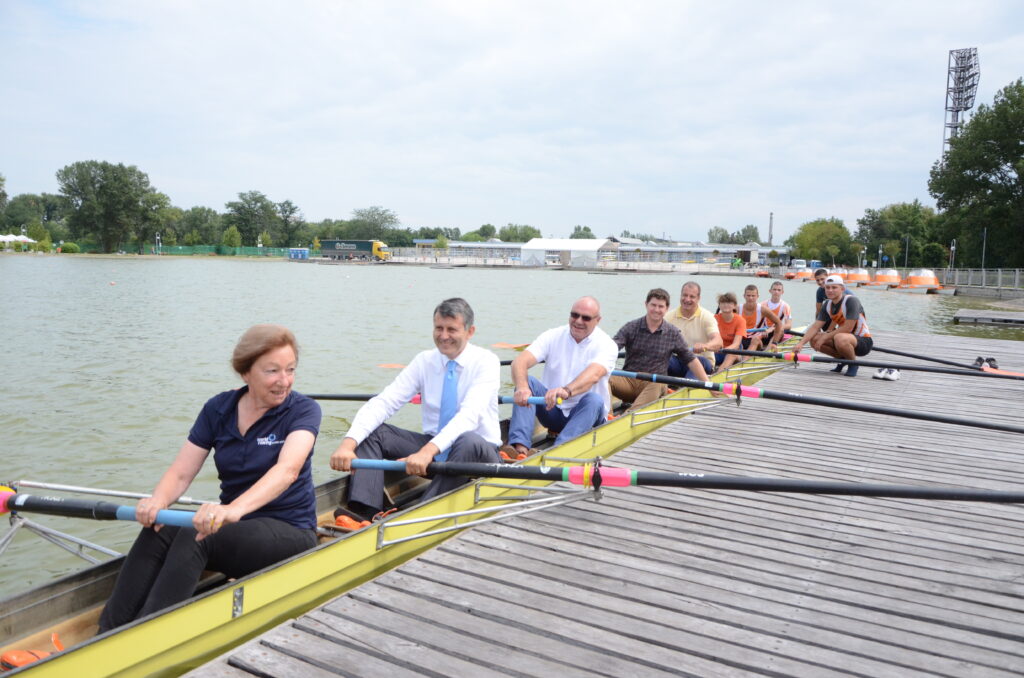
Otsetova has been coming to Plovdiv since 1980, when only half of the current lake existed, and the rest was dug out for the 1981 Canoeing World Championships. That was where she faced her first challenge as a venue designer, and she lost.
“This venue was designed for canoe and kayak,” she explains, “and the International Canoe Federation wanted a finish tower with five to seven floors, one for each official. The more senior you were, the higher up you sat.” She thought this was unreasonable: such an expensive structure would sit unused most of the time. Her own design, which she improved on later projects, had three levels: one for organising-committee operations, one for timing and scoring, and a third just high enough for the photo-finish camera. “That’s why finish towers everywhere have gotten shorter since,” she says. Plovdiv is the exception, since the design was set before she arrived.
She did succeed with the boathouses. In Plovdiv, organisers had copied Potsdam’s layout, placing the boathouse on one side of the course rather than at the start. This forced crews to row a longer loop back to the finish after racing. “I argued we didn’t need to repeat that mistake,” she says. “That’s the main thing I changed at this venue.”
It’s a theme that runs through everything Otsetova has built since: efficiency for the athletes and the public, not just spectacle for the cameras.
From a Swimming Lane to the Bow Seat
Otsetova’s journey into rowing began unexpectedly, due to an ear condition. As a teenage competitive swimmer, she was told by doctors that she could no longer swim. At fifteen or sixteen, most clubs thought she was too old to start a new sport.
A chance encounter changed everything. A woman came to her school looking for kids to try rowing at the lake in Otsetova’s village. Since Otsetova knew the area, she offered to lead the group there. A World War Two veteran who ran the local program put her straight into a boat. She hated it at first. “Oars I couldn’t control, hands swollen within a day,” she recalls. Still, she was told to return the next day, and she lacked the courage to say no.
Her breakthrough came from stubbornness, not talent. She was still struggling with her blade when she was put in a boat for a regatta, and she won. “That’s when the bug bit me,” she says. Soon after, the club held a real training camp but left her out, saying she had not proven herself. She responded by asking for the boathouse keys and training alone. “By the time they came back, I was better than the others. That’s how I was finally accepted onto the team.”
That was 1966. Nine years later, in 1975, she and Zdravka Yordanova partnered in the women’s double sculls, a pairing that came together only months before winning a surprise bronze at the World Championships in Nottingham. “It was like dancing,” Otsetova says about their partnership. “Either it works between two people, or it doesn’t, and it worked from the start.”
Montreal 1976: A Breakthrough for Rowing
The following year brought the Olympics that would define her name in the sport — and a watershed moment for rowing itself, as Montreal 1976 marked the first time women were permitted to compete in Olympic rowing.
Otsetova credits her coach, a Russian trainer from Saint Petersburg, with an almost telepathic level of preparation. “He worked so intensely on our synchronisation that I knew exactly what my partner was about to do just from how she moved,” she says. His pre-race instructions were characteristically sparse: “Go out and do what you know how to do. No tactics, no theory.”
It worked. Otsetova and Yordanova went out fast, building a four-second lead over 1,000 metres into a headwind — remarkable given they were considerably smaller than the Russian and German crews they beat. “At the medal ceremony, we were looking at them eye to eye,” she says, “even though they stood a step below us on the podium.”
Looking back, she’s careful not to overstate how it felt in the moment. “I don’t think we realised at the time that it was historic,” she says of competing in that first cohort of Olympic women rowers. “We were just happy to be there.” The contrast with her next Olympics, Moscow 1980, was stark — she remembers training on a course lined with soldiers, “backs to us, weapons pointed outward,” a far cry from Montreal’s looser, more celebratory atmosphere, where medal-winning athletes were free to stay through the closing ceremony and mingle with competitors from other sports. “That doesn’t really happen anymore,” she notes. “Athletes finish their event and leave. The Games should be more than just the racing.”
Bulgaria, remarkably, won a second rowing gold in Montreal that year too — and the celebrations, by Otsetova’s account, were suitably unrestrained, including dragging a few unsuspecting officials out of their rooms for a cold shower “to give them a taste of what we’d gone through training in the rain for years.” Not every Bulgarian rower left Montreal with a medal, she’s quick to add — a reminder, even amid the celebration, of how thin the line between glory and heartbreak can be in this sport.
A Second Career, Built One Exam at a Time
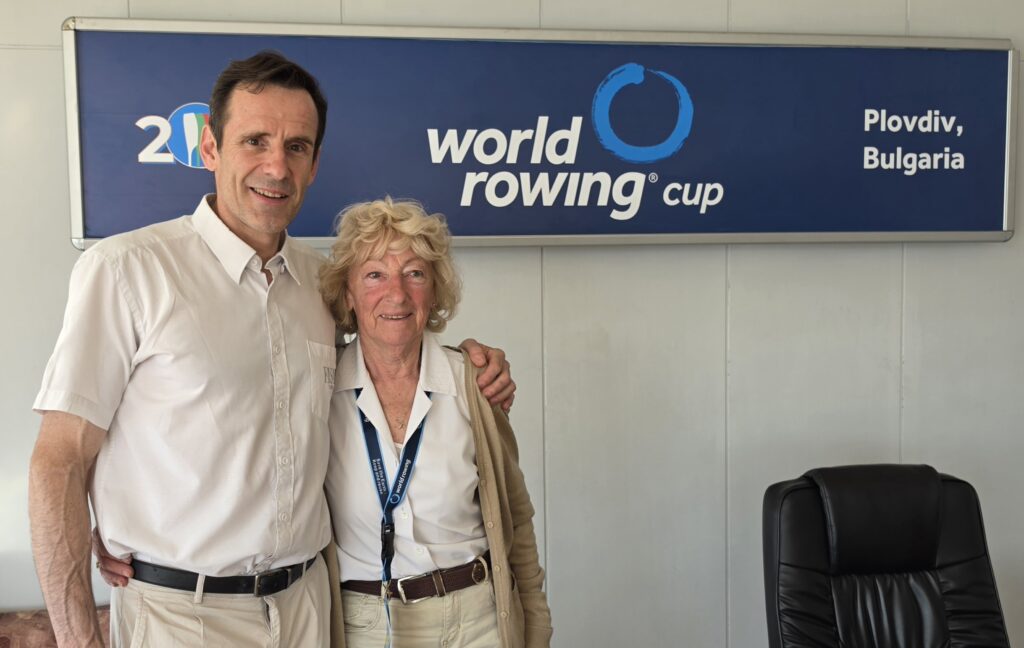
What many people do not know about Otsetova’s 1976 season is that she was also finishing an architecture degree. Her coaches and professors said it was impossible to do both. “I was told, ‘Choose: rowing or architecture,'” she says. “But whenever someone tells me something isn’t possible, that’s exactly when I find a way.”
Her solution was to compress everything: she crammed a month’s worth of exams into one week, attended every lecture she could, and sketched designs by hand in any corner of a training camp where she could find a table, long before AutoCAD existed. “My drawings were never perfect,” she admits, “but I made it work.” She defended her diploma in May 1976. Two months later, she was racing in Montreal.
That balancing act still influences how she works today. “That experience has served me well since, especially when designing rowing courses,” she says. “I often sit across from urban planners who all have their own ideas, and sometimes their own private interests.” Her main principle has not changed since architecture school: design for everyday use, not just for the event. “The event lasts a few days. Daily use matters far more.”
Reeds, Pontoons, and the Fight for Every Venue Since
That principle has been tested and sometimes adjusted at every Olympic rowing venue Otsetova has worked on since Barcelona 1992, when she began her long tenure as the sport’s chief course consultant.
In Barcelona, the fight was ecological. Local environmental rules protected the reed beds lining the course, even though, as Otsetova points out, cutting reeds back actually helps them grow stronger. The compromise was almost comic: since the reeds couldn’t be trimmed, organisers erected two giant scoreboards so spectators on the blocked side could follow the race without being able to see it. “The stories from venue planning over the years could fill a book,” she says.
Atlanta 1996 led to one of her most creative solutions. Organisers wanted spectator seating on both sides of the course, which would have meant cutting down trees on the hillside opposite the finish tower. Otsetova refused, saying, “If someone proposed cutting the trees on the hill across from my own house, I’d want to stop them at any cost.” Instead, she borrowed an idea from a documentary she had seen about military pontoon bridges used to move tanks across rivers. Why not float the grandstands instead? Organisers agreed, and Atlanta’s rowing course ended up with floating grandstands on both banks, creating an atmosphere Otsetova still calls “genuinely unique.”
The Fight Over a Number
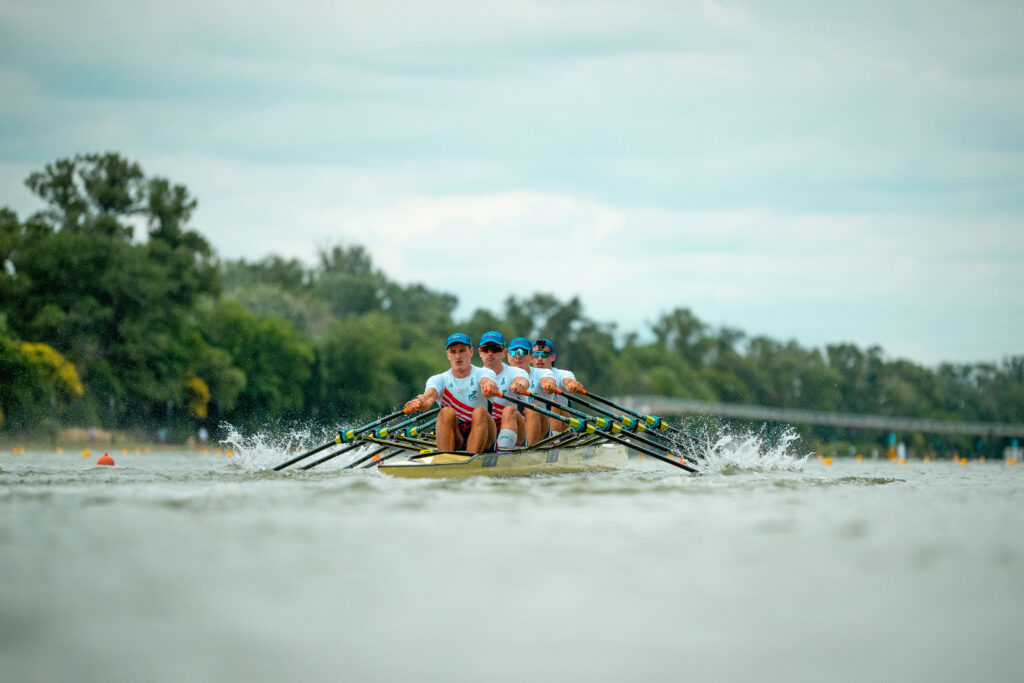
Her latest challenge has been over something rowing considers almost sacred: the 2,000m distance.
When organisers first scouted venues for Los Angeles 2028, they proposed a site two hours outside the city — remote, dry, and with no plan for everyday public use, which Otsetova considers non-negotiable in any venue she’s involved with. She pushed back until they found an alternative: a site close to the city, surrounded by housing, with genuine atmosphere — but too short for a full 2,000-metre course.
“We treat 2,000 metres almost like a fixed law in rowing,” she says, “even though other sports race over all kinds of distances.” When she suggested shortening the LA course to 1,500 metres, many in the sport resisted, since they still believe “rowing simply is a 2,000-metre sport.” The organising council eventually agreed to her plan. Some people in the sport are still not convinced, but Otsetova is not bothered by the disagreement. “Can you imagine the alternative?” she asks. “A sub-village two hours from everything, separate from the rest of the Olympics. This way, it’ll be something to really experience.”
A seat at the table from the start
Otsetova’s impact on the sport goes beyond venue design. She was part of the first IOC Athletes’ Commission, formed in the early 1980s, alongside figures such as Thomas Bach and Kipchoge Keino. Both of them later became senior IOC leaders. This made her one of the first women to have a seat in Olympic governance.
When asked which of her roles—Olympic champion, architect, federation president, or course designer—has brought her the most satisfaction, her answer is about something else. “Honestly, having a very good family, my children, my grandchildren, matters most,” she says. She almost missed this year’s regatta in Plovdiv because her daughter, who was working at the event, needed Otsetova to look after her grandchildren. “Some people were put out by that,” she says, “but sometimes you set your priorities, and I put my daughter first.”
What rowing needs next
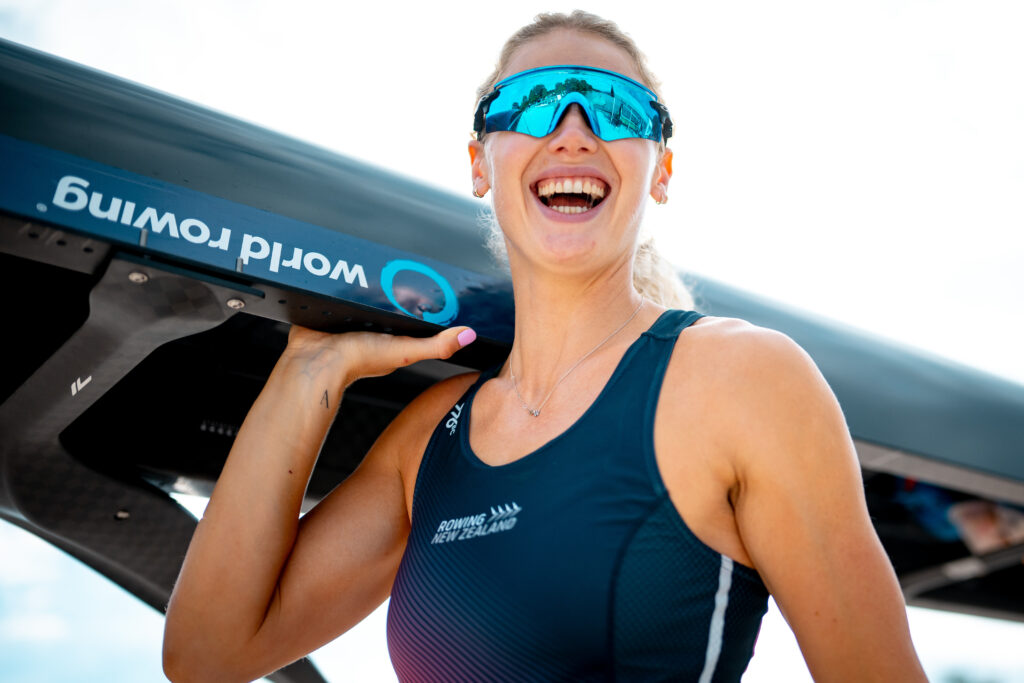
Otsetova has clearly thought a lot about this question, and her answer is still firm. She says classic racing is special, but the sport needs to change if it wants to survive.
“The world has changed completely since rowing was established, and we haven’t changed with it,” she says. “I’m not popular for saying so, but people today want things fast and immediate, not drawn out. A race now lasts six or seven minutes, and nobody watches the whole thing. They watch the first 500 metres and then switch channels.”
She points to the Buenos Aires Youth Olympics, where organisers tried relay formats and shorter distances, as proof that the sport already has good ideas. It just needs the will to use them more widely. “I think there’s a real opportunity there if we want to stay attractive to younger audiences,” she says. “People my age can sit and watch for hours. The younger generation doesn’t have that kind of patience.”
Sixty venues and counting
After fifty years in the sport as an athlete, architect, administrator, and advocate, Otsetova’s achievements are hard to overstate. According to one journalist, she has contributed to about sixty Olympic and World Rowing venues during her career. These include new designs in Beijing, Sydney, Tampere, and Sarasota, where her name is still on a plaque, as well as renovations like the finish tower in Munich, which she reduced from its original size to a practical two floors.
“It’s been a genuinely interesting experience, all these years,” she says. This is a modest way to sum up a career spent making the sport she loves work a little better, one challenge at a time.