


11 Sep 2026
From Amsterdam to Bled: Nora Peuser Just Keeps Racing
Two weeks, two worlds. After racing for Germany at the World Rowing Championships in Amsterdam, 27-year-old Nora Peuser is unbeaten at the World Rowing Masters Regatta in Bled, with four gold medals in four races. And Nora still has five more starts to come.
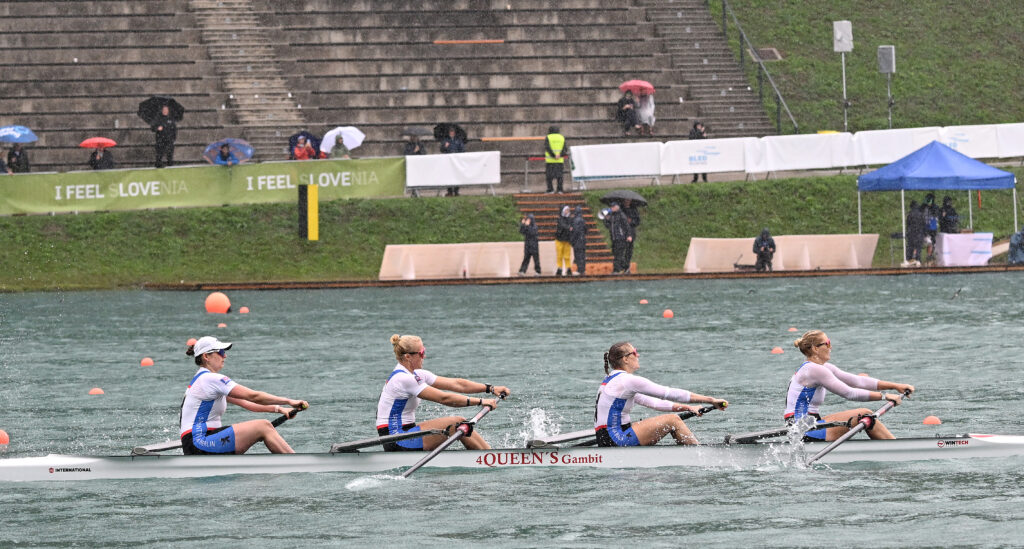
Nora Peuser has barely had time to catch her breath.
Less than two weeks after lining up for Germany at the World Rowing Championships in Amsterdam, she is back on the start line in Bled. The difference is that this time there is no national-team programme, no carefully controlled build-up and no pressure to perform for selection.
Instead, there are club teammates, mixed crews, long days at the regatta and, so far, a rather impressive collection of gold medals.
Peuser has raced four times through the first three days of the 2026 World Rowing Masters Regatta. So far, she has collected four golds.
By the end of the five-day regatta, she is scheduled to have raced nine times, across singles, doubles, fours, eights and mixed eights.
For someone who has spent much of her rowing career chasing international results, it might seem like an unusual way to spend the weeks after a World Championship.
For Peuser, it makes perfect sense. “I’m really enjoying it,” she says.
From One World to Another
Peuser knows the difference between the two worlds better than most.
At the World Championships in Amsterdam, every part of the day had a purpose. The warm-up was planned. The race strategy was clear. The focus was performance.
“In the national team, I’m really focused,” she says. “There’s a clear plan for everything, from the warm-up right through to the race. You know exactly what you’re supposed to do.”
Bled is different.
“There’s basically no warm-up here!” she says with a laugh.
That is not to say the racing is taken lightly. Peuser still wants to win. Her four-for-four start makes that abundantly clear.
But the atmosphere is different. “At the World Championships, everything is very professional. Everyone has their warm-up routine, everyone is focused, and there’s a huge crowd watching and cheering.”
In Bled, she says, “You just get in the boat and enjoy yourself.”
There is more freedom. More spontaneity. And considerably less pressure.
“You don’t really know exactly what’s going to happen, and there are always little surprises.”
That is part of the appeal.
A Familiar Boat, a Different Feeling
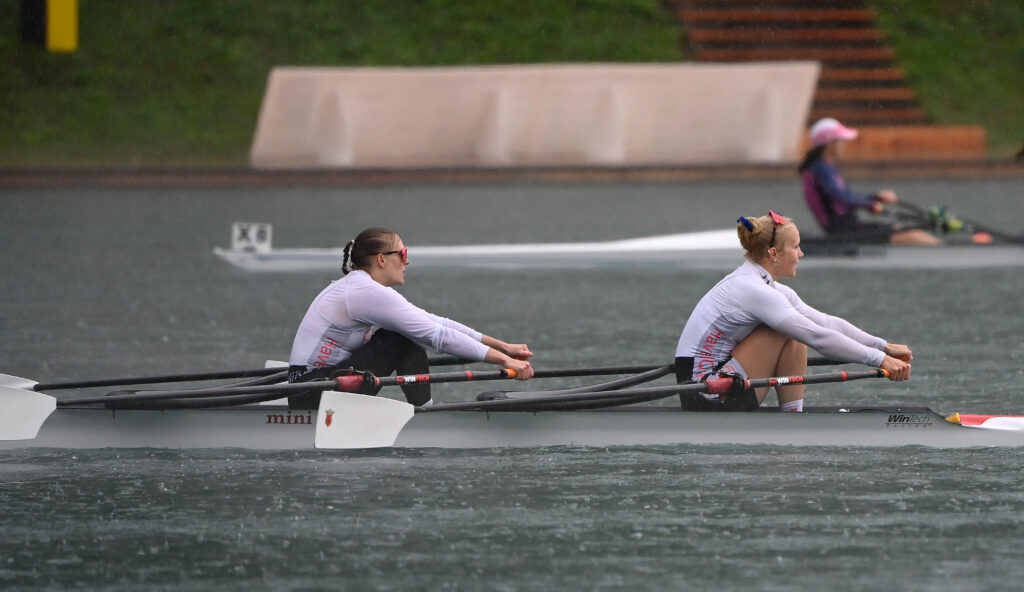
Peuser is no stranger to the people she races alongside.
She has been part of her club’s group for around seven years and has raced with them in Germany’s Bundesliga. Masters racing has become a way for the group to continue rowing together outside the main competitive season.
When the dates worked after Amsterdam, Peuser came to Bled.
“We have a really good group here, and we row well together, so it’s fun to be part of the crew,” she says.
That sense of belonging is central to the experience.
At an elite regatta, the athlete’s schedule revolves around the race. Here, the race is part of a much bigger experience.
“You’re here because you want to be here,” Peuser says.
That difference can be difficult to quantify, but easy to feel.
Nora Knows What Comes Next
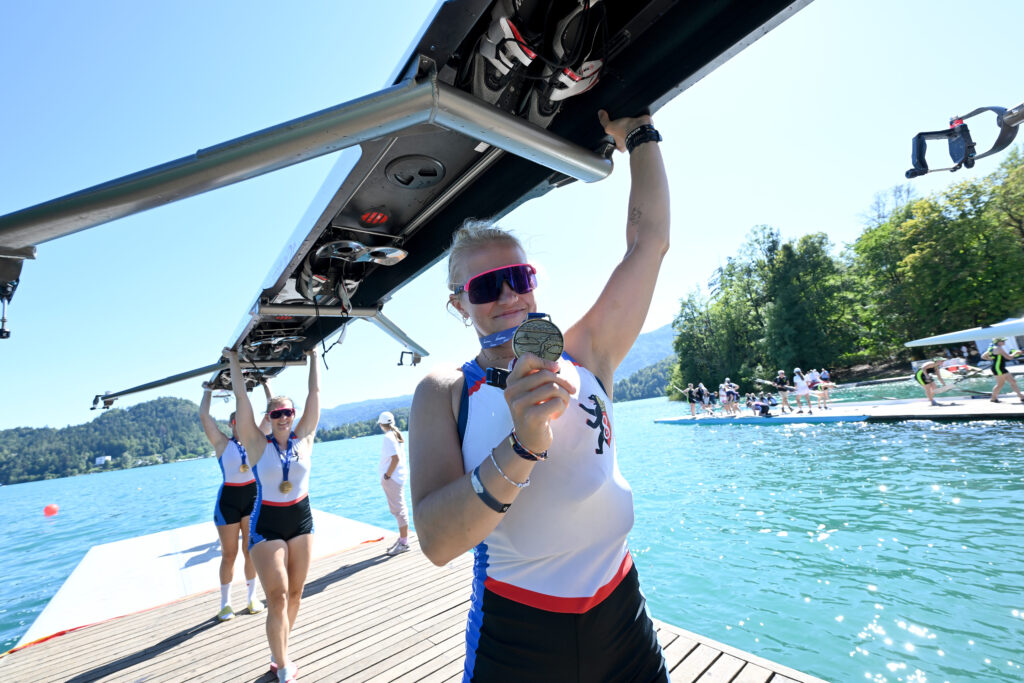
Peuser has been on the international scene since she was a teenager.
In 2017, she won silver in the double sculls at the U19 World Championships and another silver in the quadruple sculls at the U19 European Championships.
Two years later, she finished fourth in the double sculls at the U23 World Championships.
At senior level, she has raced for Germany at the European Championships and World Cup regattas, including a fifth-place finish in the eight at the 2022 Europeans and sixth place finishes in the quadruple sculls at World Cup II and III that same year.
She has already experienced the intensity of an elite rowing career.
And that gives her a particular appreciation for what Masters rowing offers.
Walking through the Bled boat park, she is struck by the age range of the competitors — and, even more, by their ability.
“I’m really impressed by how old some of the people here are — and by how well they can still compete,” she says.
At 27, Peuser is among the younger athletes in the field. But she can already see the value in having somewhere to go when the demands of elite rowing eventually change.
“You can finish your national-team career and still have something to work towards, with World Masters and European Masters competitions,” she says.
“It gives you another chapter in rowing.”
Athletes for Life
That idea is perhaps the most powerful thing Peuser has taken from Bled.
Elite sport can be defined by its deadlines. The next selection trial. The next World Cup. The next World Championship. The next Olympic cycle.
Masters rowing offers a different relationship with time.
You can step away and come back. You can race seriously without making rowing your entire life. You can join a crew when your schedule allows. You can keep competing long after an international career has ended.
Peuser is currently studying Social Work and Sports Science. Away from rowing, she enjoys hiking and cycling.
But rowing remains the sport that keeps pulling her back.
“I just really love the sport,” she says.
And then she describes something every rower recognises.
“What I love is the feeling when everyone in the boat is working together and the boat is running really well. When you get that feeling of everything coming together, that’s what keeps me coming back.”
It is a simple answer, but perhaps the most convincing one.
After all the training, the travel, the early mornings, and the years of elite competition, what keeps Peuser rowing is still the boat running well.
A Holiday With a Start Line
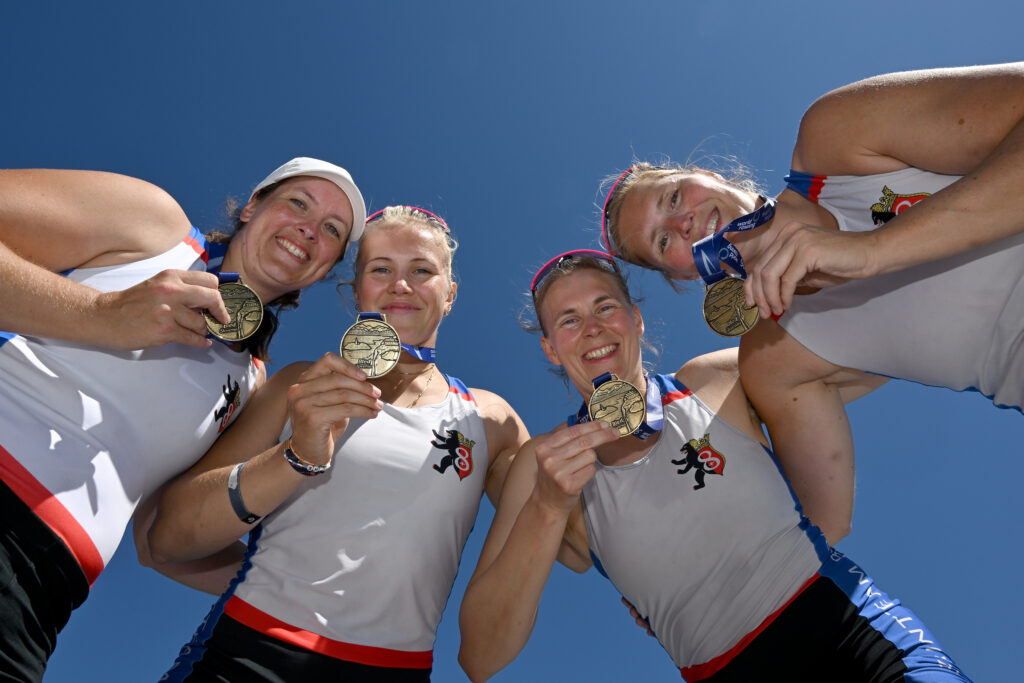
There is another reason Bled feels different. It actually feels a little like a holiday.
Peuser and her teammates are staying together in an apartment. They cook together. They spend time together away from the regatta. And when they are not racing, they can enjoy one of the most spectacular settings on the international rowing calendar.
“The lake, obviously, and the whole location,” Peuser says. “Bled is beautiful. The castle and the mountains make it such a special place to be.”
Normally, a holiday for Peuser might involve hiking or cycling. This one just happens to involve nine rowing races.
So far, the balance is working. Four starts. Four wins.
Why More Elites Should Try It
For Peuser, the experience is good enough that she has no hesitation recommending it to other international athletes.
“Absolutely,” she says when asked whether national-team rowers should come to a World Masters Regatta. “I would highly recommend it. It’s just a lot of fun.”
That recommendation comes from someone who has seen both sides of the sport within the space of a fortnight. Amsterdam demanded her full concentration. Bled has given her something different: the freedom to race because she wants to, with people she enjoys rowing with, in a place she wants to be.
The competitive instinct has not disappeared. Far from it.
But neither has the enjoyment.
And perhaps that is the real lesson of Peuser’s remarkable two-week journey from World Championships to World Masters.
The level may differ. The crew may change. The pressure may lower. But the reason to keep coming back can remain exactly the same.
The boat runs well.
You’re with your friends.
And you still want to race.
With five starts still ahead of her in Bled, Nora Peuser is not quite finished yet.