


21 Oct 2026
Qingdao Debrief: Beach sprints comes of age in China
Seven years ago, beach sprints was a new concept, tested out at a few events by the small but passionate coastal rowing community. The first-ever World Rowing Beach Sprints Finals in Shenzhen only had four events, China dominated the medals, and nobody really thought that in less than a decade the discipline might be an Olympic event.
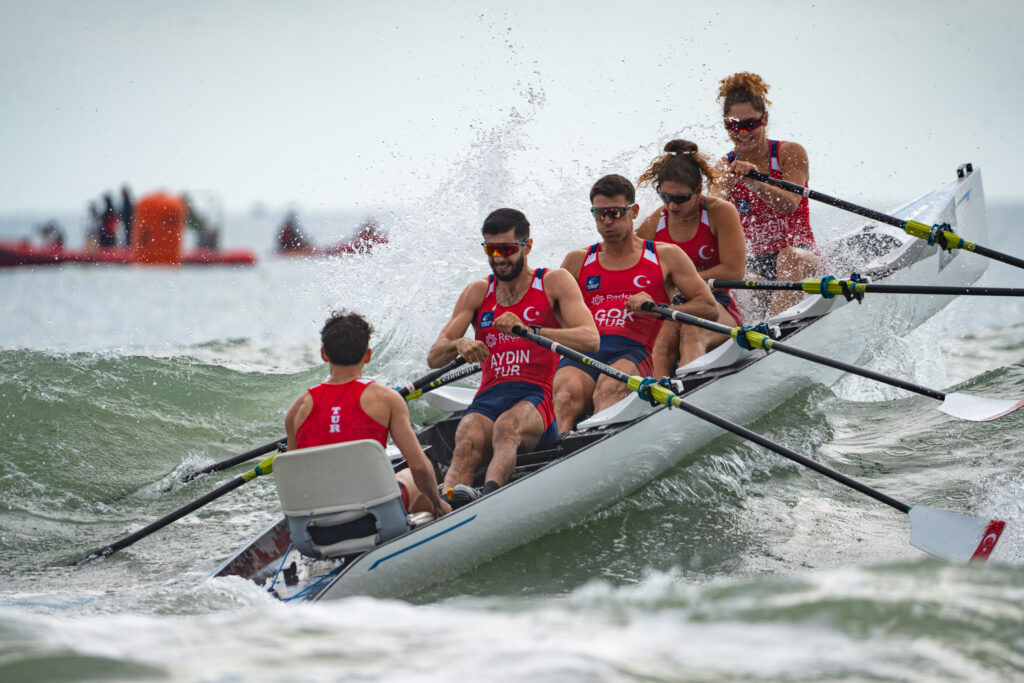
In the years since that has changed. Beach sprints has been embraced by coastal and classic rowers alike. They might come because they want to race at the Olympic Games, but they will stay for the unique combination of athletic challenge and party atmosphere which the discipline brings. And the fans are coming for the same thing – the beach in China was thronged with curious spectators, cheering on the athletes as they braved the tricky surf.
This is the Qingdao debrief.
Home Waters Suit China
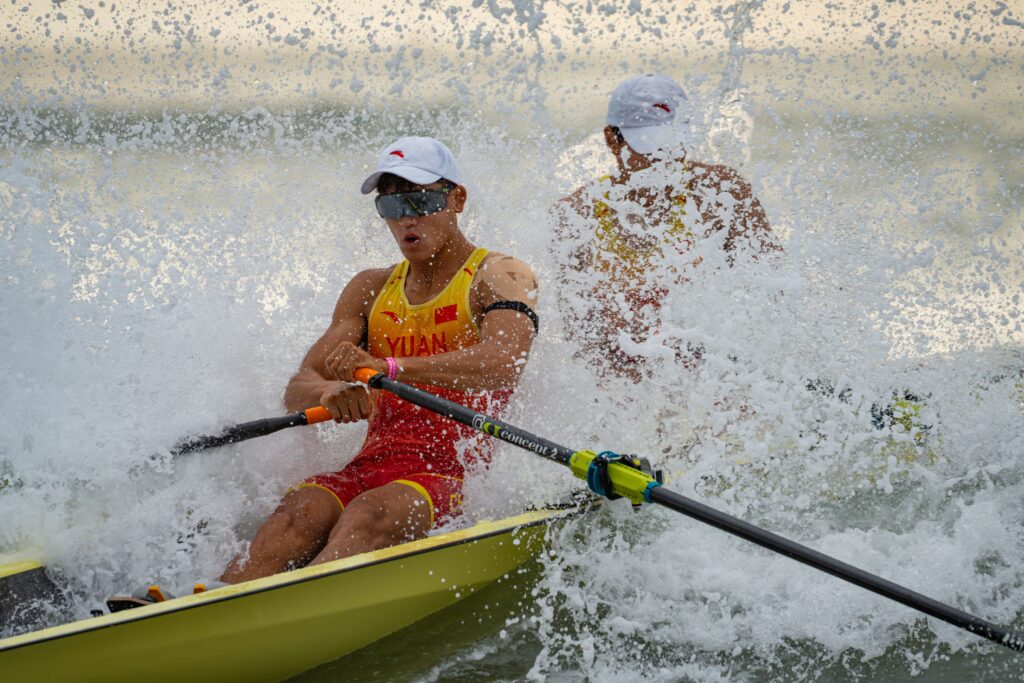
There is no doubt China came into their home championships extremely well-prepared. Out of nine crews, only one failed to make the semifinals; seven reached the final, and four won gold medals. It was by far their best showing at a World Rowing Beach Sprint Finals.
The Chinese crews uniformly raced very hard, with a high stroke rate, and were good on the technical parts of the course such as the 180-degree turn halfway. Coastal men’s solo champion Liu Jiayu also stood out for his extraordinary speed on the water, taking lengths out of all his opposition.
The Chinese team were also all very young – their oldest being 28-year-old Li Juanjuan, bow of the mixed quad – and if they can keep developing they will be a real threat leading into qualification for Los Angeles 2028 and the Olympic Games themselves.
Australia on the Up
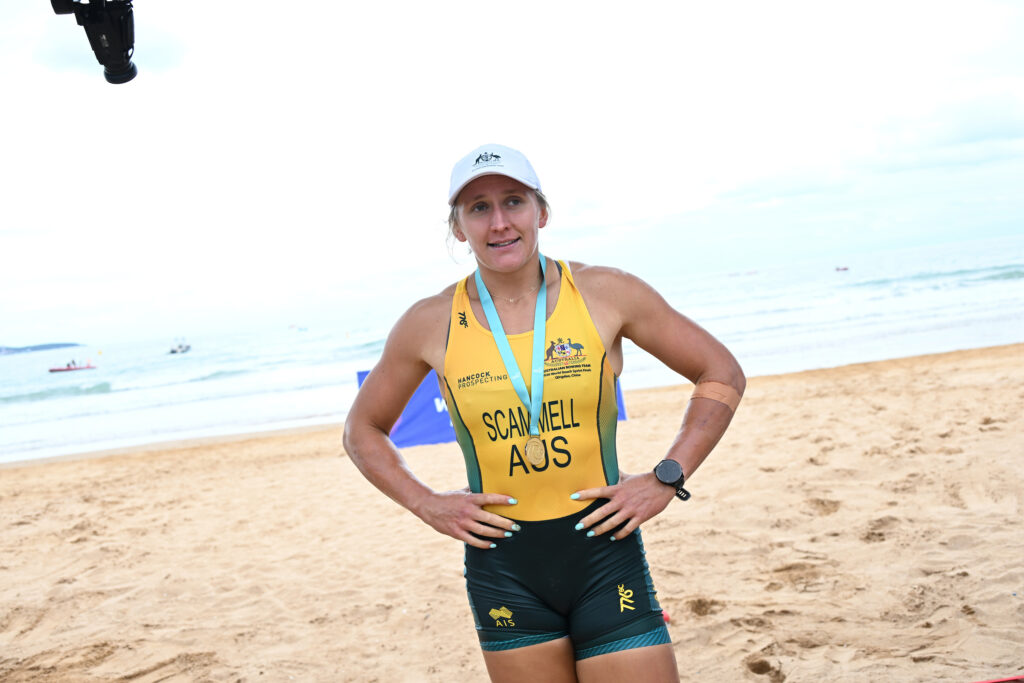
Something is also going right in Australia. With the Australian beach sprints team part of the high performance structure, they have gone from one medal in 2025 (bronze in the mixed quad) to four medals, including two in Olympic-class boats and one gold, in 2026.
It’s entirely possible that another medal could have been on the cards in the mixed double sculls if that event had not been pushed into Tuesday, as women’s solo champion Bella Scammell was doubling up. Scammell, understandably, looked pretty exhausted at the end of the doubles knockout race, lost to eventual champions Germany.
Beach sprints’ inclusion in the Brisbane 2032 Olympic Games is not confirmed, but if it does make it on to the programme, the Australians are set up well to perform at home.
Upsets for Some
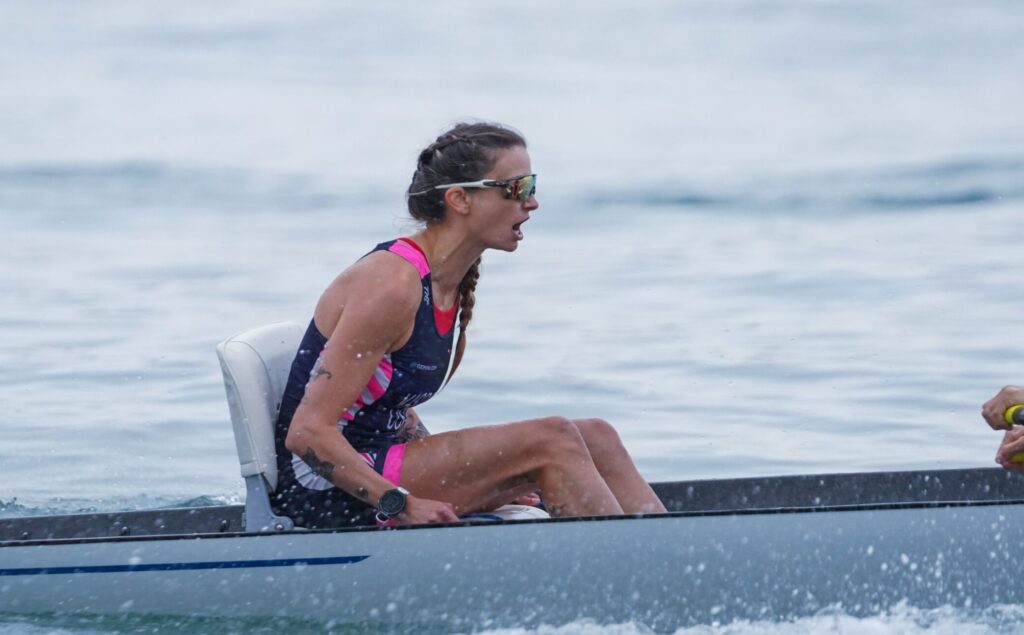
While China and Australia went away celebrating, some other big rowing nations had a less good day on the beach. The USA and Great Britain, both among the top performers in classic rowing, went away with a gold medal each (plus a bronze for the USA), and missed out on the sharp end of the Olympic events.
After the USA had shone in the World Rowing Coastal Championships a week earlier, it was perhaps a surprising outcome for an experienced group. Gold for the USA mixed quad was some consolation for its stroke Chris Bak, who failed to make it three in a row in the coastal men’s solo but still remains the discipline’s most decorated athlete, now with six world titles.
Great Britain’s Lexi Gill and Emma Nicholson, who won the under 19 women’s double sculls, surely have a bright future. But both nations came out on the wrong side of some agonisingly close finishes, especially Christine Cavallo (USA) in the coastal women’s solo. She lost to eventual winner Scammell after stumbling just before the buzzer in the quarterfinals. Getting on the right side of those margins will be key when it comes to Olympic qualification next year.
The Beach Sprint Universe Expands
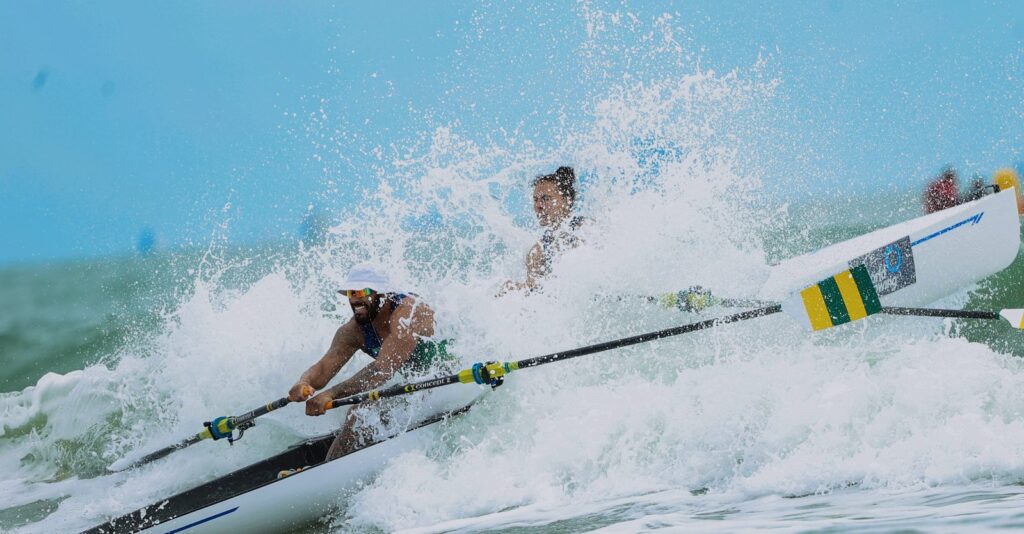
As the discipline grows in popularity, more and more nations are getting involved, and starting to perform. The number of ‘firsts’ in Qingdao are too many to list individually, but crew after crew made history for their country as they progressed deeper into the competition than ever before. Poland’s mixed doubles bronze was their first beach sprints medal, Australia’s two golds were their first titles, Thailand and Indonesia made their first knockout rounds (Indonesia on their beach sprints debut, no less) – we could go on.
Eight nations, including Indonesia, made their debuts at a World Rowing Beach Sprint Finals. Kava Halafi was Tonga’s first-ever athlete at any World Rowing event, and despite being a newcomer to rowing and coastal rowing, made it through the first time trial safely in tricky conditions. For developing rowing nations, beach sprints has huge potential as it is relatively cheap – a boat can be shared among athletes of different genders and sizes and you can launch on pretty much any beach or shore. There is lots of excitement about the future of the sport around the world.
Adaptability is Key

The competition also showed the importance of flexibility in coastal rowing, especially in a changing climate. Strong winds forced the cancellation of training on Saturday and racing on Sunday, and another adverse weather forecast meant the organisers made the difficult decision to move all of Wednesday’s racing into Tuesday. That gave us two intense days of action, but everyone was able to race and the coastal veterans were relishing the tricky surf rolling into the beach.
Huge credit has to go to all involved in making sure that competition could get underway on Monday. Key infrastructure and equipment was protected from the storm, and while some tweaks to the course had to be made to account for safety and Qingdao’s significant tidal range, competition was essentially unaffected when it did start.
And the energy and vibes stayed high throughout Tuesday’s 10-hour day of finals, with the crowds cheering and tunes pumping from 7am to 5pm.
Next on the Beach
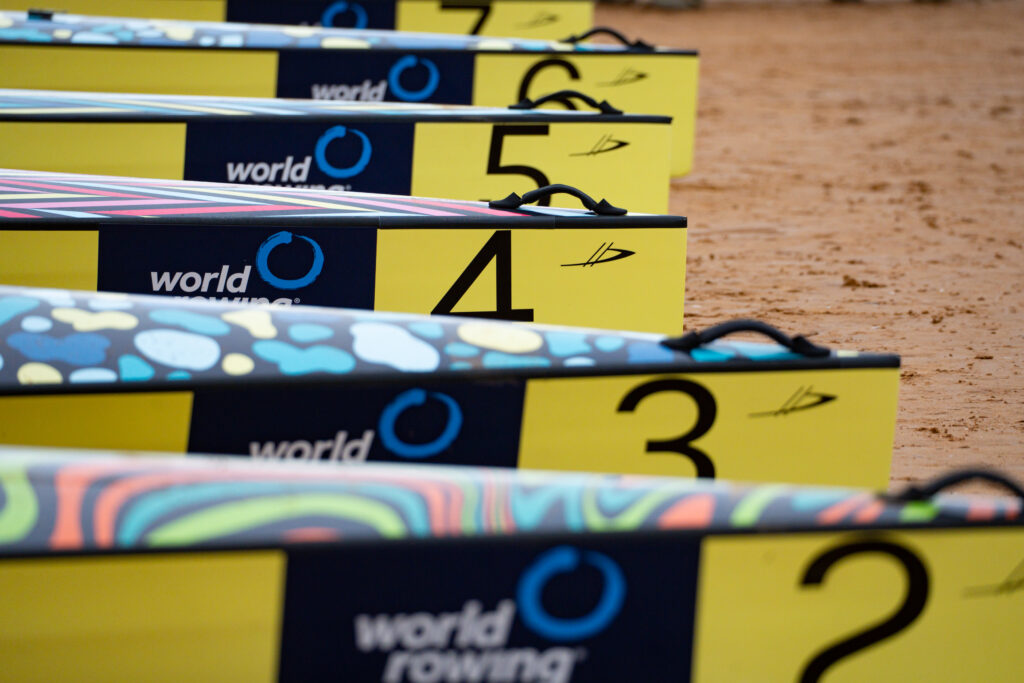
There is lots to look forward to in the world of beach sprints. Coming up very soon is the Dakar 2026 Youth Olympic Games, where athletes aged between 15 and 18 will become the first to test the discipline in an Olympic context. It’s safe to say those selected are absolutely buzzing.
And next year, ahead of Olympic qualification, there is the debut of the World Rowing Beach Sprint Series. Seven nations qualified for this thanks to their results in the three Olympic events in Qingdao, and will race next spring in Türkiye and China.
Plus, there will be plenty of continental championships and other beach sprints events. With less than two years to go to Los Angeles, the future is bright on the beach.