


26 Oct 2026
Fair Play in Focus Ahead of Dakar 2026
As Coastal Beach Sprints make their Youth Olympic Games debut in Dakar 2026, World Rowing reminds athletes and support personnel of their responsibility to protect fair competition.
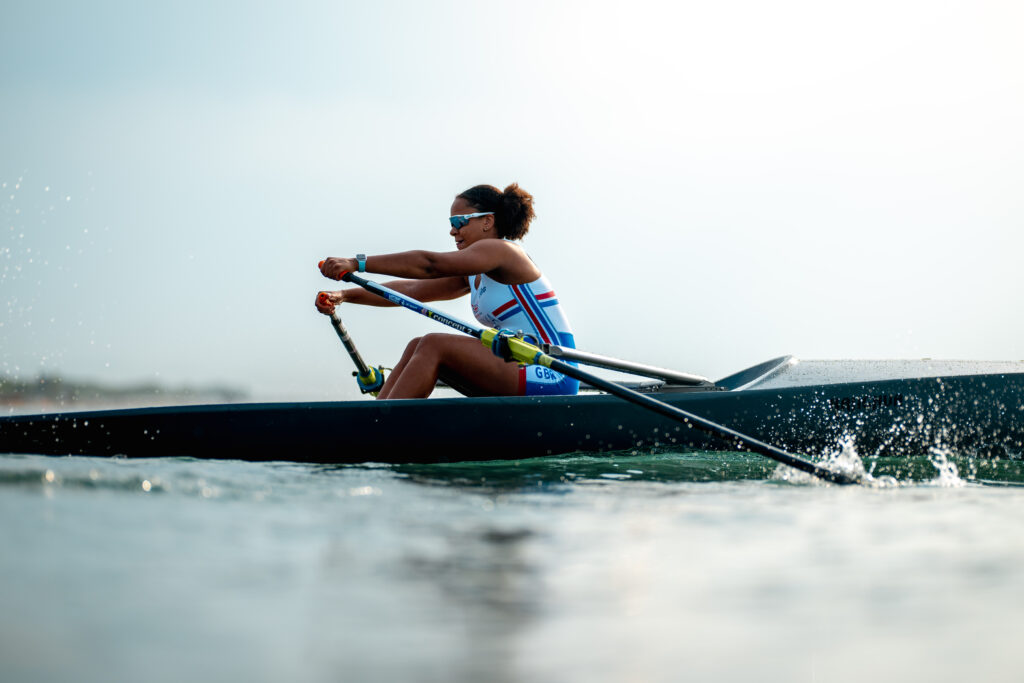
Competition manipulation can happen in any sport, including rowing. As the sport reaches new audiences and enters new stages on the Olympic journey, understanding the risks — and knowing when to speak up — is essential to protecting its integrity.
Competition manipulation occurs when someone unfairly influences a sporting competition to make money or gain another advantage. It can take many forms, from deliberately underperforming at a key moment to sharing confidential information that could influence betting outcomes.
The risk is not limited to major international competitions or athletes competing for medals. Everyone involved in rowing has a role in keeping the sport fair.
Why Competition Manipulation Matters in Rowing
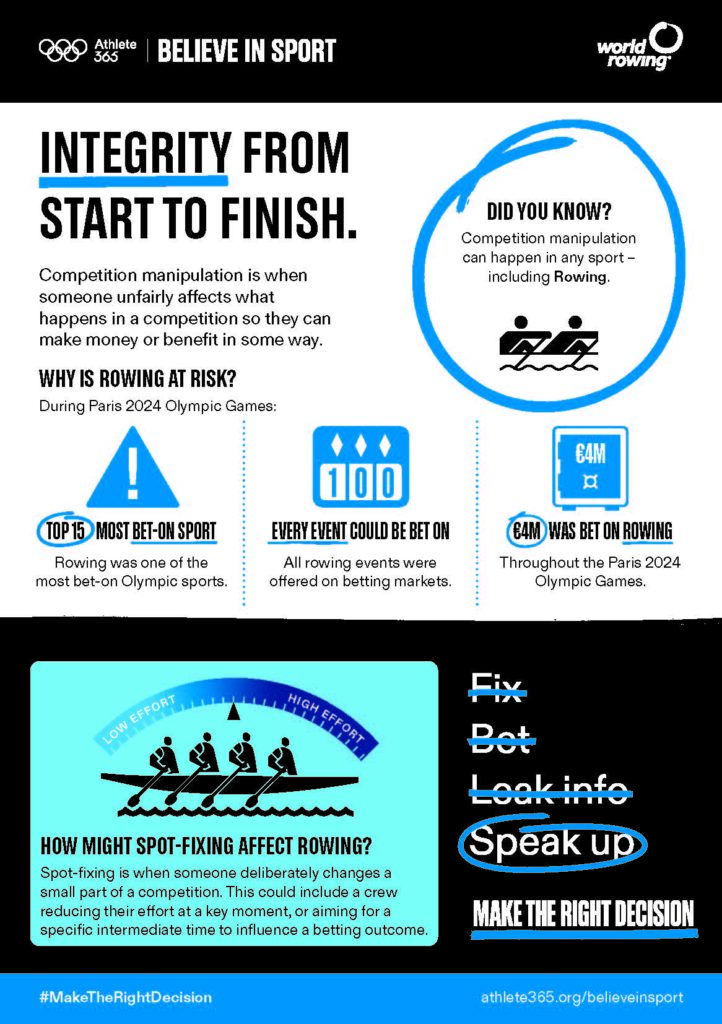
Rowing may not be the first sport that comes to mind when people think about betting, but it attracts significant betting interest. During the Paris 2024 Olympic Games, rowing was among the 15 most-bet-on Olympic sports, with every rowing event available on betting markets. According to the IOC Integrity Office, bettors wagered €4 million on rowing during the last Summer Games.
One particular risk is spot-fixing: deliberately manipulating a specific moment or aspect of a competition rather than its overall result. In rowing, this could mean a crew deliberately reducing its effort at a crucial point or targeting a particular intermediate time to influence a betting outcome.
These actions can be difficult to detect. Small changes in performance may appear unremarkable, yet even minor differences in effort can affect a race. That makes awareness, vigilance and a shared commitment to fair play especially important.
Know the Rules. Protect our Sport.
Athletes, coaches, officials and other members of a team’s entourage should keep three principles in mind:
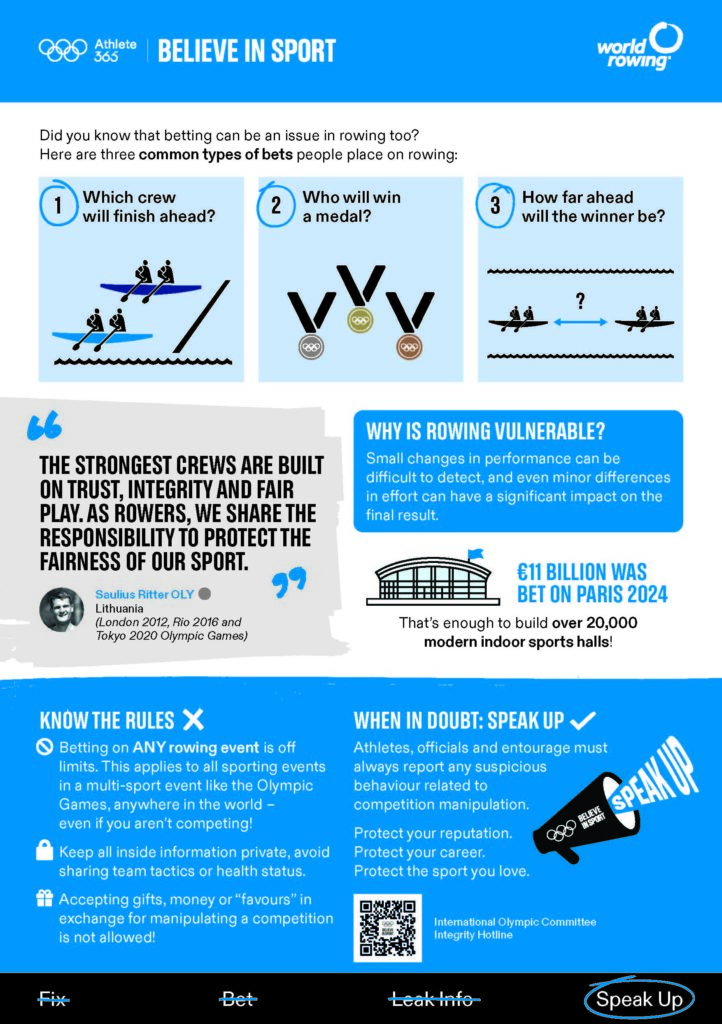
- Never bet on rowing. Betting on any rowing event is prohibited under the rules highlighted in the infographic. At a multi-sport event such as the Olympic Games, this applies even if you are not competing in the event.
- Keep inside information private. Do not share confidential information, including team tactics or an athlete’s health status, that could be used to influence betting or manipulate a competition.
- Never accept an offer to manipulate a competition. Money, gifts or favours offered in exchange for influencing a result or a specific moment in a race are not acceptable.
Knowing the rules is the first step. Recognising suspicious approaches and understanding how to report them are equally important.
When in Doubt? Speak Up.
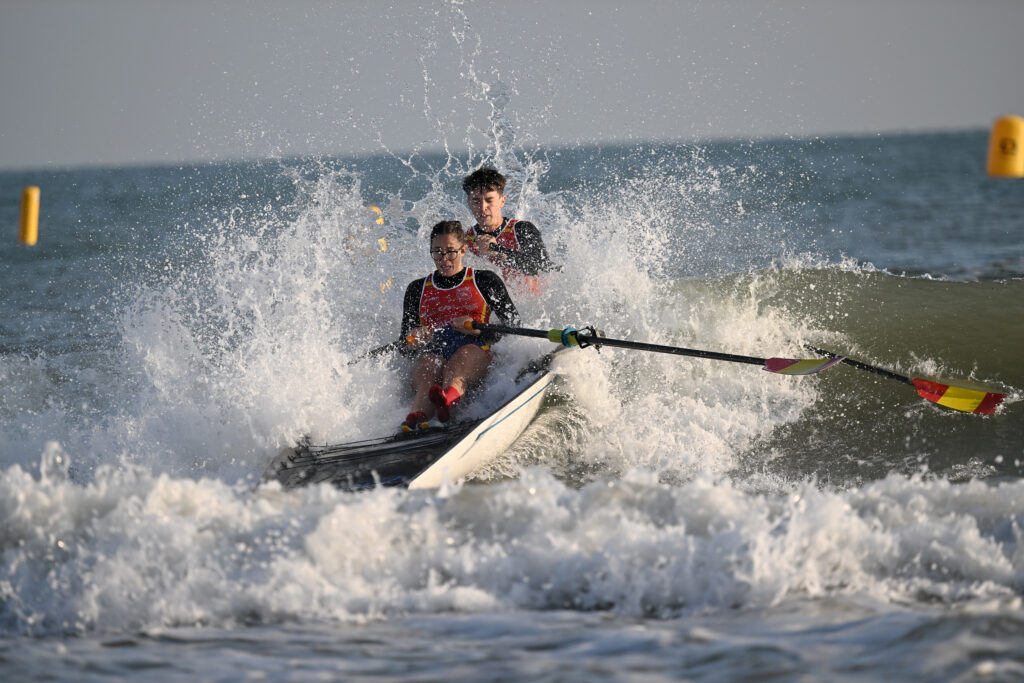
If you encounter suspicious behaviour related to competition manipulation, report it. Athletes, officials and members of the entourage all have a responsibility to raise concerns rather than ignore them.
Speaking up helps protect athletes’ reputations and careers, safeguards the credibility of results and reinforces the trust on which rowing depends. No one should feel that they have to handle a suspicious approach alone.
As Lithuanian Olympian Saulius Ritter, who competed at London 2012, Rio 2016 and Tokyo 2020, emphasises in the accompanying infographic, rowing is built on trust, integrity and fair play. Protecting those values is a shared responsibility.
With Coastal Beach Sprints set to feature at the Youth Olympic Games Dakar 2026 for the first time, and the discipline scheduled to make its Olympic debut at LA28, this is an important moment to reinforce that message with the next generation of rowers.
Know the rules. Refuse manipulation. Keep inside information private. Speak up when something is wrong.
Protecting rowing’s integrity starts with every one of us.